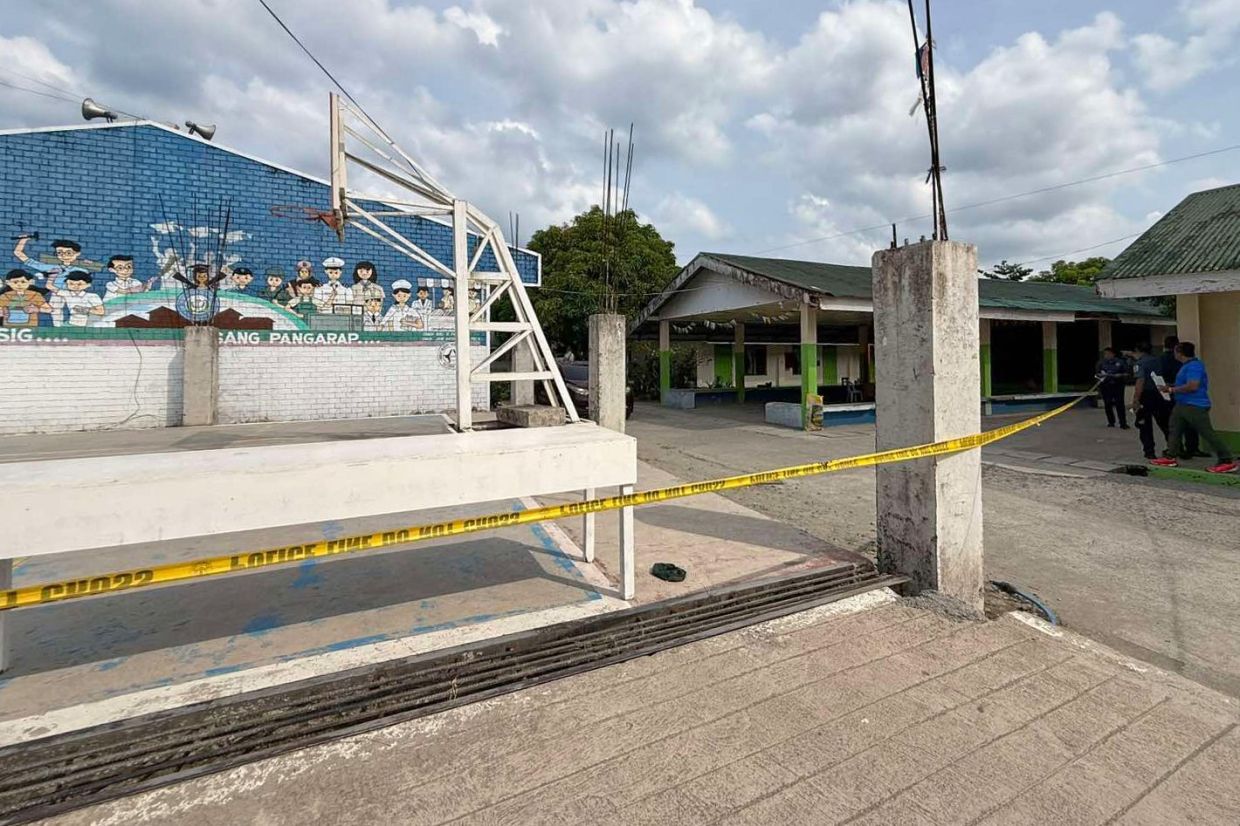
The Philippine National Police arrested a 14-year-old female student for allegedly threatening a school attack through social media posts, marking the second such incident following a deadly shooting at a secondary school in Tacloban City. Interior Secretary Jonvic Remulla disclosed the detention at a Camp Crame press conference, revealing that operatives from the Criminal Investigation and Detection Group apprehended the Tolosa National High School Grade 10 student after Senator Bam Aquino alerted authorities to the threatening posts made on Wednesday evening.
The minor's social media messages explicitly warned students at Tolosa National High School to prepare for violence, with one post stating: "Hello. Send this to your friends. Yo, from Tolosa, prepare yourselves, especially to you, as you owe me. Get ready. I will disrupt the school." The subsequent message escalated the threat, declaring: "You won't know me, but you will recognise me. There is no time nor day. Be prepared for whoever gets shot or stabbed. We don't care. Good luck to you at Tolosa National High School." The language and tone mirrored patterns seen in other violent threats circulating online, raising serious concerns among school administrators and parents in the Leyte province.
Investigators discovered that the student had created multiple Facebook accounts to amplify and distribute the threatening content across a wider audience. Police utilised social media analysis techniques and intelligence from community members to establish her identity conclusively. However, once authorities contacted the minor and her family, she deleted all associated accounts and the original posts disappeared from public view, complicating efforts to preserve evidence and conduct a thorough investigation into her motivations.
The minor was transferred to the Department of Social Welfare and Development and subsequently released without formal charges because Philippine law prohibits criminal prosecution of children under 15 under Republic Act No. 9344, the Juvenile Justice and Welfare Act. This legislative framework, designed to protect young offenders and emphasise rehabilitation over punishment, meant that despite the seriousness of the threat, authorities could not pursue traditional criminal proceedings against the student. The decision frustrated some commentators who argued the law inadequately addressed emerging threats posed by digital-age minors capable of causing mass panic.
Remulla indicated that the student's cooperation with investigators proved limited, with the minor expressing considerable anxiety about potential consequences. Her parents compounded the difficulty by declining to supply information when contacted by the Tolosa Municipal Police Station, creating an investigative dead-end. Despite these barriers, officials pieced together enough information to conclude that personal and family issues likely motivated the posting of threats rather than any concrete operational planning or capacity to carry out violence. Crucially, police found no evidence that the minor or her family possessed access to firearms or had engaged in collaborative schemes with other individuals.
The Tolosa incident arrives just days after a catastrophic shooting at San Jose National High School in Tacloban City, in which two students aged 14 and 15 opened fire, killing three classmates and wounding at least 20 others. That tragedy sent shockwaves through Philippine communities and prompted heightened vigilance regarding copycat threats and similar incidents. Security officials noted that exposure to that recent violence appeared to have influenced the Tolosa student's threatening rhetoric, as she seemed to have drawn inspiration from media coverage and social discussion surrounding the Tacloban shootings.
A particularly troubling connection emerged between both the Tacloban shooters and the Tolosa student: all three minors were identified as avid players of GoreBox, a video game featuring extremely graphic violence. The game's popularity among teenagers, combined with its explicitly violent content depicting gore and shooting scenarios, prompted the Cybercrime Investigation and Coordinating Centre to temporarily ban the title in the Philippines following the Tacloban attack. Authorities expressed concern that the game's immersive simulation of mass violence might desensitise young players or reinforce violent ideation among vulnerable adolescents already struggling with personal or emotional difficulties.
The cases underscore a growing phenomenon in Southeast Asia whereby minors with access to online platforms and digital tools can rapidly escalate from passive consumption of violent media to active threats targeting schools and peers. The speed with which threats spread via social media, the difficulty in distinguishing genuine danger from attention-seeking behaviour, and the limitations of juvenile justice systems in addressing digital crimes create a complex challenge for law enforcement across the region. Schools in the Philippines and neighbouring countries have begun implementing additional security protocols and monitoring systems to identify threatening communications earlier and coordinate with police more effectively.
Malaysia and other neighbouring jurisdictions have observed similar patterns, with online threats to educational institutions becoming more frequent even when actual violent capability remains absent. The sophistication required to distinguish credible threats from adolescent bravado, emotional outbursts, or deliberate hoaxes strains police resources and creates unnecessary alarm within communities. The Tolosa case suggests that even when no genuine threat materialises, the psychological impact on students, parents, and staff remains substantial, justifying serious investigative and preventive responses despite the perpetrator's youth and apparent lack of operational capacity.

