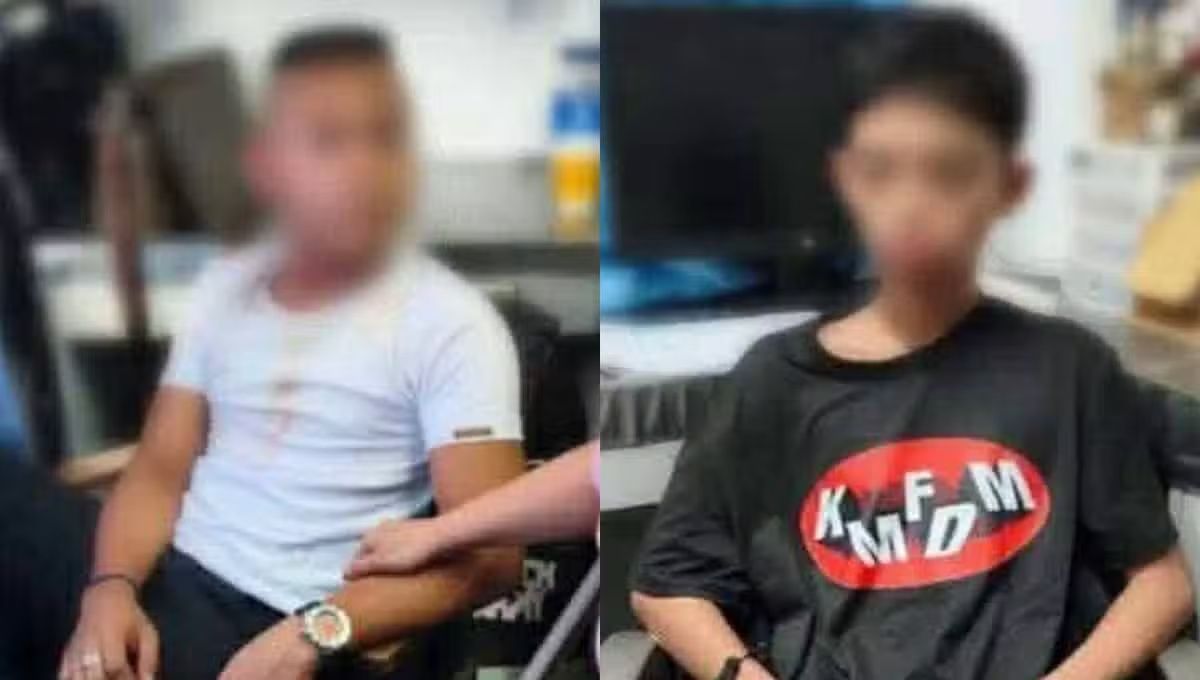
The Philippine education system faces a profound reckoning following a shooting at San Jose National High School in Tacloban City on June 22, when two Grade 9 students—aged 14 and 15—opened fire on their classmates, leaving three dead and 20 wounded. The incident represents one of the country's deadliest school shootings in recent memory, marking a rare but devastating eruption of gun violence within an educational institution. The tragedy has exposed fundamental fractures in the nation's approach to juvenile justice and raised uncomfortable questions about how the legal system should treat children who commit grave offences.
The two suspects were apprehended immediately, but their divergent legal paths underscore the central tension now dividing Philippine policymakers and grieving families. The 15-year-old faces multiple counts of murder and frustrated murder, confronting the full weight of criminal prosecution. His younger accomplice, however, falls beneath the threshold of criminal responsibility established by the Juvenile Justice and Welfare Act of 2006 and therefore cannot be formally charged. Instead, he will be channeled into a rehabilitation programme known as the House of Hope, designed to address the needs of children in conflict with the law rather than punishing them through the criminal courts.
This legal distinction has inflicted fresh agony on bereaved families. Erbea Fabian, whose 15-year-old son Chris Lorenz was killed in the shooting, expressed profound frustration that the younger perpetrator would escape criminal accountability despite allegedly firing the most shots and bearing responsibility for her son's death. Similarly, Jenny Baldoria, mother of 16-year-old victim Joyancee, voiced her anguish at the prospect of forgiveness when the suspect she holds accountable for her daughter's murder faces no criminal sanctions. Their testimonies have given voice to a broader sentiment that existing protections for juvenile offenders may have tilted too far toward rehabilitation at the expense of justice for victims.
The shooting has occurred against a backdrop of escalating student violence across Philippine campuses. Within days of the Tacloban incident, authorities thwarted another potential mass shooting at a separate Leyte school, and three stabbing incidents were recorded on different campuses nationwide within a single week. This pattern has catalyzed an urgent national conversation about whether current juvenile justice frameworks remain fit for purpose in an environment where young people increasingly resort to lethal violence. The accumulation of incidents has created political momentum for legislative reform that seemed unlikely before June 22.
President Ferdinand Marcos Jr has signaled openness to lowering the minimum age of criminal responsibility, a position that gains support from law enforcement agencies. The Philippine National Police have advocated setting the threshold at 12 years old, with spokesperson Allen Rae Co citing documented cases of criminal involvement by children as young as nine. Interior Secretary Jonvic Remulla has emphasized how criminal syndicates deliberately exploit minors in drug trafficking precisely because they operate beyond the reach of criminal law, turning their legal immunity into an operational asset. These arguments resonate with concerns that the current system inadvertently creates perverse incentives for criminal organizations to recruit younger perpetrators.
Senator Robin Padilla has already drafted legislation to lower the minimum age to 10, filed in July 2025, and has urged President Marcos to convene a special session of Congress to expedite debate while the nation's attention remains focused on the issue. Padilla framed the matter as a fundamental question of national priority, suggesting that if the Philippines is now confronting American-style school shooting violence, it must respond with equivalent urgency and legislative action. His intervention reflects the intensity of political pressure to act decisively, even as Congress remained in recess until late July.
Investigative details have further complicated the narrative. Authorities discovered that the 14-year-old suspect had been posting violent content online before the attack and demonstrated heavy exposure to digital media depicting extreme violence. Investigators identified that he had been playing GoreBox, a first-person shooter game developed by German manufacturer F2Games featuring graphic combat scenarios with extensive weapons arsenals. The government temporarily blocked access to the game while investigating its potential influence on the suspect's actions. This revelation has catalyzed additional calls for legislation restricting minors' access to violent online gaming and platforms, expanding the debate beyond criminal liability alone.
The Philippines maintains one of Asia's highest thresholds for criminal responsibility, a distinction that reflects its historical alignment with child protection principles but increasingly sits at odds with regional practice. Most neighboring countries have established the threshold at 14 years, while Indonesia sets it at 12 and Singapore at 10. This regional comparison has fueled arguments that Philippine law has become anachronistic, leaving the country vulnerable to exploitation by young perpetrators and creating anomalies in how the Southeast Asian region treats juvenile offenders. The gap between Philippine practice and its neighbors provides ammunition to reformers seeking to justify significant legal change.
However, international human rights bodies have cautioned against precipitous reform. The United Nations Committee on the Rights of the Child has urged states to resist lowering thresholds already above 14 and has declared any minimum below 12 internationally unacceptable according to established child protection standards. Singapore's experience demonstrates that even with a 10-year threshold, offenders between 10 and 16 typically face handling through specialized Youth Courts rather than adult criminal systems, suggesting that lowering the age need not entail treating children as adults. This nuance has been largely absent from domestic Philippine debate, which has often presented the issue in binary terms.
Defenders of the existing juvenile justice framework have raised substantive objections to reform proposals. Tricia Clare Oco, executive director of the Juvenile Justice and Welfare Council, has argued that lowering the minimum age addresses symptoms rather than underlying causes of violence. She emphasized that American jurisdictions with stricter juvenile laws have failed to prevent school shootings, suggesting that legislative reform targeting age thresholds alone will not enhance public safety. Instead, Oco has pointed to proximate drivers of youth violence—family dysfunction, bullying, peer pressure, and media normalization of harm—as the appropriate targets for preventative intervention. She has also noted that existing law already permits courts to order involuntary commitment to rehabilitation facilities within 72 hours, with structured programming mandatory and parental civil liability exposure, meaning current mechanisms possess more enforcement capacity than casual observers might assume.
The immediate institutional response has been comprehensive. The Philippine Senate and the Commission on Human Rights have announced parallel investigations into the shooting, signaling that multiple bodies will scrutinize both the incident and underlying systemic factors. The Commission on Human Rights explicitly called for a rights-based and child-sensitive approach to investigation and prevention, emphasizing that honoring victims and preventing future tragedies requires commitment to human rights principles rather than purely punitive responses. This stance reflects tension between demands for accountability and recognition that effective violence prevention demands addressing root causes rather than simply adjusting criminal liability ages.
The Tacloban shooting has crystallized a fundamental dilemma facing contemporary Philippine governance: how to balance child protection principles established in international law and domestic statute with legitimate public demands for accountability when minors commit atrocious acts. The case reveals that this is not merely a technical legal question but a profound moral and policy choice with implications for how the nation treats its young people, structures its criminal justice system, and responds to community trauma. As lawmakers prepare to reconvene, the tragedy has shifted the burden of proof onto defenders of the status quo, forcing them to articulate persuasive arguments for why the current system adequately serves both child welfare and public safety.

