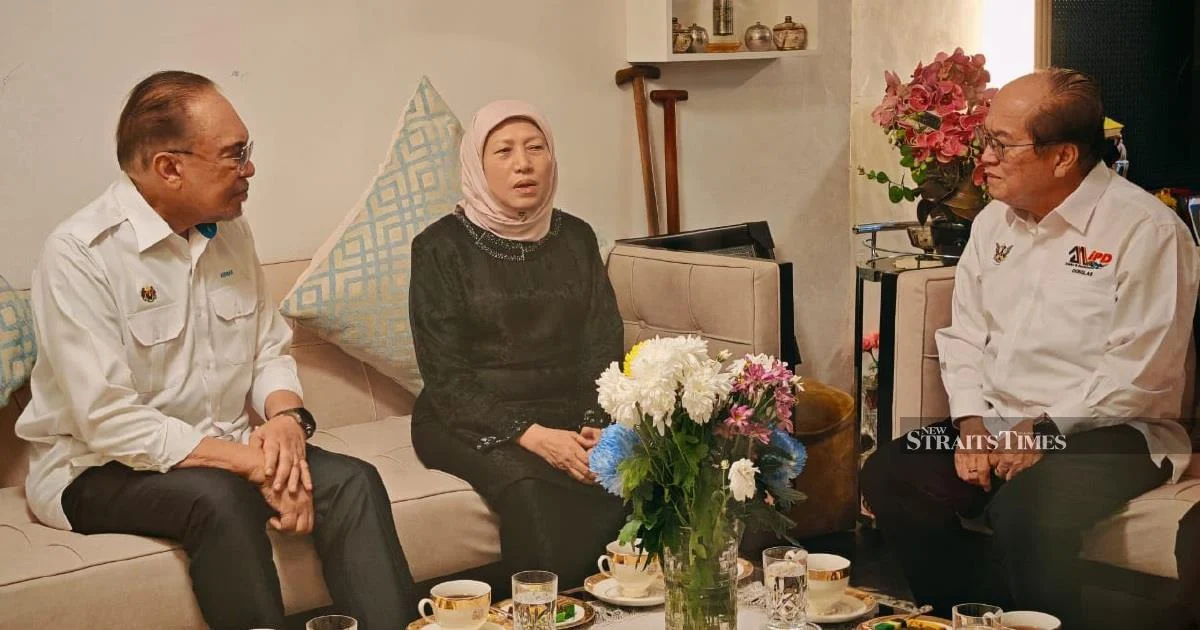
Prime Minister Datuk Seri Anwar Ibrahim travelled to Kuching to pay his personal respects to Women, Family and Community Development Minister Datuk Seri Nancy Shukri following the death of her husband, Datuk Kamil Misuari. The gesture underscores the close working relationships within Malaysia's ministerial circles, particularly at a time when senior government figures observe the customs of expressing solidarity during personal loss.
Nancy Shukri, who serves as the Women, Family and Community Development Minister in the current administration, has been a significant figure in Malaysian politics. Her portfolio covers crucial social policy areas that affect millions of families nationwide, and her work has intersected with various national initiatives addressing gender equality, family welfare, and community development programmes. The minister represents Kuching in Parliament and maintains considerable influence within her political party and the broader government structure.
The passing of Datuk Kamil Misuari represents a personal tragedy for the minister and her family at a time when she continues her ministerial responsibilities. In Malaysian political culture, high-level condolence visits from the Prime Minister carry considerable symbolic weight, demonstrating institutional recognition of the minister's contributions and affirming the bonds of fellowship that unite the cabinet. Such visits are customary practice when senior ministers face significant personal loss.
Anwar Ibrahim's decision to make the journey to Sarawak reflects the protocols observed at the highest levels of government. The Prime Minister's office maintains a careful schedule of official duties, and the allocation of time for such personal visits indicates the priority placed on maintaining morale and demonstrating leadership empathy within the cabinet structure. This approach has characterized Anwar's tenure as Prime Minister, emphasizing personal touch and direct engagement with colleagues during difficult circumstances.
The visit also carries broader significance within the context of government stability and cohesion. Malaysia's political landscape has experienced considerable turbulence in recent years, with frequent changes in administration and coalition arrangements. Moments of collective grief and mutual support among senior ministers help reinforce the institutional bonds that keep the government functioning effectively. These occasions transcend the usual partisan or procedural divisions that may exist between different government factions.
Nancy Shukri's ministerial portfolio places her at the intersection of several important national conversations. The Women, Family and Community Development Ministry oversees policies related to domestic welfare, children's protection, women's empowerment programmes, and community cohesion initiatives. During her tenure, the minister has been involved in implementing various government schemes and responding to social policy challenges affecting Malaysian households.
Sarawak, where the condolence visit took place, represents an important political jurisdiction for Malaysia's federal government. The state's unique constitutional arrangements and significant representation in Parliament make it a crucial arena for maintaining strong central government relationships. Official visits by the Prime Minister to Sarawak carry additional diplomatic significance beyond routine ministerial matters, reflecting the careful attention paid to managing federal-state relations in Malaysia's complex political system.
The timing and nature of Anwar's visit demonstrate how contemporary Malaysian governance balances formal state business with the human dimensions of political life. While the Prime Minister's schedule remains packed with policy decisions, international engagements, and parliamentary matters, this condolence visit illustrates the expectation that senior leaders maintain personal connections with their ministerial colleagues during moments of personal hardship.
For Nancy Shukri, continuing her ministerial duties while managing personal grief represents the reality facing many senior government officials. The minister's ability to maintain her portfolio responsibilities during this period will likely receive acknowledgment from her peers, while the government's institutional response to her loss—symbolized by the Prime Minister's visit—offers the kind of professional and personal support that helps senior leaders navigate difficult transitions.
The incident also reflects the continued importance of traditional courtesy and respect within Malaysia's formal political institutions, even as broader political alignments shift and policy debates become more intense. These moments of collective respect and mutual support provide a counterpoint to the adversarial aspects of Malaysian politics, reminding both the public and political actors of the human bonds that ultimately underlie institutional governance.
%22%2F%3E%3C%2Fpattern%3E%3C%2Fdefs%3E%3Crect%20width%3D%22100%25%22%20height%3D%22100%25%22%20fill%3D%22url(%23ph4paxcg)%22%2F%3E%3Crect%20width%3D%22100%25%22%20height%3D%22100%25%22%20fill%3D%22url(%23ph4paxcp)%22%2F%3E%3Ctext%20x%3D%2250%25%22%20y%3D%2250%25%22%20text-anchor%3D%22middle%22%20dominant-baseline%3D%22central%22%20fill%3D%22rgba(255%2C255%2C255%2C0.95)%22%20font-family%3D%22Georgia%2C%20'Times%20New%20Roman'%2C%20serif%22%20font-weight%3D%22700%22%20font-size%3D%22194%22%20letter-spacing%3D%22-0.02em%22%3EHaaland%3C%2Ftext%3E%3C%2Fsvg%3E)
%22%2F%3E%3C%2Fpattern%3E%3C%2Fdefs%3E%3Crect%20width%3D%22100%25%22%20height%3D%22100%25%22%20fill%3D%22url(%23phrd62g)%22%2F%3E%3Crect%20width%3D%22100%25%22%20height%3D%22100%25%22%20fill%3D%22url(%23phrd62p)%22%2F%3E%3Ctext%20x%3D%2250%25%22%20y%3D%2250%25%22%20text-anchor%3D%22middle%22%20dominant-baseline%3D%22central%22%20fill%3D%22rgba(255%2C255%2C255%2C0.95)%22%20font-family%3D%22Georgia%2C%20'Times%20New%20Roman'%2C%20serif%22%20font-weight%3D%22700%22%20font-size%3D%22320%22%20letter-spacing%3D%22-0.02em%22%3EPM%3C%2Ftext%3E%3C%2Fsvg%3E)