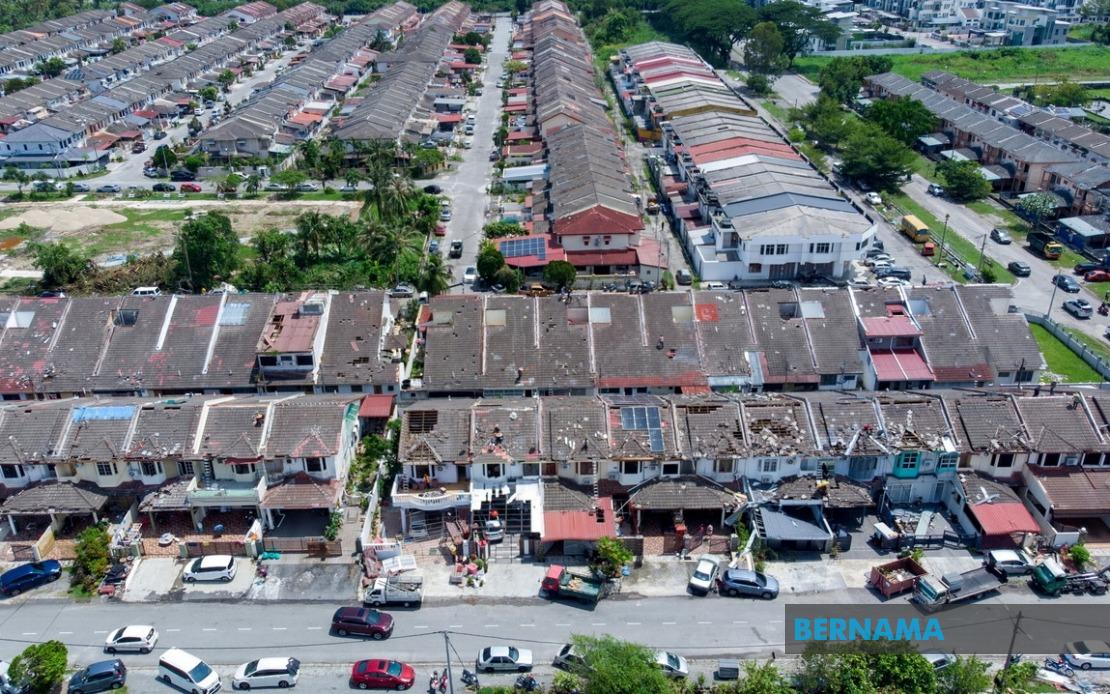
The Ipoh police force has established security perimeters across five separate zones within the storm-ravaged Bercham area, implementing movement controls to guard against opportunistic crimes as residents begin the process of recovery and reconstruction. The decision to seal off these neighbourhoods reflects growing concerns about looting and burglary in disaster-affected communities, a common challenge that emerges during the vulnerable period when homes stand damaged and occupants are focused on salvage and repairs.
According to Ipoh district police chief ACP Muhammad Najib Hamzah, the restrictions do allow residents reasonable access to their properties, particularly those working to salvage belongings and repair damage caused by the meteorological event that struck the area on Friday. The police leadership recognises the practical reality that victims need to enter their homes to assess damage, retrieve valuables, and begin restoration work. However, this flexibility comes with conditions and heightened scrutiny, particularly as darkness falls and visibility decreases.
The enforcement strategy becomes notably more stringent during evening and night hours, when the risk of criminal activity intensifies. Several affected neighbourhoods remain without electrical power following the storm, compounding security challenges and creating opportunities for criminals to operate under cover of darkness. Muhammad Najib indicated that residents who wish to conduct cleanup activities after sunset will face verification checks, requiring them to demonstrate ownership of the properties they are accessing. This measure, while aimed at preventing crime, adds an administrative layer to recovery efforts already complicated by infrastructure damage and personal loss.
The concern animating this stricter nighttime protocol reflects a real problem: thieves and burglars often disguise criminal activity as legitimate cleanup work, taking advantage of the chaos and temporary absence of normal oversight that characterises disaster zones. By requiring identification and verification of property ownership during night hours, police hope to create sufficient friction to deter would-be looters while still allowing genuine residents to protect their interests. The approach represents a balance between security and pragmatism, acknowledging both the legitimate needs of victims and the genuine security threats they face.
As of the morning of June 21, the police had documented 492 storm-related reports through Op Bencana, the government's disaster response operation framework. Significantly, authorities have indicated that there is no time limit for victims to lodge complaints or reports of damage and loss, allowing residents to file documentation at their own pace as they complete damage assessments and insurance evaluations. This open-ended reporting window acknowledges that in the immediate aftermath of disaster, victims are often in shock or focused on survival and protection rather than paperwork.
Despite the relatively clear accounting of incidents reported, the total financial impact of the storm remains uncertain. Muhammad Najib stated that the complete extent of losses across all affected areas has not yet been calculated, suggesting that damage assessment is still ongoing. This assessment phase is crucial for understanding the scale of recovery needed and informing allocation of government assistance and insurance payouts. Preliminary indications from neighbourhood officials suggest that the damage was substantial, with one report indicating that more than 200 residential structures sustained damage across the Bercham locality.
M. Kulasegaran, Member of Parliament for Ipoh Barat and Deputy Minister in the Prime Minister's Department (Law and Institutional Reform), characterised the meteorological event as extraordinary and unprecedented in its violence and impact. Kulasegaran attributed the damage pattern to a landspout phenomenon—a rare and concentrated vortex of rotating air that forms over land, similar to a tornado but typically smaller and of shorter duration. This classification carries significance because landspouts represent extreme weather events that communities cannot easily predict or prevent, underscoring the randomness of natural disaster and the importance of disaster preparedness and response mechanisms.
The neighbourhoods bearing the brunt of the damage form a cluster within the greater Bercham area, encompassing Anjung Bercham Utara, Taman Mujur, Kampung Bercham, Kampung Tersusun Tasek, Taman Pusat Bercham and Taman Indah Sakti. This geographic concentration suggests that the storm's destructive path was narrowly focused, sparing some communities while inflicting concentrated damage on others—a pattern consistent with landspout activity. Such selective destruction creates pockets of intense recovery need alongside relatively unaffected neighbourhoods, potentially complicating coordination of relief and reconstruction resources.
The deployment of the Incident Control Post (PKTK) at Bercham police station indicates that authorities have established a centralised command structure for coordinating response operations, intelligence gathering, and inter-agency cooperation. This infrastructure provides a focal point for communication between residents and officials, for tracking ongoing incidents and recovery progress, and for deploying personnel and resources to areas of greatest need. The visible presence of coordinated institutional response, represented by the police chief's inspection of these facilities and media briefings, serves both practical and psychological functions—it demonstrates government capacity and commitment while providing residents with information about support available to them.
For Malaysian readers and broader Southeast Asian audiences, this incident illustrates the vulnerability of residential communities to extreme weather phenomena and the critical importance of integrated disaster response frameworks. The police response demonstrates how security considerations intersect with humanitarian needs during recovery phases, requiring sophisticated coordination between law enforcement and other agencies. As climate patterns potentially create conditions for more frequent or intense extreme weather events across the region, the experience in Bercham offers lessons about effective initial response, protection of affected communities against secondary victimisation through crime, and the importance of clear communication with residents navigating traumatic circumstances.
%22%2F%3E%3C%2Fpattern%3E%3C%2Fdefs%3E%3Crect%20width%3D%22100%25%22%20height%3D%22100%25%22%20fill%3D%22url(%23ph3cdu7g)%22%2F%3E%3Crect%20width%3D%22100%25%22%20height%3D%22100%25%22%20fill%3D%22url(%23ph3cdu7p)%22%2F%3E%3Ctext%20x%3D%2250%25%22%20y%3D%2250%25%22%20text-anchor%3D%22middle%22%20dominant-baseline%3D%22central%22%20fill%3D%22rgba(255%2C255%2C255%2C0.95)%22%20font-family%3D%22Georgia%2C%20'Times%20New%20Roman'%2C%20serif%22%20font-weight%3D%22700%22%20font-size%3D%22320%22%20letter-spacing%3D%22-0.02em%22%3EData%3C%2Ftext%3E%3C%2Fsvg%3E)

%22%2F%3E%3C%2Fpattern%3E%3C%2Fdefs%3E%3Crect%20width%3D%22100%25%22%20height%3D%22100%25%22%20fill%3D%22url(%23ph1nj3dg)%22%2F%3E%3Crect%20width%3D%22100%25%22%20height%3D%22100%25%22%20fill%3D%22url(%23ph1nj3dp)%22%2F%3E%3Ctext%20x%3D%2250%25%22%20y%3D%2250%25%22%20text-anchor%3D%22middle%22%20dominant-baseline%3D%22central%22%20fill%3D%22rgba(255%2C255%2C255%2C0.95)%22%20font-family%3D%22Georgia%2C%20'Times%20New%20Roman'%2C%20serif%22%20font-weight%3D%22700%22%20font-size%3D%22151%22%20letter-spacing%3D%22-0.02em%22%3ETraveller%3C%2Ftext%3E%3C%2Fsvg%3E)