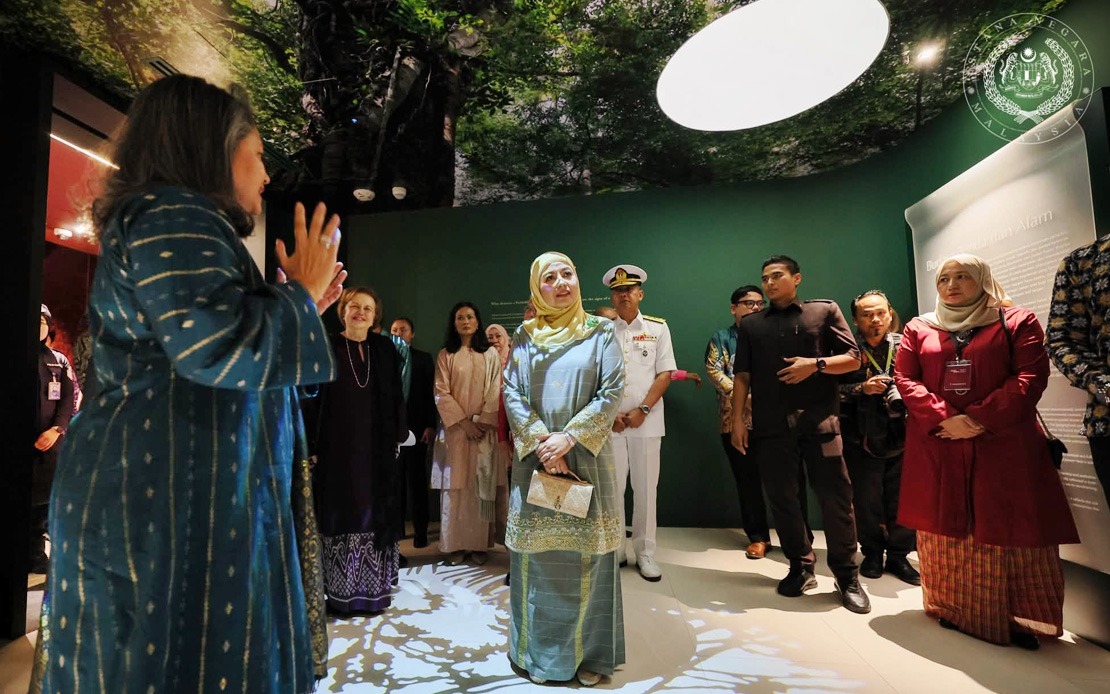
Her Majesty Queen Raja Zarith Sofiah officially inaugurated the Merdeka Textile Museum at Menara Merdeka Maybank in Kuala Lumpur on August 21, marking a significant milestone in Malaysia's commitment to preserving its rich cultural legacy. The facility, developed by PNB Merdeka Ventures Sdn Bhd—a fully-owned arm of Permodalan Nasional Berhad—represents an ambitious initiative to safeguard and celebrate the textile heritage of the Malay world through immersive storytelling and hands-on cultural engagement.
The Queen underscored the fundamental importance of heritage preservation during the ceremony, emphasizing that every nation possesses a distinct cultural inheritance that deserves recognition, careful stewardship, and transmission to succeeding generations. This statement reflects broader concerns across Southeast Asia about the erosion of traditional knowledge systems amid rapid modernization and globalization. In the Malaysian context, where diverse ethnic communities coexist, establishing dedicated heritage institutions serves not only cultural purposes but also strengthens national cohesion by validating and elevating local traditions.
Raja Zarith Sofiah articulated a vision of the museum as a vital educational and research hub that would engage all Malaysians, particularly highlighting its potential to inspire contemporary women and youth. Her remarks, shared through Sultan Ibrahim Sultan Iskandar's social media channels, carried particular weight regarding the generational transmission of cultural values. The Queen's concern that traditional knowledge could vanish without deliberate conservation efforts speaks to the accelerating pace of social change in Malaysia, where younger cohorts increasingly engage with global rather than localized cultural frameworks.
The museum's centerpiece comprises a curated collection of remarkable personal artifacts assembled by the late Sharifah Azah Syed Mohammed Alsagoff, known as Azah Aziz. This historical figure held significant family connections to Malaysia's banking and administrative elite—she was the spouse of the late Prof Diraja Ungku Abdul Aziz Abdul Hamid and mother of Tan Sri Dr Ungku Zeti Akhtar Aziz, the former Bank Negara Malaysia governor. The Azah Aziz family's decision to donate these treasured pieces to public stewardship represents a meaningful contribution to national cultural infrastructure.
The donated collection encompasses 240 distinct garments and 69 pieces of traditional jewelry, encompassing iconic textile forms such as songket sarongs, Limar Baju Kurung ensembles, and Tekat Emas ornamented pieces. Songket, in particular, represents one of Malaysia's most recognizable cultural exports—hand-woven silk and gold-thread fabric traditionally worn during ceremonial occasions. The inclusion of such comprehensive examples enables the museum to document not merely finished products but to trace the evolution, regional variations, and manufacturing techniques underlying these distinctive art forms. The Tekat Emas tradition, involving intricate gold threadwork embroidery, exemplifies the sophisticated textile craftsmanship that has characterized Southeast Asian culture for centuries.
The architectural and programmatic design of the Merdeka Textile Museum reflects contemporary museum practice standards. Eight thematic galleries organize the collections and contextual material, enabling visitors to navigate textile heritage through structured learning pathways. Beyond exhibition spaces, the facility incorporates an integrated study center housing specialized equipment and resources for textile professionals and researchers. The conservation laboratory addresses the practical challenge of maintaining fragile historic textiles in Malaysia's tropical climate, where humidity and environmental factors pose preservation threats.
The fabric library component enables comparative analysis and research accessibility, allowing scholars and practitioners to examine textile samples in standardized conditions. This feature proves particularly valuable for designers, craftspeople, and students seeking to understand traditional techniques for potential contemporary applications. The textile knowledge center functions as an information hub, potentially housing archives, oral histories, and documentation related to Malaysian textile traditions across various ethnic communities. Such interdisciplinary resources strengthen the museum's utility beyond ceremonial visitation.
The formal proceedings included several prominent government figures and institutional leaders. Hannah Yeoh, serving as Minister in the Prime Minister's Department with responsibility for Federal Territories, represented the federal administration's commitment to cultural infrastructure development. Tan Sri Shamsul Azri Abu Bakar, the Chief Secretary to the Government, attended in his capacity overseeing Malaysia's civil service apparatus. Raja Tan Sri Arshad Raja Tun Uda, chairman of the PNB group, underscored the private sector's collaborative role in national cultural preservation. This multi-stakeholder attendance reflected recognition across government, administration, and business circles that textile heritage preservation constitutes a matter of national significance.
For Malaysian readers and the broader Southeast Asian region, the museum's opening carries implications extending beyond cultural nostalgia. As global fashion industries increasingly seek authentic cultural narratives and sustainable production practices, detailed knowledge of traditional textile methods offers economic potential for artisan communities. Documentation of heritage techniques creates opportunities for contemporary designers to develop products that honor cultural authenticity while meeting modern aesthetic preferences. The museum thus positions itself at the intersection of cultural preservation, educational advancement, and economic potential.
The timing of the museum's inauguration, during Malaysia's post-pandemic recovery phase, also signaled confidence in cultural tourism's role within the nation's economic diversification strategy. International visitors increasingly seek immersive cultural experiences rather than conventional tourist attractions, and heritage institutions provide such opportunities while generating sustainable employment for preservation specialists, educators, and hospitality workers. Kuala Lumpur's central location and existing infrastructure make it an accessible venue for both domestic and international audiences.
The Merdeka Textile Museum ultimately represents a deliberate institutional choice to validate and celebrate Malay-world textile traditions through scholarly rigor, aesthetic appreciation, and public accessibility. By housing this collection within a dedicated, professionally-managed facility equipped with conservation and research capabilities, Malaysia demonstrates commitment to treating textile heritage with the same institutional seriousness traditionally reserved for visual arts, manuscripts, or historical artifacts. This approach elevates textile work from folk craft categorization to recognized cultural achievement deserving specialized study and celebration.
Moving forward, the museum's success will depend upon sustained institutional support, regular public engagement programming, and strategic partnerships with educational institutions and international heritage organizations. The Queen's emphasis on youth engagement and intergenerational transmission suggests that visitor programming should prioritize school groups, university students, and apprenticeship opportunities for emerging textile artisans. Such initiatives would transform the museum from a repository of historical objects into a living cultural institution actively shaping Malaysia's textile future.

