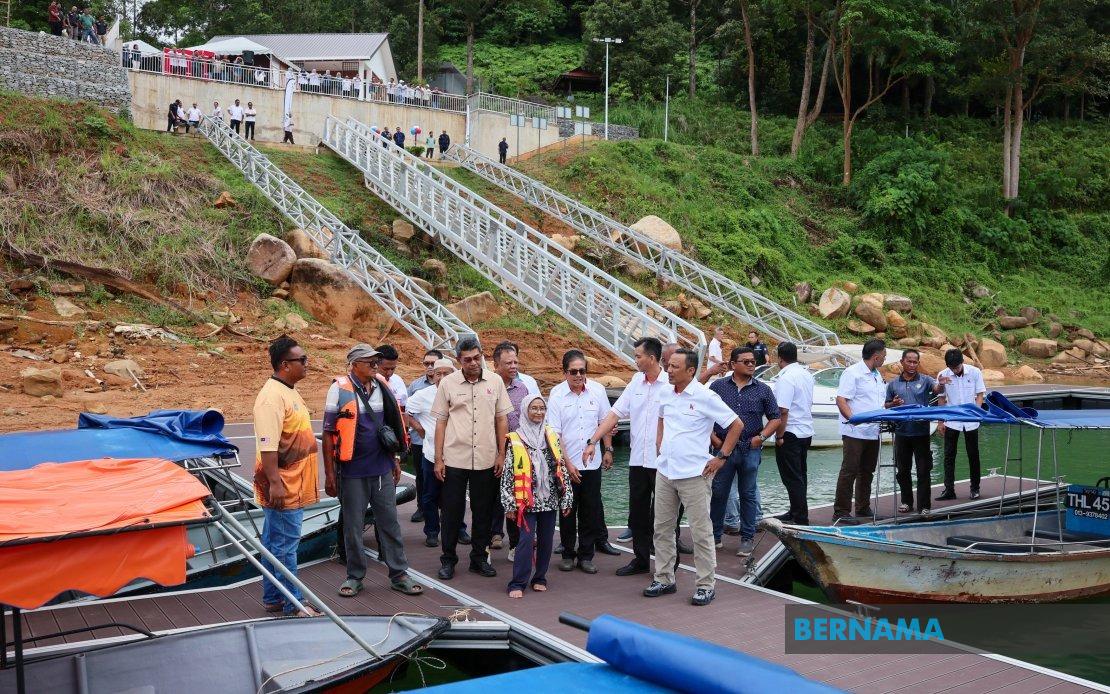
A major infrastructure project has been handed over at Tasik Kenyir, Terengganu's celebrated man-made lake, with the completion of an RM8.7 million jetty development aimed at transforming how the destination manages its growing tourism operations. Opened on July 6, the facility represents a significant investment in regional tourism infrastructure under Malaysia's 11th Malaysia Plan, with the Terengganu Tengah Development Authority (KETENGAH) championing the initiative to address long-standing operational challenges at one of the country's most distinctive ecotourism attractions.
The jetty project emerges from a recognised need to impose order on what had become increasingly haphazard boat berthing practices around Pengkalan Gawi. According to KETENGAH chairman Datuk Rozi Mamat, the unorganised docking of vessels had created operational inefficiencies and detracted from the professional presentation that international tourism destinations require. By consolidating boat facilities into a single, purpose-built complex, authorities hope to eliminate the scattered mooring arrangements that have characterised the lake's waterfront for years, establishing instead a unified hub that reflects modern standards expected by international visitors.
The completed facility represents a comprehensive approach to waterfront development rather than a simple pier construction. The jetty can accommodate more than 80 houseboats and speedboats simultaneously, each with access to electricity and water supply—amenities previously unavailable at scattered berthing points. Beyond the docking infrastructure itself, the project incorporates a 600-metre pedestrian walkway designed to improve visitor flow and safety, complemented by 86 parking bays that address the constant challenge of vehicle congestion at popular tourist attractions in rural Terengganu. Public facilities including toilets, a guard post, an electrical substation, a pump house and waste disposal infrastructure complete the installation, each element carefully considered to support the operational demands of a busy tourist destination.
Tasik Kenyir occupies a distinctive position within Malaysia's tourism landscape. Unlike coastal beach destinations that dominate regional tourism promotion, the artificial lake offers visitors an immersive freshwater ecotourism experience characterised by fishing opportunities, wildlife observation and tranquil water-based activities. This differentiation provides genuine competitive advantage in a crowded Asian tourism market where many destinations vie for the same coastal leisure visitor. However, realising this potential has required deliberate investment in infrastructure that meets contemporary expectations—a challenge that smaller, inland destinations often struggle to address with limited resources.
The timing of this jetty completion reflects broader strategic thinking about regional development priorities. KETENGAH received RM48.36 million in development allocations during the current financial year for implementation across 28 separate programmes and projects spanning its jurisdictional areas of Dungun, Hulu Terengganu and Kemaman. This substantial allocation underscores government recognition that the central Terengganu region requires targeted investment to compete effectively within Malaysia's tourism economy. The jetty represents just one element of a coordinated development strategy; alongside it, six other initiatives are progressing at Tasik Kenyir itself, including upgrades at the Sungai Petang Kelah Sanctuary Complex, repairs to slopes at tourist attractions, redevelopment of facilities at Pulau Petang, construction of a public mini park at Gawi Point and refurbishment of the Herbal Park.
For Malaysia's tourism sector, the Tasik Kenyir investments carry broader implications. Regional destinations compete intensively for domestic and regional leisure spending, with infrastructure quality directly influencing visitor satisfaction and repeat visitation rates. A well-maintained, professionally managed jetty facility signals to the broader hospitality ecosystem—accommodation providers, food vendors, activity operators—that the destination is serious about quality improvement, potentially encouraging private sector investment in complementary services. When government commits substantial capital to public infrastructure, it frequently catalyses private sector response that amplifies the development impact.
The project also addresses safety and environmental management concerns that extend beyond mere operational convenience. Modern waste disposal facilities, adequate lighting, security presence and clear traffic patterns reduce accident risks for both visitors and boat operators navigating busy waterways. For a destination dependent on water-based activities, demonstrating commitment to safety and environmental stewardship builds investor confidence and enhances the destination's reputation among risk-conscious tourists increasingly concerned about personal security and environmental impact.
From a developmental perspective, completing the jetty on schedule—construction ran from 2023 through July 2024—indicates reasonable project management capability within KETENGAH, a factor that influences how effectively future allocations will be deployed. In Malaysian regional development contexts, execution capacity often determines whether good intentions translate into tangible visitor benefits. A successfully completed signature project builds institutional credibility necessary to attract support for subsequent phases of development.
Looking forward, the jetty's success will ultimately be measured by whether it generates the intended tourism growth and operational improvements. Datuk Rozi's confidence that the facility will resolve long-standing berthing disorganisation reflects legitimate expectations, but realisation depends on effective enforcement of berthing regulations and continued maintenance standards. Southeast Asian tourism infrastructure frequently faces challenges sustaining quality after initial completion, particularly in regional destinations where ongoing operational budgets may prove insufficient for professional management standards.
The project demonstrates that Malaysia's regional tourism destinations continue attracting deliberate policy investment and capital allocation. For investors, operators and visitors considering Tasik Kenyir's tourism potential, the completed jetty signals institutional commitment to enhancing the destination's appeal and professionalism. As Malaysia competes with increasingly sophisticated regional tourism offerings from Thailand, Indonesia and Vietnam, developments like this jetty facility underscore efforts to ensure that lesser-known domestic attractions can compete on infrastructure and service quality grounds, not merely on novelty or natural appeal.

