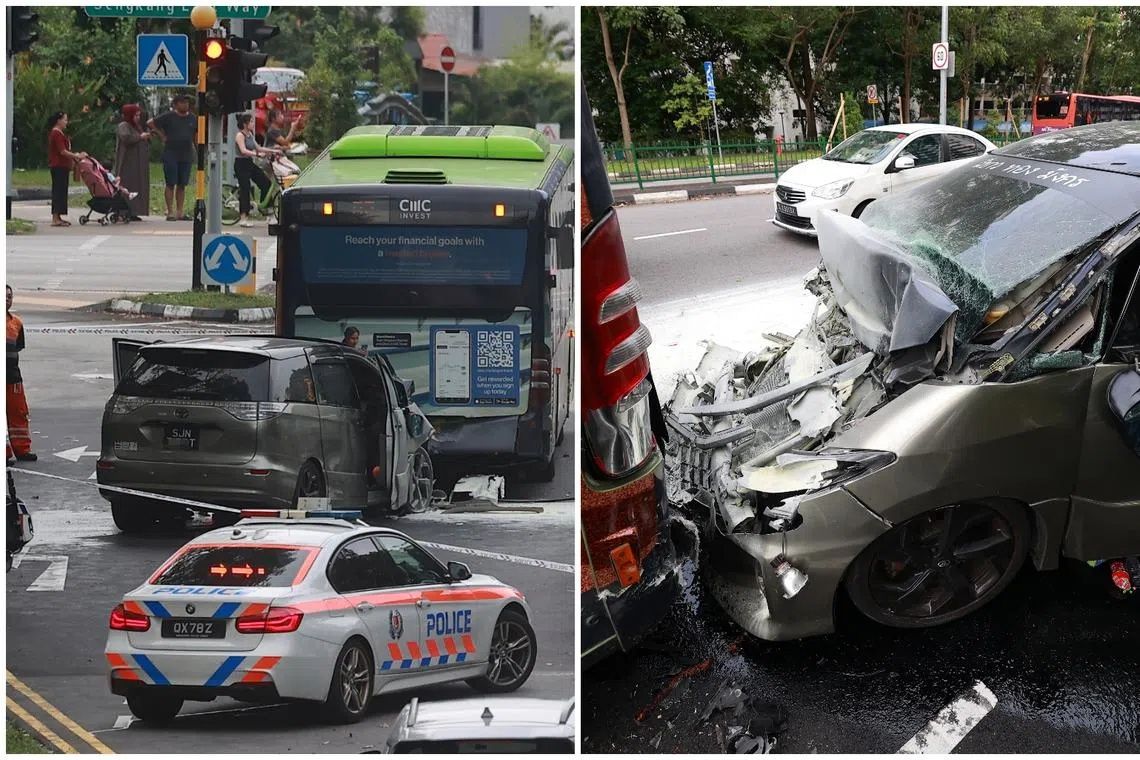
Singapore's emergency medical professionals are raising alarm bells over a dangerous and largely hidden threat to road safety: motorists operating vehicles under the influence of drugs, particularly an anaesthetic compound found in vaporising devices. Three men appeared in court within just twelve days in June after being caught driving while impaired—a pattern that reflects an alarming trend emerging across the island's transport network.
The substance at the centre of this crisis is etomidate, a pharmaceutical anaesthetic that has found its way into recreational vaping products marketed as Kpods. Two of the three charged men were accused of driving while under the influence of methamphetamine, commonly known as Ice, but the third case highlighted a novel and lesser-understood danger: a driver operating a vehicle after inhaling etomidate-laced vapour. This distinction matters because it reveals how quickly novel drug delivery methods can outpace public awareness and law enforcement detection protocols.
Dr Jonathan Tang, a clinical toxicologist based at the National University Hospital's Emergency Medicine Department, has become an inadvertent specialist in this problem through his work treating accident victims. He has personally encountered multiple patients presenting with traumatic injuries sustained in road collisions involving drivers impaired by etomidate. Speaking from clinical experience rather than theoretical knowledge, Tang emphasises that the pharmacological effects mirror alcohol intoxication in their impact on driving ability, fundamentally compromising both the impaired driver's safety and that of everyone else sharing the road.
The human cost is staggering. Between 2023 and 2025, authorities documented 38 traffic accidents directly linked to drug and etomidate use, with nineteen proving fatal. This concentration accelerated sharply in 2025, when twenty-nine of the thirty-eight total incidents occurred—a dramatic year-on-year jump suggesting either increased prevalence or improved detection, or likely both. Among the fatal cases, the breakdown reveals etomidate's particular lethality: nine fatalities involved etomidate alone, whilst ten involved other drugs. The remaining cases involved combinations of substances, including seven accidents featuring both etomidate and other drugs.
One tragedy crystallises the scale of this danger. In May 2025, a vehicle in Punggol collided with a bus after its driver lost control. Police later recovered forty-two vapes and more than twelve hundred pods from the vehicle, with several containing etomidate. The 28-year-old female passenger died from her injuries sustained in the crash. Subsequent toxicology confirmed etomidate in both the driver's and the deceased woman's blood—raising haunting questions about whether she knew what she was inhaling, and whether her presence in the vehicle influenced the driver's judgment or behaviour.
Tang's clinical assessment explains why etomidate poses such a distinctive hazard. The drug induces delayed reaction times, impairs the driver's ability to perceive hazards developing around them, and undermines vehicle control. Yet the danger extends beyond mechanical driving performance. Etomidate use has been associated with psychiatric manifestations including depressed mood, heightened aggression, and increased impulsivity—states of mind that render someone fundamentally unsuitable to operate a vehicle in urban traffic. Some users report suicidal ideation following etomidate use, introducing an additional layer of concern that transcends simple impairment and enters territory where drivers may deliberately cause accidents.
Parliament took notice in February when Member of Parliament Valerie Lee, representing Pasir Ris-Changi GRC, raised concerns about whether the Traffic Police employed standard screening protocols to detect impairment in accident-involved drivers. Coordinating Minister for National Security K. Shanmugam confirmed that Traffic Police do assess for impaired driving at accident scenes, and will order blood tests if drug or etomidate use is suspected. However, the fact that such an explicit parliamentary question was necessary suggests the protocols may not have been sufficiently rigorous or publicised. Shanmugam's revelation of the thirty-eight accidents and nineteen fatalities represented the first systematic public accounting of the problem's true scale.
The legal consequences available to authorities are considerable but may prove insufficient as a deterrent. First-time offenders convicted of driving while under the influence of an intoxicating substance face up to one year imprisonment, a fine reaching S$10,000, or both. Repeat offenders face doubled penalties: up to two years imprisonment and fines up to S$20,000. Yet these punishments arrive only after accidents occur and victims are injured or killed. The challenge is detecting impairment before tragedy strikes, particularly when the substance involved—a recreational vape product—may not trigger the same public recognition as alcohol on the breath.
The three men charged in June exemplify different dimensions of the problem. Mohamed Firdouz Mohamed Akram, aged 36, caused injuries to two people in Kallang after consuming Ice before driving in a manner deemed dangerous. Following the collision with a taxi, he abandoned his vehicle and fled—behaviour suggesting awareness that he had done something wrong. Police subsequently discovered drugs, vaporisers, and weapons in his abandoned car. Puah Zhe Cong, aged 34, was charged with dangerous driving causing death and failing to stop after an accident, with allegations of etomidate use resulting in one death and two injuries. Sivakandesh, aged 32, crashed his Mercedes-Benz into a rubbish chute after consuming methamphetamine, striking bollards and other vehicles before coming to rest. The removal of his registration plates after the accident suggests deliberate effort to evade accountability.
Singapore's overall road safety picture has deteriorated significantly. Traffic deaths reached a ten-year high in 2025 with one hundred and forty-nine fatalities, exceeding the one hundred and forty-one deaths recorded in 2016 and the one hundred and forty-two in 2024. The number of injured persons climbed from nine thousand three hundred and forty-two in 2024 to nine thousand nine hundred and fifty-five in 2025. These figures encompass accidents of all causes, but the drug-impaired driving component represents a particularly preventable subset—one where intervention before the driving occurs, rather than after the accident, becomes feasible through effective detection and enforcement at borders and point-of-sale.
For Malaysian and broader Southeast Asian readers, Singapore's situation carries cautionary weight. The emergence of etomidate-laced Kpods reflects how drug use patterns evolve rapidly across the region, often outpacing regulatory frameworks and public awareness campaigns. If Singapore, with its stringent drug enforcement regime and sophisticated law enforcement apparatus, is experiencing difficulty detecting and preventing etomidate-impaired driving, other jurisdictions may face even greater challenges. The pharmacological profile of etomidate—its anaesthetic properties that impair cognition whilst potentially masking obvious signs of intoxication—makes it particularly insidious compared to traditional drugs of abuse that may produce more visible behavioural changes.
Medical professionals and safety advocates frame this not merely as a law enforcement problem but as a public health crisis requiring multi-faceted response. Detection mechanisms need enhancement, public awareness campaigns must educate drivers and passengers about etomidate's specific dangers, and harm reduction strategies must be considered alongside punishment-based approaches. The fundamental challenge remains that recreational vaping presents as a low-risk behaviour to many users, obscuring the reality that what they inhale may fundamentally impair their ability to operate machinery weighing a tonne or more at urban speeds.
%22%2F%3E%3C%2Fpattern%3E%3C%2Fdefs%3E%3Crect%20width%3D%22100%25%22%20height%3D%22100%25%22%20fill%3D%22url(%23phc4y2g)%22%2F%3E%3Crect%20width%3D%22100%25%22%20height%3D%22100%25%22%20fill%3D%22url(%23phc4y2p)%22%2F%3E%3Ctext%20x%3D%2250%25%22%20y%3D%2250%25%22%20text-anchor%3D%22middle%22%20dominant-baseline%3D%22central%22%20fill%3D%22rgba(255%2C255%2C255%2C0.95)%22%20font-family%3D%22Georgia%2C%20'Times%20New%20Roman'%2C%20serif%22%20font-weight%3D%22700%22%20font-size%3D%22272%22%20letter-spacing%3D%22-0.02em%22%3EMedia%3C%2Ftext%3E%3C%2Fsvg%3E)
%22%2F%3E%3C%2Fpattern%3E%3C%2Fdefs%3E%3Crect%20width%3D%22100%25%22%20height%3D%22100%25%22%20fill%3D%22url(%23ph4h96ng)%22%2F%3E%3Crect%20width%3D%22100%25%22%20height%3D%22100%25%22%20fill%3D%22url(%23ph4h96np)%22%2F%3E%3Ctext%20x%3D%2250%25%22%20y%3D%2250%25%22%20text-anchor%3D%22middle%22%20dominant-baseline%3D%22central%22%20fill%3D%22rgba(255%2C255%2C255%2C0.95)%22%20font-family%3D%22Georgia%2C%20'Times%20New%20Roman'%2C%20serif%22%20font-weight%3D%22700%22%20font-size%3D%22226%22%20letter-spacing%3D%22-0.02em%22%3EHAWANA%3C%2Ftext%3E%3C%2Fsvg%3E)