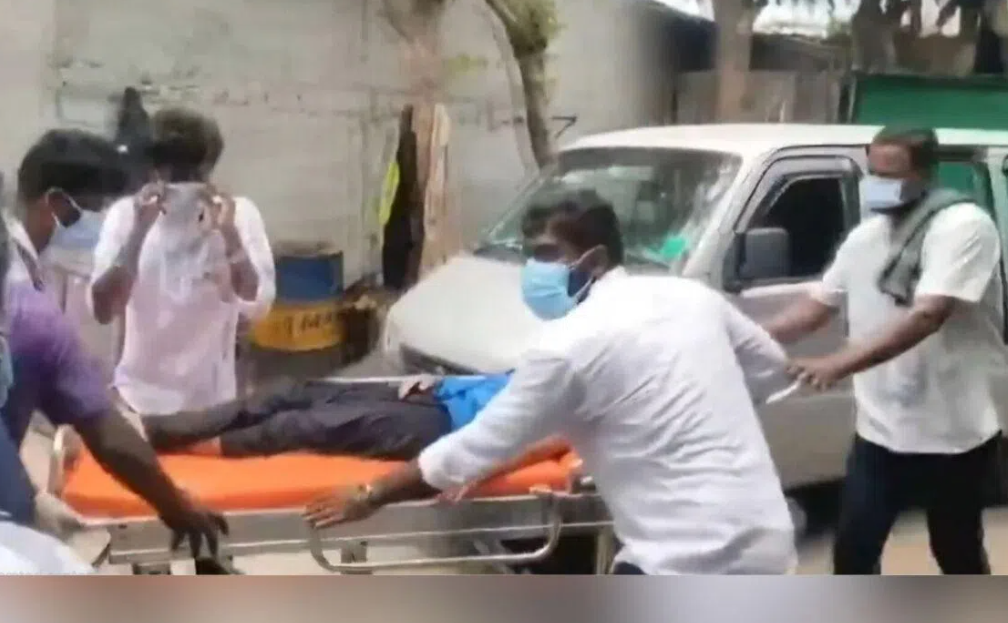
A catastrophic gas leak at a seafood export processing facility in Tamil Nadu's Thiruvallur district has left at least six workers dead and forced dozens more to seek emergency medical treatment. The incident unfolded on Sunday at a plant near Periyapalayam village, where a suspected ammonia discharge from the unit's refrigeration or processing infrastructure rapidly permeated through the workplace, overwhelming personnel with toxic fumes and triggering a desperate scramble for safety.
The facility housed approximately 120 migrant labourers at the time of the accident, a workforce predominantly comprised of women recruited from economically disadvantaged regions including Assam, Odisha and Jharkhand. Their presence in such large numbers during the incident underscores both the scale of industrial operations in the Tamil Nadu seafood export sector and the vulnerability of migrant workers to workplace hazards in India's food processing industry. These workers, many of whom come from impoverished communities seeking employment opportunities, often lack adequate knowledge of workplace safety protocols or the confidence to raise concerns about hazardous conditions.
The physiological impact on exposed workers proved severe and immediate. Those caught in the ammonia cloud experienced acute respiratory distress, vertigo and significant irritation to eyes and mucous membranes. Some casualties displayed more alarming symptoms, including bleeding from the nose and mouth—signs suggesting exposure levels sufficient to cause tissue damage and potentially life-threatening physiological responses. The intensity of these symptoms reflected the concentration and duration of gas exposure experienced by workers in proximity to the leak's source.
Chaos engulfed the premises as workers sought to flee the contaminated areas, with some collapsing mid-escape as the toxic gas overwhelmed their respiratory systems. Emergency personnel, including police units and local authorities, mobilised rapidly and transported affected individuals to nearby medical facilities where they were admitted for intensive care. Hospital records indicate that several patients remain in critical condition, their prognoses uncertain as medical teams work to manage respiratory damage and systemic toxicity from ammonia exposure.
Tamil Nadu's Chief Minister C. Joseph Vijay responded swiftly to the disaster, publicly expressing grave concern and directing state officials to ensure comprehensive medical support for the injured. His administration has prioritised investigation into root causes, establishing a three-member inquiry committee tasked with examining the circumstances that culminated in the leak. The committee has been mandated to complete an immediate facility inspection and deliver a comprehensive report within 24 hours—an aggressive timeline reflecting the political importance attached to establishing accountability.
The investigation framework encompasses multiple critical dimensions. Authorities will scrutinise existing safety protocols at the facility, examining whether standard industrial practices for handling ammonia were properly documented and consistently implemented. Maintenance procedures for refrigeration equipment will come under intense scrutiny, as such systems represent the most probable source of leaks when inadequately serviced or inspected. The inquiry will also assess potential regulatory violations and negligence by facility management, determining whether operators failed to comply with mandatory industrial safety standards established under Indian labour and environmental law.
For Malaysia and the broader Southeast Asian region, this incident carries significant implications. The Tamil Nadu seafood export sector supplies substantial volumes to international markets, including Malaysian importers and distributors who rely on Indian suppliers for frozen and processed seafood products. Many Malaysian food importers and retailers maintain commercial relationships with facilities in Tamil Nadu's Thiruvallur district, making compliance and safety standards at these plants matters of direct relevance to regional supply chains and consumer protection.
The tragedy also highlights systemic vulnerabilities affecting migrant workers across South and Southeast Asia. Indian seafood processing facilities frequently employ cross-regional migrant labour forces, replicating patterns common throughout ASEAN manufacturing and food processing sectors. These workers typically operate with minimal job security, limited access to safety training, and restricted capacity to challenge unsafe working conditions without risking employment. The concentration of 120 labourers from multiple states at a single facility reflects how Indian employers leverage internal migration to secure flexible, relatively inexpensive workforces—a model replicated across Malaysia, Thailand and Indonesia.
The police investigation has already commenced formal proceedings, with charges expected as authorities determine responsibility. Officials are currently evaluating whether the facility had maintained current certifications for ammonia handling and whether operators had conducted mandated safety audits. The focus on regulatory compliance reflects recognition that industrial disasters typically result not from isolated equipment failures but from systemic negligence—inadequate training, deferred maintenance, insufficient safety equipment and management indifference to hazard mitigation.
This disaster exposes broader questions about workplace safety governance in India's rapidly expanding food export sector. As global demand for seafood products intensifies, processing facilities have expanded capacity without proportionate investment in safety infrastructure. Workers from disadvantaged communities, unfamiliar with industrial hazards and dependent on employment for survival, bear the human cost of this expansion. The incident will likely trigger heightened scrutiny from Malaysian importers and international buyers concerned about supply chain safety and worker welfare—potentially influencing sourcing decisions and compliance requirements for Indian suppliers serving Southeast Asian markets.
%22%2F%3E%3C%2Fpattern%3E%3C%2Fdefs%3E%3Crect%20width%3D%22100%25%22%20height%3D%22100%25%22%20fill%3D%22url(%23ph2rbueg)%22%2F%3E%3Crect%20width%3D%22100%25%22%20height%3D%22100%25%22%20fill%3D%22url(%23ph2rbuep)%22%2F%3E%3Ctext%20x%3D%2250%25%22%20y%3D%2250%25%22%20text-anchor%3D%22middle%22%20dominant-baseline%3D%22central%22%20fill%3D%22rgba(255%2C255%2C255%2C0.95)%22%20font-family%3D%22Georgia%2C%20'Times%20New%20Roman'%2C%20serif%22%20font-weight%3D%22700%22%20font-size%3D%22136%22%20letter-spacing%3D%22-0.02em%22%3EBangladesh%3C%2Ftext%3E%3C%2Fsvg%3E)
%22%2F%3E%3C%2Fpattern%3E%3C%2Fdefs%3E%3Crect%20width%3D%22100%25%22%20height%3D%22100%25%22%20fill%3D%22url(%23ph51v0dg)%22%2F%3E%3Crect%20width%3D%22100%25%22%20height%3D%22100%25%22%20fill%3D%22url(%23ph51v0dp)%22%2F%3E%3Ctext%20x%3D%2250%25%22%20y%3D%2250%25%22%20text-anchor%3D%22middle%22%20dominant-baseline%3D%22central%22%20fill%3D%22rgba(255%2C255%2C255%2C0.95)%22%20font-family%3D%22Georgia%2C%20'Times%20New%20Roman'%2C%20serif%22%20font-weight%3D%22700%22%20font-size%3D%22170%22%20letter-spacing%3D%22-0.02em%22%3EMalaysia%3C%2Ftext%3E%3C%2Fsvg%3E)