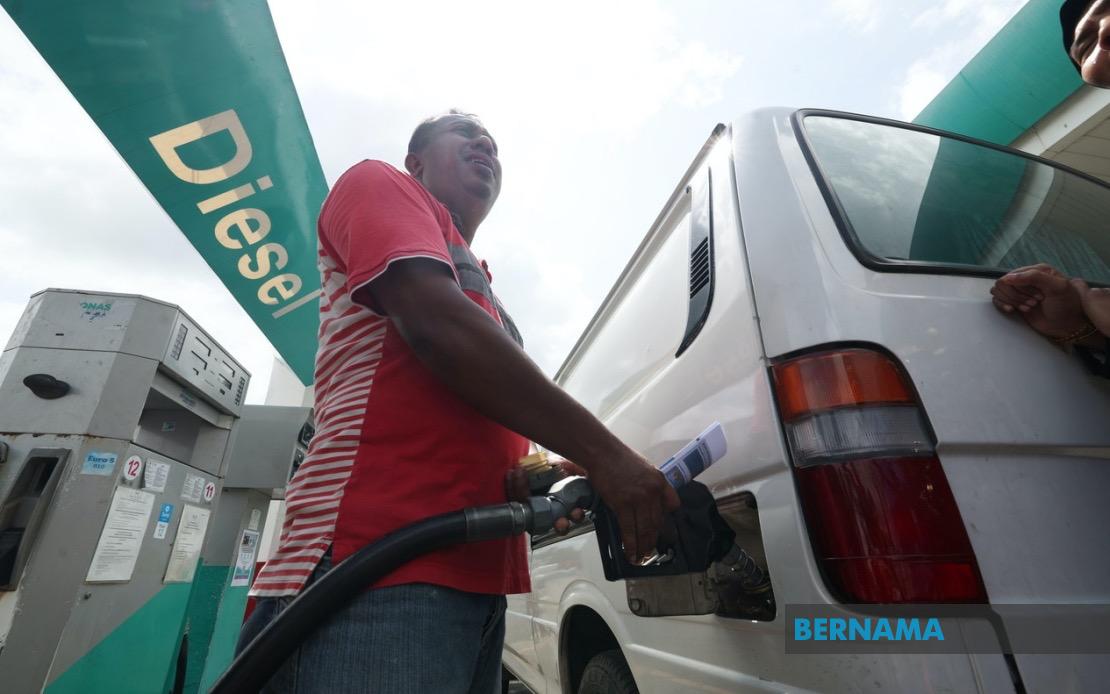
The Malaysian government under Prime Minister Datuk Seri Anwar Ibrahim has unveiled plans to reduce the price of subsidised diesel to RM2.10 per litre beginning in July 2026, marking a significant shift in the nation's fuel subsidy architecture. The announcement, made during an official ceremony in Bintulu, signals the administration's commitment to rationalising energy costs while maintaining affordability for eligible citizens through a more structured approach.
The new pricing structure represents an evolution of the MADANI government's subsidy strategy, moving away from blanket subsidies toward a targeted system that prioritises Malaysian households and small businesses most affected by fuel expenses. This methodology mirrors the success of the BUDI MADANI RON95 (BUDI95) programme, which has proven effective in directing government assistance to deserving recipients while maintaining fiscal discipline. The transition underscores the administration's broader economic philosophy of ensuring equitable distribution of public resources without creating unsustainable budget pressures.
Verification of eligibility will occur through the MyKad system, ensuring that only qualified Malaysian citizens benefit from the reduced diesel pricing. This digital identity-based approach eliminates potential fraud and leakage that has historically plagued subsidy schemes across Southeast Asia. By tying subsidies to individual verification rather than implementing a blanket price cap, the government can more accurately track uptake and manage fiscal impact while preventing abuse by non-eligible parties or commercial operators attempting to exploit the system.
Finance Minister II Datuk Seri Amir Hamzah Azizan is scheduled to provide comprehensive details regarding the implementation mechanics during a media briefing in Kuala Lumpur. These clarifications will likely address critical operational questions including the timeline for system deployment, the process for registering eligible recipients, and mechanisms to prevent cross-border arbitrage where consumers might attempt to purchase subsidised fuel in Malaysia for use or resale elsewhere in the region.
The diesel subsidy reform carries substantial implications for Malaysia's transport and logistics sector, which relies heavily on fuel costs to determine operational economics. Small and medium-sized enterprises engaged in road haulage, commercial fishing, and agriculture will potentially see reduced input costs, though much depends on the precise definition of eligible user categories. The government must balance affordability concerns against the need to prevent commercial operators from exploiting consumer-level pricing structures that could distort market competition.
This initiative also reflects regional trends toward subsidy rationalisation across ASEAN economies. Countries including Indonesia, Thailand, and the Philippines have implemented targeted subsidy programmes to address fiscal sustainability while protecting vulnerable populations. Malaysia's approach, building on the BUDI95 framework's proven success, positions the nation as a thoughtful reformer willing to restructure rather than eliminate social safety nets around essential commodities.
The announcement during the Bintulu Port ceremony, where the facility transitioned from federal to state port status, suggests a broader economic development agenda encompassing infrastructure advancement and fiscal prudence. Sarawak's expanded port autonomy combined with controlled energy costs may enhance the state's competitiveness in downstream industries and logistics hubs serving regional trade networks.
Energy subsidy reform remains politically sensitive across Malaysia given the impact on household budgets and transport costs, which cascade through the economy affecting food prices and consumer goods. The government's decision to implement the new diesel pricing through a transparent, technology-enabled verification system demonstrates an effort to build public confidence in subsidy administration by emphasising fairness and preventing leakage to undeserving recipients.
The July 2026 implementation date provides sufficient lead time for stakeholders including fuel retailers, commercial operators, and eligible citizen groups to prepare for the transition. However, the government must invest in public awareness campaigns to ensure citizens understand their eligibility status and the process for accessing subsidised pricing, preventing confusion that could undermine the programme's effectiveness and public acceptance.
From a macroeconomic perspective, the subsidy reduction to RM2.10 per litre represents a measured step toward normalising fuel prices toward market levels while protecting the vulnerable through targeted support. This contrasts sharply with sudden subsidy removals that have triggered inflation spikes and public unrest in other developing economies. The phased, technology-enabled approach suggests Malaysia is learning from regional experiences and designing subsidy reform that achieves fiscal objectives without creating social instability.
The diesel subsidy framework will also influence Malaysia's broader economic competitiveness, particularly for export-oriented industries dependent on efficient logistics and transportation networks. By maintaining affordable fuel for eligible users while improving cost-targeting precision, the government aims to support productive sectors without creating artificial competitive advantages that might attract inefficient operators or distort resource allocation.
%22%2F%3E%3C%2Fpattern%3E%3C%2Fdefs%3E%3Crect%20width%3D%22100%25%22%20height%3D%22100%25%22%20fill%3D%22url(%23ph4paxcg)%22%2F%3E%3Crect%20width%3D%22100%25%22%20height%3D%22100%25%22%20fill%3D%22url(%23ph4paxcp)%22%2F%3E%3Ctext%20x%3D%2250%25%22%20y%3D%2250%25%22%20text-anchor%3D%22middle%22%20dominant-baseline%3D%22central%22%20fill%3D%22rgba(255%2C255%2C255%2C0.95)%22%20font-family%3D%22Georgia%2C%20'Times%20New%20Roman'%2C%20serif%22%20font-weight%3D%22700%22%20font-size%3D%22194%22%20letter-spacing%3D%22-0.02em%22%3EHaaland%3C%2Ftext%3E%3C%2Fsvg%3E)
%22%2F%3E%3C%2Fpattern%3E%3C%2Fdefs%3E%3Crect%20width%3D%22100%25%22%20height%3D%22100%25%22%20fill%3D%22url(%23phrd62g)%22%2F%3E%3Crect%20width%3D%22100%25%22%20height%3D%22100%25%22%20fill%3D%22url(%23phrd62p)%22%2F%3E%3Ctext%20x%3D%2250%25%22%20y%3D%2250%25%22%20text-anchor%3D%22middle%22%20dominant-baseline%3D%22central%22%20fill%3D%22rgba(255%2C255%2C255%2C0.95)%22%20font-family%3D%22Georgia%2C%20'Times%20New%20Roman'%2C%20serif%22%20font-weight%3D%22700%22%20font-size%3D%22320%22%20letter-spacing%3D%22-0.02em%22%3EPM%3C%2Ftext%3E%3C%2Fsvg%3E)