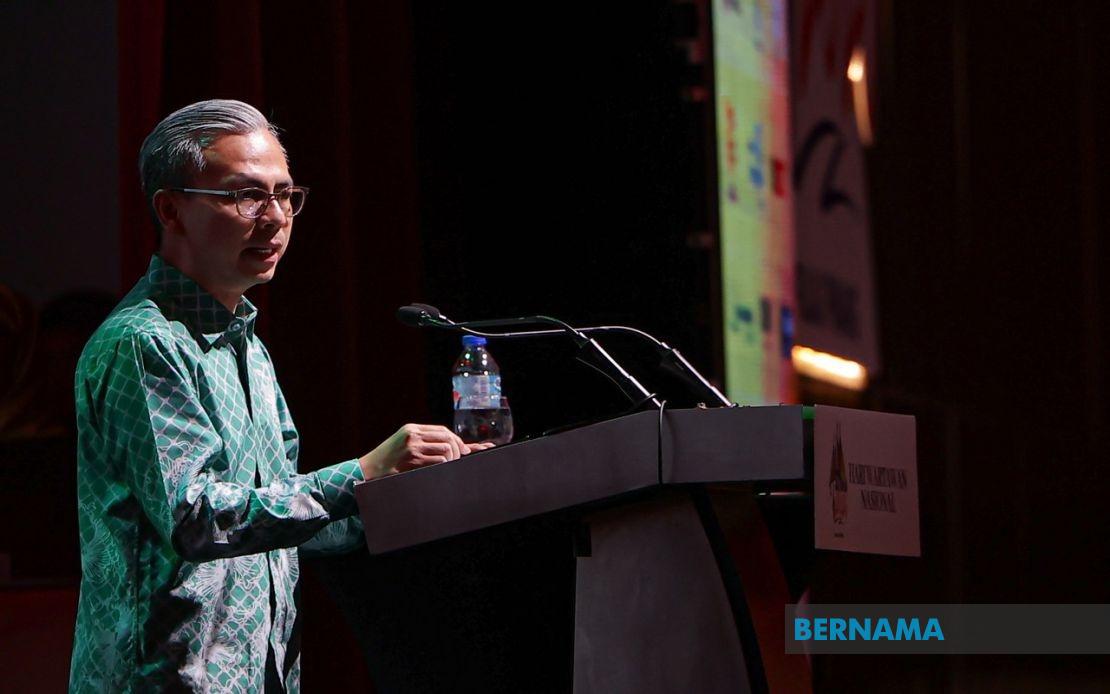
Telekom Malaysia has stepped forward as the new strategic partner of Tabung Kasih@HAWANA, pledging RM500,000 through a corporate social responsibility initiative aimed at strengthening financial support for media practitioners and former media personnel throughout Malaysia. The announcement was made by Communications Minister Datuk Fahmi Fadzil during the National Journalists' Day grand finale in Butterworth, an event that drew Prime Minister Datuk Seri Anwar Ibrahim and other senior officials to underscore the government's commitment to supporting the media sector during a period of substantial economic pressure.
The contribution represents a meaningful commitment to a welfare fund that has operated since April 2023, demonstrating growing recognition among corporate leaders of the financial vulnerabilities facing newsroom workers. Fahmi expressed his gratitude for Telekom Malaysia's initiative, characterising the partnership as emblematic of the kind of corporate engagement needed to sustain Malaysia's media infrastructure at a time when traditional revenue models have deteriorated significantly. The Tabung Kasih@HAWANA has already disbursed RM2.26 million in financial assistance to 773 media practitioners nationwide, addressing urgent welfare needs ranging from medical emergencies to living expenses for journalists facing redundancy or reduced working hours.
The timing of this partnership announcement carries particular significance given the sector's escalating financial crisis. Malaysia's annual advertising expenditure has contracted sharply from RM4.5 billion to approximately RM2 billion in recent years, a decline that has fundamentally reshaped the economic viability of traditional media organisations. This structural shift has forced many news outlets to reduce staff levels, cut salaries, and scale back investigative journalism—the very work that underpins media credibility and democratic accountability. Fahmi used the platform to make an explicit appeal to government-linked companies and private enterprises to redirect their media spending towards local publications, recognising that external financial support through CSR partnerships alone cannot address the systemic revenue collapse facing the industry.
Fahmi articulated a broader vision for corporate sector engagement with Malaysia's media ecosystem, extending beyond simple donation models to encompass strategic collaborations, sponsorships, and industry development initiatives. He positioned Telekom Malaysia's partnership as a template for how large corporations might contribute to media sustainability while building reputational value through association with journalism and information integrity. This framing acknowledges a reality that many multinational and large domestic firms have yet to fully embrace: the health of local media represents a public good with direct relevance to corporate operating environments, supply chain stability, and consumer trust.
Within this context, the ministry is simultaneously advancing Project Sigma 2.0, a Google Malaysia-led initiative developed in collaboration with the Malaysian Media Council and Malaysian Press Institute. The project specifically targets technological and artificial intelligence skill development for media professionals, recognising that adaptation to digital transformation has become non-negotiable for journalists seeking employment security. This complementary initiative addresses a different dimension of media sector challenges—not immediate financial hardship but the skills gap that threatens to render experienced journalists obsolete in rapidly evolving newsrooms. Fahmi's promotion of this project signals ministerial awareness that corporate social responsibility must encompass workforce development, not merely welfare disbursements.
Regional cooperation has also featured prominently in contemporary media policy discussions. Bernama, Malaysia's national news agency, signed a memorandum of understanding with TATOLI, the national news agency of Timor-Leste, reflecting expanding collaborative frameworks within ASEAN. This agreement carries symbolic weight given Timor-Leste's recent accession to ASEAN as the 11th member state, and Fahmi explicitly linked the media partnership to broader regional integration objectives. The collaboration underscores commitment to information exchange, credible journalism standards, and diplomatic coordination among Southeast Asian nations during a period of geopolitical complexity and increasing information warfare concerns.
For Malaysian business readers, these developments signal several convergent trends shaping the media landscape. First, corporate engagement with media sector challenges is deepening, with large companies increasingly recognising that a functioning fourth estate serves their interests through market transparency and institutional accountability. Second, technological transformation of journalism is accelerating, creating both disruption and opportunity for professionals willing to acquire new competencies. Third, regional integration is expanding media cooperation frameworks, potentially creating cross-border opportunities for news organisations and individual practitioners with language skills and regional awareness.
The Tabung Kasih@HAWANA initiative itself warrants closer attention from corporate strategists. Operating as a dedicated welfare fund managed by industry bodies, it creates a visible mechanism through which companies can demonstrate social responsibility commitment while providing tangible assistance to practitioners. The fund's operation since April 2023 has established administrative capacity and credibility, reducing barriers for additional corporate partners considering similar contributions. Telekom Malaysia's strategic partnership effectively endorses the fund's governance model while leveraging the association with media support to strengthen corporate brand positioning.
However, observers should recognise the underlying tension in current policy messaging. While Fahmi appeals to companies to increase media buys and CSR contributions, the fundamental challenge remains structural: advertising revenue has migrated to digital platforms, particularly Google and Meta, leaving traditional media organisations without the income base necessary to sustain quality journalism. Corporate partnerships and welfare funds provide essential safety nets and marginal improvements to newsroom sustainability, but they cannot reverse the underlying business model transformation reshaping global media. Malaysian media companies must ultimately develop digital revenue strategies through subscriptions, affiliated commerce, and premium content offerings—a process requiring capital investment and experimentation that extends well beyond corporate philanthropy.
The ministerial emphasis on strengthening regional media cooperation through the Bernama-TATOLI arrangement suggests recognition that Southeast Asian media organisations possess collective leverage in an increasingly concentrated global information space. Coordinated approaches to artificial intelligence standards, fact-checking protocols, and editorial independence safeguards could position the region as a credible alternative to Western-dominated international news agencies and Chinese state-affiliated competitors. This dimension of media policy carries implications for Malaysia's broader regional diplomacy and technological sovereignty objectives beyond the immediate welfare and employment concerns of individual practitioners.
Looking forward, the convergence of welfare support, skills development, and regional cooperation initiatives indicates a multifaceted government approach to media sector challenges. Telekom Malaysia's partnership represents the type of corporate engagement ministers hope will multiply across the business community, while Project Sigma 2.0 addresses workforce modernisation and the Bernama-TATOLI collaboration frames media as a strategic regional asset. Whether these complementary initiatives prove sufficient to stabilise Malaysia's media ecosystem amid continued revenue pressure remains an open question, but they collectively demonstrate policymaker commitment to supporting a sector widely recognised as essential to democratic governance and economic transparency.