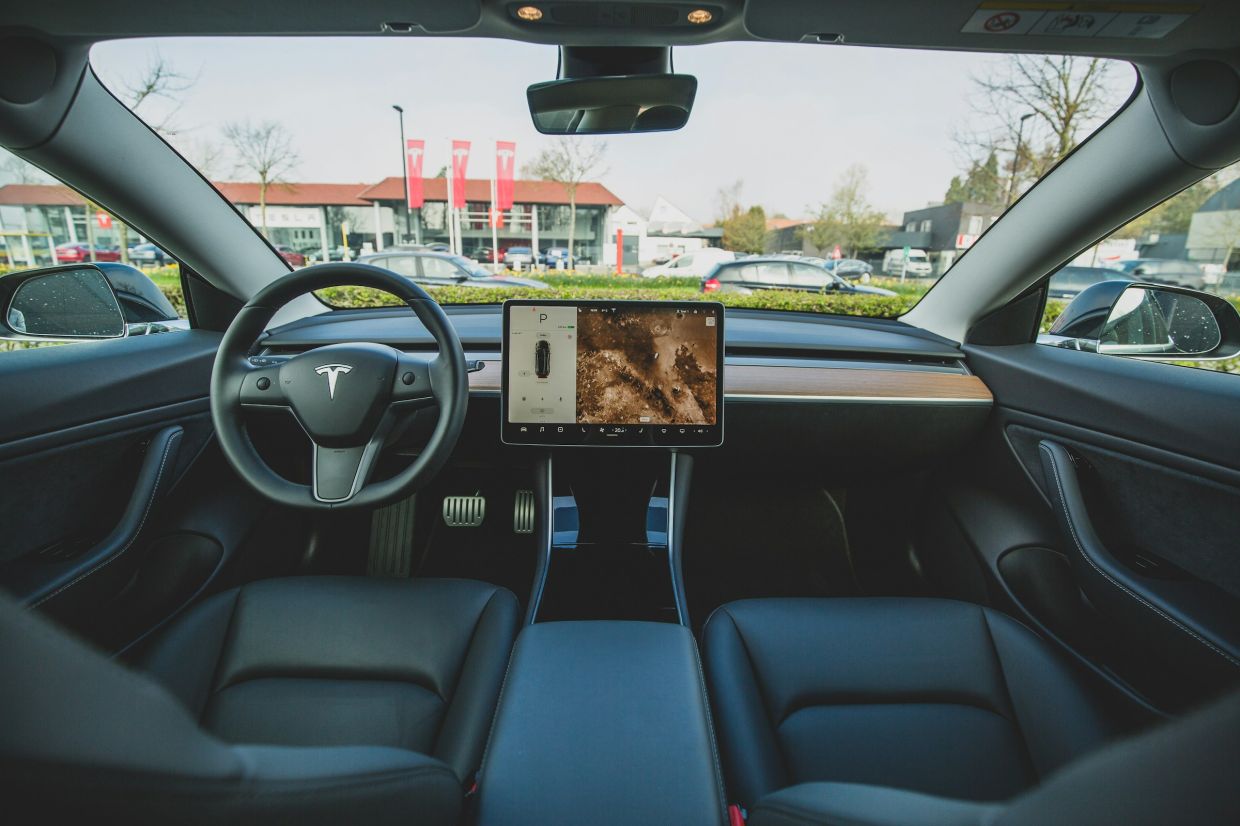
Tesla has resolved a legal claim stemming from a fatal 2023 collision that triggered federal scrutiny of the company's automated-driving capabilities, marking a significant development in the expanding debate over autonomous vehicle safety. The resolution occurred without public disclosure of settlement terms, according to the attorney representing the victim's family, though it underscores mounting concerns about whether Tesla's Full Self-Driving (FSD) technology meets adequate safety standards for operation on public roads.
The incident at the centre of the lawsuit involved Johna Story, a 71-year-old Arizona resident who was struck by a Tesla Model Y SUV while standing on a highway attempting to guide traffic around previously damaged vehicles obscured by intense sun glare. Story's death in 2023 represented a watershed moment in autonomous vehicle development, being the first confirmed pedestrian fatality attributed to Tesla's automation system since the technology's deployment to consumers. The tragedy prompted formal investigation by the National Highway Traffic Safety Administration (NHTSA) and legal action from Story's daughter against both Tesla and the vehicle's operator.
Attorney Dustin Birch, representing Story's family, confirmed the settlement's completion in recent communications, noting that his client welcomes closure on the matter. The specific financial terms and any non-monetary provisions of the agreement remain confidential, as Tesla declined to comment on the resolution or broader questions about its autonomous systems. This discretion reflects a pattern among automotive manufacturers facing product-liability claims to avoid public acknowledgment of safety issues that might invite regulatory or consumer scrutiny.
For Tesla and Chief Executive Officer Elon Musk, the settlement arrives amid a critical juncture for the company's strategic direction. The manufacturer has increasingly positioned autonomous driving and robotaxi development as central to its long-term viability and growth prospects, with FSD serving as the technological foundation for these ambitions. Tesla has pursued regulatory approvals globally for various iterations of the system, yet this expansion has proceeded despite persistent objections from automotive safety advocates who contend that significant defects remain unresolved within the platform.
Federal regulators have substantially intensified their examination of FSD following the Story incident. In 2024, NHTSA initiated a formal investigation into whether the system presents an unacceptable public safety risk, an action that escalated this year into an engineering analysis phase. This elevated scrutiny reflects a growing conviction among federal safety officials that Tesla's autonomous driving capabilities exhibit systematic vulnerabilities under adverse environmental conditions that compromise both detection and driver-response capabilities.
The specific safety concerns identified by NHTSA centre on the system's performance when visibility is degraded by natural or environmental factors. The regulator has documented instances where Tesla's camera-based perception systems failed to identify standard roadway conditions that impaired visual clarity, including sun glare, airborne dust, and fog. Most critically, in multiple crash scenarios examined by NHTSA investigators, the FSD technology demonstrated a consistent pattern of either failing to recognise degraded visibility conditions until moments before impact or lacking mechanisms to alert drivers with sufficient advance warning to permit corrective action.
Beyond detection failures, NHTSA's investigation has revealed an additional vulnerability in the system's tracking capabilities. In analysing multiple crashes occurring within similar environmental conditions, regulators discovered that Tesla's FSD frequently either lost track of or never initially detected vehicles directly ahead in its travel path. This gap in object recognition represents a fundamental challenge for the technology, suggesting that the system may struggle to maintain awareness of obstacles under precisely the conditions where human drivers face heightened visual challenges and require reliable technological assistance.
The convergence of multiple crash incidents exhibiting identical failure modes indicates that these represent systemic issues rather than isolated anomalies. Each incident reviewed involved situations where environmental factors degraded the visibility that Tesla's camera-based system depends upon, followed by either non-detection of hazards or failure to communicate safety alerts to drivers with adequate timing for response. This pattern suggests that the underlying architecture of Tesla's perception system may be fundamentally limited in its ability to maintain safe operation when light conditions, atmospheric particles, or weather patterns interfere with camera-based imaging.
Tesla has acknowledged the concerns raised by federal investigators and undertaken corrective measures. During an April earnings presentation, company executives disclosed that Tesla has begun replacing camera systems in older vehicles as part of efforts to address the identified issues. The manufacturer stated that it maintains ongoing coordination with NHTSA regarding the investigation and implied confidence in its ability to resolve the technological vulnerabilities through hardware modifications. However, the timing and scope of these camera upgrades—whether they address all affected vehicles or represent a phased deployment—remain unclear.
For Southeast Asian and Malaysian readers, Tesla's safety challenges carry particular relevance as autonomous vehicle technology gradually enters regional markets and as regulators develop frameworks for approving such systems. The trajectory of Tesla's FSD faces potential consequences for how regional authorities evaluate autonomous driving platforms, with NHTSA's engineering analysis possibly establishing precedent for rigorous testing protocols that other regulatory bodies may adopt. Malaysia's developing automotive sector and growing consumer electronics adoption suggest that autonomous vehicle technology will feature prominently in coming years, making the safety lessons emerging from Tesla's experience directly applicable to local regulatory considerations.
The settlement of Story's case does not conclude the NHTSA investigation, which continues to examine the broader safety implications of FSD technology. As the engineering analysis proceeds, federal regulators may identify additional deficiencies or determine that systemic changes are necessary before the technology can be deployed safely on public roads. Tesla's willingness to address identified problems through hardware modifications suggests the company believes defects are correctable rather than fundamental to the autonomous driving concept, but the extent to which such modifications adequately resolve safety vulnerabilities remains to be determined through regulatory evaluation.

