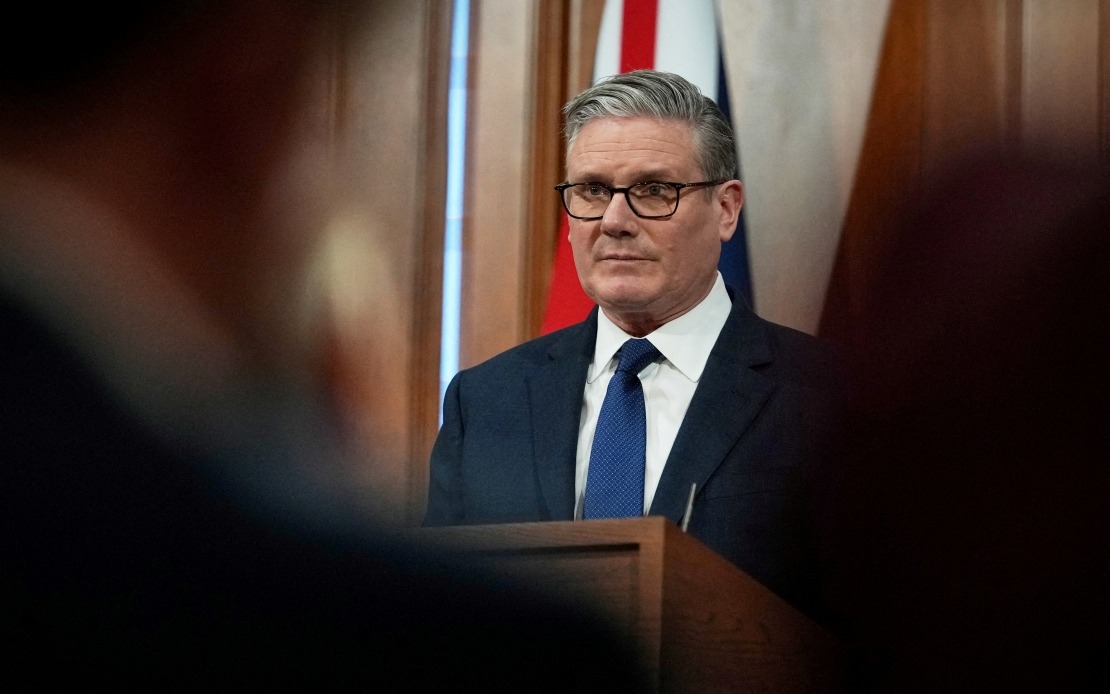
United States President Donald Trump has predicted the imminent resignation of UK Prime Minister Keir Starmer, attributing the anticipated departure to what he characterizes as substantial failures in managing immigration and energy matters. The American president made his pronouncement on Sunday via his Truth Social platform, where he wrote that Starmer would step down from his position, simultaneously wishing the British leader well despite his critical assessment. Trump's commentary specifically highlighted what he sees as inadequate handling of two critical policy areas, including a pointed reference to North Sea oil development—a gesture reflecting broader conservative frustration with restrictions on fossil fuel extraction.
The timing of Trump's declaration comes as domestic pressures within the British government intensify around Starmer's leadership. According to reporting from the BBC on the same Sunday, government insiders increasingly believe the Prime Minister may announce a formal timetable for his departure as soon as Monday, suggesting that internal momentum toward a leadership transition has already gained substantial ground within Westminster. This confluence of external commentary from the American president and internal British government dynamics creates a complex backdrop for understanding contemporary transatlantic political relationships and the degree to which international figures now openly speculate about the tenure of allied leaders.
The situation surrounding Starmer's potential resignation reflects broader tensions within British politics that have accumulated since Labour's electoral victory. The new government has faced considerable criticism from multiple quarters—both domestically and internationally—regarding its approach to several contentious policy areas. Immigration policy has proven particularly divisive, with ongoing debates about asylum processing, small boat crossings in the Channel, and the balance between humanitarian obligations and border security concerns. Energy policy represents another flashpoint, where the government's stance on renewable transitions and restrictions on North Sea oil development has drawn fire from those advocating for continued hydrocarbon extraction as a bridge fuel strategy.
Trump's intervention in British domestic politics, while characteristically direct, also signals the degree to which UK policy decisions intersect with American interests and ideological preferences. The emphasis on North Sea oil development aligns with Trump's broader commitment to expanding fossil fuel production and reversing what he terms unnecessary environmental restrictions. For Southeast Asian observers, including Malaysian readers, this dynamic illustrates how Western governments navigate competing pressures from major allied powers with differing policy priorities, a challenge that regional governments understand intimately when balancing relationships with multiple major powers.
The potential resignation scenario, if it materializes, would represent a significant disruption to British governance at a moment when international stability and coherent policy coordination remain important. A leadership transition in the UK would affect bilateral relationships across Europe, NATO alliances, and broader geopolitical alignments. For Malaysia and other ASEAN nations, UK political stability matters insofar as Britain remains an active participant in regional security architectures, trade relationships, and educational exchanges. The Commonwealth connection also means that developments in British politics carry symbolic weight across multiple nations.
Starmer's potential departure would also trigger immediate questions about succession within the Labour Party and the direction of British domestic and foreign policy. Different candidates for the Labour leadership might bring varying perspectives on issues ranging from defence spending to international development partnerships. The energy dimension is particularly relevant for resource-dependent economies like Malaysia, where questions about global energy markets, carbon transition financing, and the future role of hydrocarbon producers in the global economy remain strategically significant. How Britain's next leadership addresses these issues could influence broader international negotiations on climate finance and energy transitions.
The suggestion that Starmer might announce a resignation timetable rather than an immediate departure indicates that internal political calculations are underway regarding the optimal approach to leadership change. Such measured transitions allow for orderly handovers, negotiation among party factions, and some degree of continuity in governance. However, they also risk a period of diminished government authority and focus, during which important decisions may be deferred or deprioritized. This represents a familiar pattern in Westminster politics, though the international context adds complexity given the interlocking nature of global governance challenges.
Trump's public prediction adds an unusual dimension to what would normally be an internal British political matter. The American president's tendency to comment openly on allied leaders' political fortunes reflects both the informality of contemporary political communication and the reality that major power relationships are increasingly conducted through public platforms rather than exclusively through diplomatic channels. This phenomenon has implications for how Southeast Asian governments manage their own international relationships and navigate the increasingly public nature of geopolitical discourse.
The convergence of Trump's statement and BBC reporting of internal government expectations suggests that the question surrounding Starmer's future has transcended private deliberation and entered the realm of public political reality. Whether the Prime Minister announces a resignation schedule on Monday or in subsequent days will depend on internal party dynamics, consultation with senior colleagues, and calculations about the political cost of various scenarios. What remains clear is that the British government faces a moment of significant institutional uncertainty at a time when international challenges demand sustained and coherent policy responses.
%22%2F%3E%3C%2Fpattern%3E%3C%2Fdefs%3E%3Crect%20width%3D%22100%25%22%20height%3D%22100%25%22%20fill%3D%22url(%23phje2hg)%22%2F%3E%3Crect%20width%3D%22100%25%22%20height%3D%22100%25%22%20fill%3D%22url(%23phje2hp)%22%2F%3E%3Ctext%20x%3D%2250%25%22%20y%3D%2250%25%22%20text-anchor%3D%22middle%22%20dominant-baseline%3D%22central%22%20fill%3D%22rgba(255%2C255%2C255%2C0.95)%22%20font-family%3D%22Georgia%2C%20'Times%20New%20Roman'%2C%20serif%22%20font-weight%3D%22700%22%20font-size%3D%22320%22%20letter-spacing%3D%22-0.02em%22%3E70%3C%2Ftext%3E%3C%2Fsvg%3E)