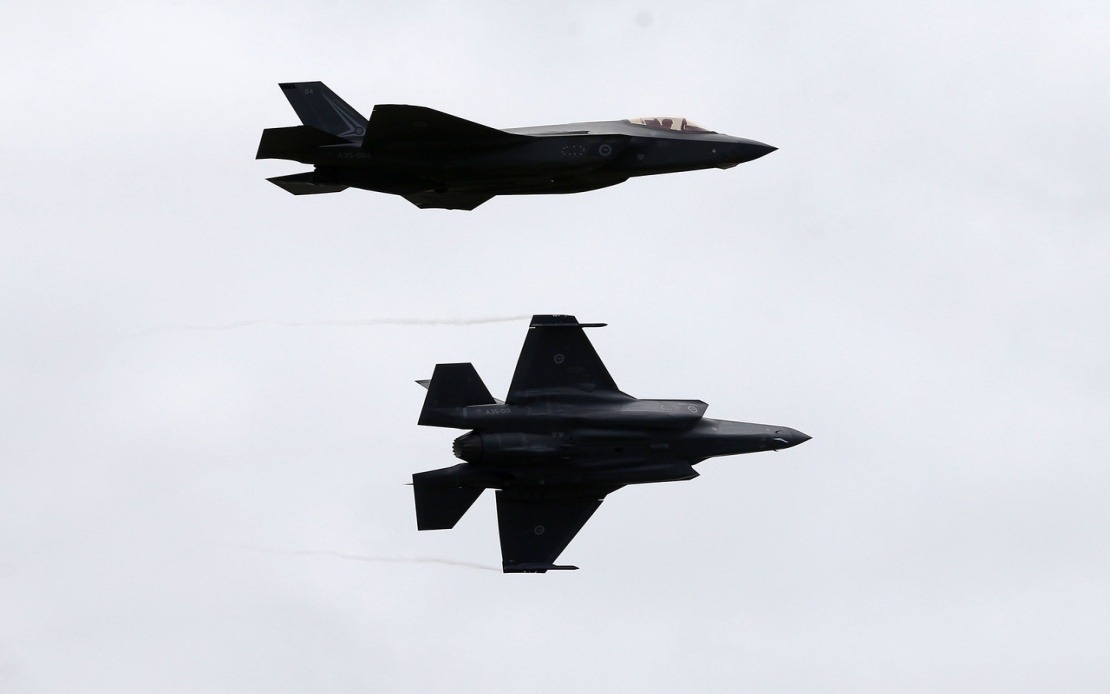
Britain, Italy and Japan have formalised a £4.6 billion (US$6.1 billion) partnership to accelerate the development of a cutting-edge stealth fighter jet, marking a critical phase in their ambitious collaboration on advanced military aviation technology. The three nations announced the contract in a joint statement, underscoring their commitment to maintaining technological superiority in next-generation air defence capabilities. This represents one of the largest trilateral defence procurement initiatives among Western democracies, reflecting deepening security partnerships across Europe and the Indo-Pacific region.
The investment flows directly into the Global Combat Air Programme (GCAP), a multi-year initiative designed to deliver a sixth-generation combat aircraft. The RAF expects the finished aircraft to be operational by 2035, a timeline that positions the platform as a successor to aging Typhoon fleets and complementary to existing F-35 Lightning II assets. The programme signals a strategic pivot toward autonomous systems integration and artificial intelligence-driven capabilities, moving beyond current fifth-generation fighter doctrine. For regional observers, the GCAP development trajectory carries implications for broader alliance structures, particularly as democracies seek to consolidate advanced defence manufacturing outside traditional transatlantic supply chains.
The British government characterised the contract signature as a pivotal milestone for GCAP, emphasising that the emerging fighter will operate within an integrated force architecture spanning multiple aircraft types and autonomous platforms. The statement highlighted the aircraft's reliance on sophisticated digital engineering and groundbreaking technologies, positioning it as the most advanced fighter jet operated by the Royal Air Force to date. This layering of capabilities—combining manned fighters with autonomous systems and AI-enhanced decision-making—represents a fundamental shift in how air forces conceptualise combat effectiveness. The integration strategy reflects evolving thinking about human-machine collaboration in contested airspace.
Edgewing, the joint venture executing the contract, was formally established in 2025 as a consortium bringing together three industrial powerhouses from distinct geographic regions. BAE Systems, Britain's primary defence contractor, leads the consortium alongside Leonardo of Italy, Europe's largest defence electronics manufacturer, and Japan Aircraft Industrial Enhancement Co. Ltd. (JAIEC), representing Japan's industrial capacity in aerospace systems. The tri-national industrial partnership consolidates expertise spanning fighter design, avionics, propulsion systems, and manufacturing across Western democracies. This structure mirrors post-Cold War European integration models while extending cooperation to the Indo-Pacific, signalling a strategic recalibration toward inclusive security architecture.
The current contract phase focuses on detailed aircraft design and establishing core performance specifications. Edgewing will conduct comprehensive testing regimes to validate concepts before full-scale manufacturing begins. This phased approach allows the consortium to refine design elements, assess integration challenges, and manage technical risks before committing to production-level investment. Industry observers note that the design phase typically consumes 40 percent of total programme cost while establishing critical foundations for subsequent development stages. The rigorous testing protocols reflect lessons learned from previous fighter development programmes, where design flaws discovered late in development cycle inflated costs substantially.
For Malaysia and Southeast Asian defence planners, the GCAP initiative carries strategic significance on multiple levels. The programme's focus on advanced autonomous systems and AI integration establishes new benchmarks for military-technological sophistication that will influence regional force modernisation calculations. Nations across ASEAN must weigh the operational capabilities of sixth-generation platforms against existing procurement timelines and budget constraints. The 2035 service entry date means the aircraft will shape operational security environments for the next three decades, affecting everything from air defence architecture to pilot training methodologies across the region.
The three-nation investment structure also highlights a broader trend toward distributed defence industrial cooperation among technologically advanced democracies. Rather than pursuing independent development programmes, Britain, Italy, and Japan have determined that collaborative investment yields superior capabilities while distributing financial and technical risks. This partnership model contrasts with alternative approaches pursued by other powers, some emphasising national self-sufficiency and others pursuing bilateral arrangements. The collaborative framework could influence regional thinking about cost-sharing mechanisms for major defence acquisitions, particularly as Southeast Asian nations assess options for modernising ageing fighter fleets.
The GCAP programme occurs within a context of escalating great-power competition and technological change in military aviation. Potential adversaries are simultaneously advancing hypersonic weapons, enhancing air defence systems, and developing counter-stealth technologies. The sixth-generation fighter must therefore incorporate design margins and technological hedging to maintain relevance across the 2035-2065 operational window. This extended relevance horizon demands fundamental innovations in materials, propulsion, sensors, and network integration rather than incremental improvements to existing platforms. The investment commitment reflects confidence that such innovations are achievable within realistic technical and fiscal parameters.
Military-technological partnerships between democracies create cascading effects across defence industrial supply chains and security relationships. Suppliers to Edgewing span multiple nations, creating interdependencies that deepen security cooperation while concentrating cutting-edge manufacturing capability. For Southeast Asian countries considering defence partnerships, such industrial integration demonstrates both the benefits and complexities of deep technological collaboration. Access to advanced platforms typically requires alignment with partner nations' technology-sharing policies, export control regimes, and political priorities.
The financial commitment from three major economies also reflects assessments of sustained security competition justifying extraordinary military spending. Combined defence budgets for the three nations exceed US$250 billion annually, positioning the US$6.1 billion GCAP investment as significant but manageable relative to overall defence spending. Nonetheless, this scale of commitment demonstrates that advanced democracies view sixth-generation fighter capability as strategically essential despite fiscal pressures elsewhere. Regional defence analysts will monitor whether the GCAP programme succeeds on schedule and budget, as delays or cost overruns could influence decisions about comparable projects across Asia-Pacific nations.
The contract signature represents commitment to the design phase, but substantial milestones remain before production decisions become irreversible. Technological challenges in areas including hypersonic integration, directed-energy weapons, and autonomous combat coordination remain incompletely solved. The consortium must demonstrate that innovations conceived during the design phase can be reliably manufactured at scale while remaining within cost parameters. Slippage on any of these dimensions could compress the 2035 timeline or inflate ultimate programme costs. Nonetheless, the three-nation commitment signals determination to proceed regardless of technical difficulties, reflecting assessments that the strategic stakes justify persistence through inevitable challenges.

