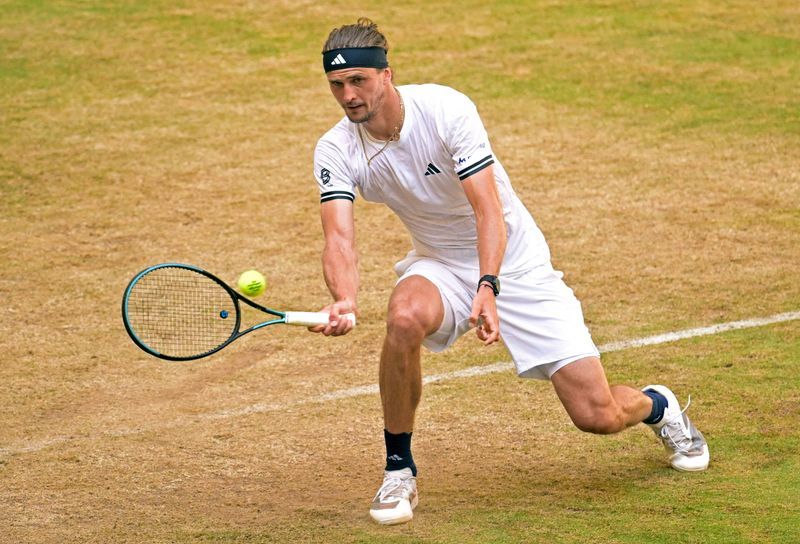
World number three Alexander Zverev has attributed his Halle Open semi-final loss to American Taylor Fritz on Saturday to a malfunction in the glucose monitoring device he relies on to manage his Type 1 diabetes. The German fell 6-7(4) 6-4 7-5 in a match that stretched over two hours and 39 minutes, extending his difficult run against Fritz, who has now won their last six consecutive encounters.
Zverev's explanation centred on the behaviour of his continuous glucose monitor, which provides real-time readings of blood sugar levels essential for athletes managing diabetes. The device malfunctioned by displaying dangerously elevated glucose values when his actual blood sugar was critically low, leading him to administer significantly more insulin than medically necessary. This miscalculation had cascading physiological consequences that compromised his physical capacity during the contest, particularly in its opening stages.
The magnitude of the glucose management crisis became apparent when Zverev consumed approximately 350 grams of sugar within the first 45 minutes of play, an extraordinary quantity prompted by the sensor's erroneous warnings. Despite this emergency intervention, he described experiencing debilitating physical sensations throughout the early portion of the match, creating a severe competitive disadvantage that persisted even as he attempted to adjust his strategy.
Yet even whilst accounting for these technical and physiological obstacles, Zverev demonstrated notable sportsmanship by acknowledging Fritz's superior performance on the day. Rather than using the sensor malfunction as an excuse to diminish his opponent's achievement, he offered candid recognition that the American's tactical execution and shot-making simply outmatched his own contributions to the contest, regardless of the circumstances affecting his physical state.
The incident marks an unprecedented occurrence in Zverev's diabetes management regimen. He has been utilising Medtronic continuous glucose monitoring technology since the mid-2010s, representing approximately nine years of consistent reliance on this equipment for maintaining optimal glucose levels during competition and daily life. The device has proven instrumental in allowing him to compete at the highest levels of professional tennis despite his Type 1 diabetes diagnosis at age four, a medical condition typically considered incompatible with elite athletic performance.
Zverev's experience with Medtronic technology has been sufficiently reliable that such a significant calibration failure had never previously occurred during his nearly decade-long partnership with the device. The scale of the malfunction—inverting the device's readings so dramatically that low values appeared high—represents an unusual technical failure that exceeded anything encountered during the extensive period of utilisation. This rarity underscores both the device's generally dependable operation and the exceptional nature of Saturday's incident.
The timing of this malfunction carries implications for Zverev's immediate competitive schedule, particularly with regard to the upcoming Championships at Wimbledon, scheduled to commence on June 29 and conclude on July 12. However, Zverev indicated confidence that the technical issue would not resurface or present ongoing concerns as he prepares to compete in the grass-court major championship. This suggests either that Medtronic has already identified and rectified the problem or that he is confident in his ability to verify device accuracy before future competitions.
For Malaysian and Southeast Asian sports enthusiasts, Zverev's candid disclosure about managing an international sporting career whilst navigating a chronic medical condition offers compelling perspective. His willingness to publicly discuss the technical and physical challenges inherent in competing with Type 1 diabetes, combined with his continued success at the world's highest competitive levels, represents an important narrative about athlete resilience and medical innovation in professional sport.
The Halle Open loss carries weight primarily because it interrupted Zverev's preparation entering Wimbledon, one of tennis's four Grand Slam tournaments. His grass-court performance carries particular significance given Wimbledon's unique surface characteristics and the tournament's historical importance within professional tennis. Heading to the championship following this disappointing result adds psychological context to his pursuit of major title success, though his demonstrated ability to compete effectively despite Type 1 diabetes management challenges suggests fundamental competitive resilience.

%22%2F%3E%3C%2Fpattern%3E%3C%2Fdefs%3E%3Crect%20width%3D%22100%25%22%20height%3D%22100%25%22%20fill%3D%22url(%23ph55gaog)%22%2F%3E%3Crect%20width%3D%22100%25%22%20height%3D%22100%25%22%20fill%3D%22url(%23ph55gaop)%22%2F%3E%3Ctext%20x%3D%2250%25%22%20y%3D%2250%25%22%20text-anchor%3D%22middle%22%20dominant-baseline%3D%22central%22%20fill%3D%22rgba(255%2C255%2C255%2C0.95)%22%20font-family%3D%22Georgia%2C%20'Times%20New%20Roman'%2C%20serif%22%20font-weight%3D%22700%22%20font-size%3D%22320%22%20letter-spacing%3D%22-0.02em%22%3EMUDA%3C%2Ftext%3E%3C%2Fsvg%3E)