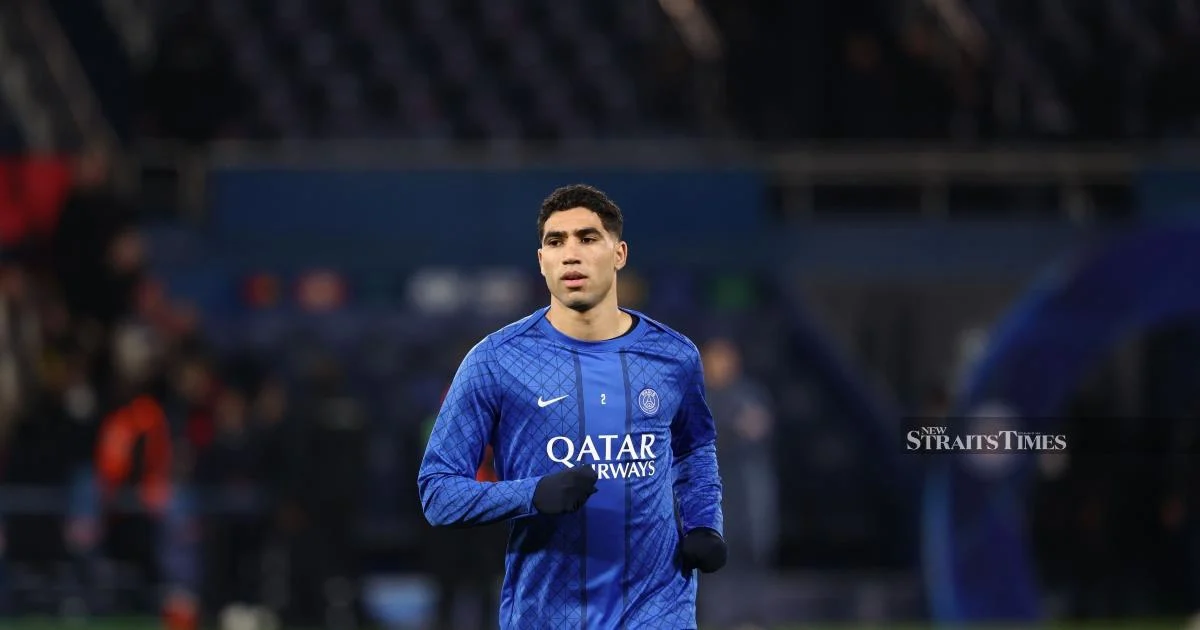
Morocco's star defender Achraf Hakimi faces a formal trial after a French appeals court rejected his bid to overturn the earlier decision requiring him to answer rape allegations. The Versailles court's confirmation on Friday means the Paris Saint-Germain player will proceed through the French judicial system, marking a pivotal moment in a case that has generated international attention within the sporting world.
The legal proceedings surrounding Hakimi have unfolded over several months, during which he has maintained his innocence. The appeals court's decision to sustain the trial order reflects the court's determination that sufficient grounds exist to bring the matter before judges. The rejection of his challenge suggests the judiciary found credible evidence warranting the formal prosecution process, though this does not prejudge the ultimate outcome of the trial itself.
Hakimi, who has represented Morocco at multiple international tournaments and played for some of Europe's elite clubs, represents one of football's most prominent recent legal cases. His status as a high-profile athlete has ensured widespread media coverage across Europe and beyond, heightening public interest in how the French courts handle the allegations. The case has also drawn attention to broader questions about accountability within professional sports, where athletes' public positions have sometimes complicated legal proceedings.
The decision by the Versailles court carries implications extending beyond the individual case. It demonstrates that French judicial authorities are proceeding with rigour, regardless of an accused person's sporting fame or professional standing. This approach reflects prevailing standards within major European legal systems, where principles of equal treatment under law ostensibly apply uniformly across society's different strata.
For Malaysian and Southeast Asian football enthusiasts, the case illustrates how international sports figures can find themselves entangled in serious legal matters that fundamentally alter their careers and public reputations. Hakimi's situation serves as a reminder that professional achievement and international recognition offer no shield against criminal investigation or prosecution in foreign jurisdictions, a reality increasingly relevant as Asian players gain prominence in European leagues.
The Paris Saint-Germain player's predicament also underscores the complexities of cross-border justice. French law applies within French territory, meaning allegations arising from incidents occurring in France fall squarely within that country's legal purview. This territorial principle ensures that international athletes cannot escape accountability by virtue of their non-resident status, a safeguard that most developed legal systems maintain.
As the case progresses toward trial, Hakimi will need to mount a comprehensive legal defence. The confirmation by the appeals court does not constitute proof of guilt but rather a determination that the allegations are substantial enough to warrant judicial examination. The burden of proof in criminal cases remains with prosecutors, who must demonstrate guilt beyond reasonable doubt—a stringent standard reflecting the gravity of rape accusations.
The timing of court proceedings in France frequently spans months or even years, meaning resolution may not come swiftly. During this extended period, Hakimi's professional career remains in limbo, with questions arising about his availability for international duty and his standing within club squads. The psychological and reputational toll of such proceedings cannot be underestimated, affecting not only the accused but also families and professional associates.
For Paris Saint-Germain, Hakimi's legal situation creates administrative complications. Clubs must navigate the reality that squad members may face absence during trials, while managing fan sentiment and institutional reputation. The club's response to his circumstances reflects broader challenges modern sports organisations encounter when addressing players' off-field conduct.
The case highlights ongoing debates within European football regarding governance structures and responsibilities when players face serious allegations. While sporting bodies have increasingly implemented conduct policies, their authority remains limited compared to criminal courts. The distinction between sporting sanctions and legal consequences has become increasingly important, as accusations of serious crimes demand judicial rather than merely institutional resolution.
Sports fans across the region should recognise that this development reflects broader societal shifts toward holding prominent figures accountable regardless of their professional status. The unwillingness of French authorities to shield Hakimi from prosecution, despite his international stature, demonstrates institutional independence that underpins rule-of-law principles in developed democracies.
Hakimi's legal ordeal serves as a sobering reminder that international athletic success, while bringing fame and material rewards, does not exempt individuals from facing serious accusations. The Versailles court's decision ensures that the allegations will receive formal judicial scrutiny, with outcomes that could reshape his career trajectory and public legacy. As the trial approaches, the football world watches closely, understanding that precedents established through this case may influence how future allegations involving prominent athletes are handled across European courts.