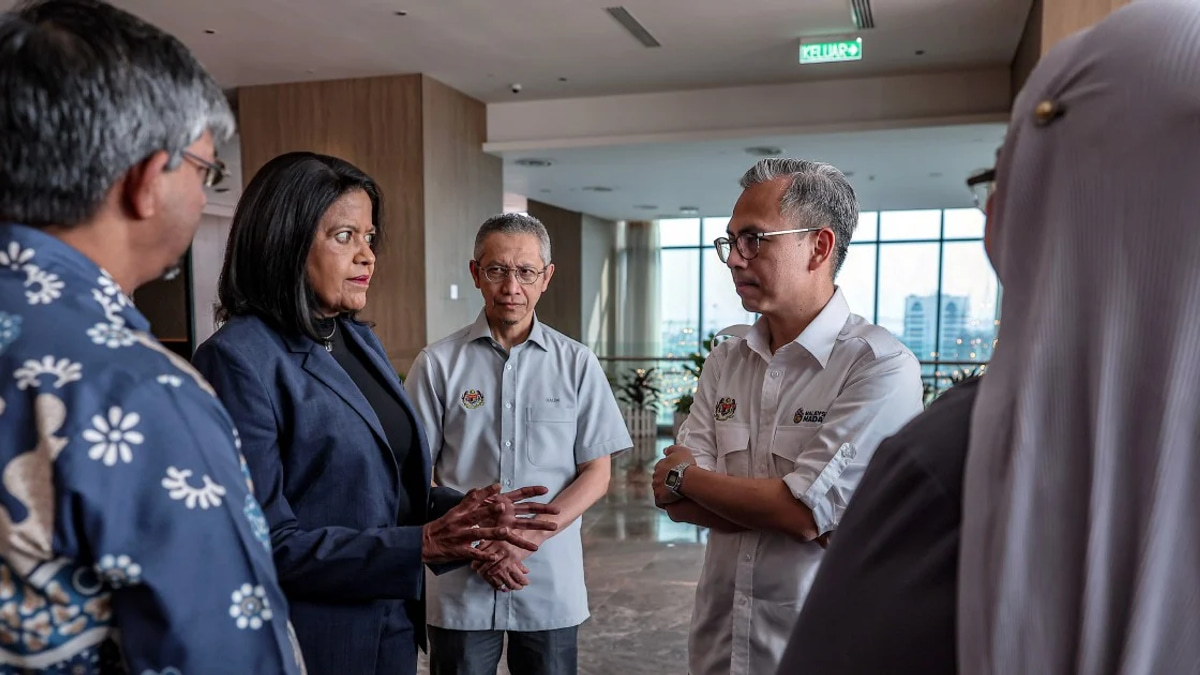
Prime Minister Anwar Ibrahim has appealed directly to Malaysians to move beyond the inflammatory rhetoric being promoted by sections of the political establishment, underscoring his conviction that the country's multicultural fabric represents an enduring competitive advantage in an increasingly fractious world. The message, delivered with evident frustration at what Anwar perceives as a deliberate strategy to inflame communal sensitivities, signals mounting concern within the federal administration about the velocity and intensity of polarising discourse entering the mainstream political domain.
Anwar's intervention reflects a deepening tension within Malaysia's political ecosystem, where appeals for unity and inclusivity have been countered by a parallel trend of identity-based messaging that energises particular voter constituencies. The prime minister's framing of ethnic diversity as a foundational strength rather than a liability stands in deliberate contrast to narratives that position different communities as competitors for finite resources or political influence. This philosophical positioning carries considerable weight in Malaysia, where communal harmony has historically been treated as essential infrastructure for economic stability and social cohesion.
The timing of Anwar's comments appears connected to a broader pattern of escalating rhetoric around sensitive issues, including religious matters, special constitutional privileges, and resource allocation. By directly naming the phenomenon—"hate peddled by certain leaders"—rather than obliquely referencing it, the prime minister has signalled that his administration views such messaging as a genuine threat requiring explicit pushback from the highest levels of government. This represents a notable shift from previous periods when Malaysian leaders often preferred to address divisive rhetoric through indirection and diplomatic language.
For Malaysian readers and observers across Southeast Asia, Anwar's statement carries implications that extend well beyond domestic politics. Malaysia functions as a regional proof-of-concept for multiethnic democracy and economic cooperation. Any serious erosion of communal tolerance threatens not only local investor confidence but regional perceptions of stability more broadly. The statement therefore serves partly as reassurance to business communities and international observers that political leadership remains committed to managing diversity through constitutional and institutional frameworks rather than allowing majoritarian impulses to dominate policy formation.
The appeal to citizens to "rise above" such messaging contains an implicit acknowledgment that inflammatory rhetoric has achieved resonance among portions of the electorate. Rather than dismissing these voices as fringe elements, Anwar's formulation suggests a need for competing messaging at scale—essentially an effort to mobilise a counter-narrative that positions inclusive governance as the superior path. This tactical recognition that divisive rhetoric has genuine political purchase represents a departure from earlier assumptions that such approaches would naturally lose salience in Malaysia's sophisticated urban centres.
The characterisation of Malaysia's ethnic diversity as a foundational economic and social asset draws on historical evidence that multiethnic societies with functional institutional arrangements often outperform more homogeneous counterparts across measures of innovation, economic dynamism, and cultural soft power. Anwar's framing suggests an attempt to reground political debate in evidence-based arguments about national interest rather than allowing it to be dominated by identity-centred grievance narratives. This intellectual repositioning carries potential long-term significance for how Malaysian political discourse develops over the coming years.
Within the governing coalition, Anwar's statement may also function as a signal to coalition partners and their respective voter bases about the boundaries of acceptable political behaviour. By explicitly condemning hate-peddling rhetoric, the prime minister establishes a normative standard against which future statements and policies can be measured. This becomes particularly relevant given Malaysia's complex coalition dynamics, where multiple parties with distinct constituencies must continually negotiate shared policy ground and joint messaging approaches.
The statement arrives at a moment when Malaysian civil society organisations and academic institutions have been documenting what they describe as increasing prevalence of intolerant speech across social media platforms and in some traditional media outlets. Anwar's intervention from the prime ministerial pulpit offers a counterweight to these narratives, though observers question whether executive rhetoric alone can effectively compete with the viral dynamics of social media-amplified divisive content. The efficacy of Anwar's appeals may ultimately depend on complementary action through regulatory frameworks, platform governance, and institutional interventions that make space for inclusive messaging.
Social cohesion in Malaysia has historically rested on constitutional settlements that recognised distinct community interests while building institutional interdependencies that made cooperation more rational than conflict. Anwar's invocation of diversity as national strength implicitly reaffirms this foundational compromise, suggesting that his administration views the constitutional architecture as the appropriate framework within which political competition should occur. This positioning carries significance for how disputes over resource allocation, representation, and cultural recognition are likely to be adjudicated during his tenure.
As Malaysia navigates post-pandemic economic recovery and positions itself within shifting regional geopolitical configurations, the coherence and resilience of its multicultural political settlement will substantially shape its capacity to respond to external challenges. Anwar's call for citizens to reject divisive messaging therefore represents not merely a domestic political statement but a strategic assertion about Malaysia's competitive positioning in a regional context where political stability increasingly correlates with economic opportunity and investor confidence. The statement thus serves as both a moral appeal and a pragmatic argument about national self-interest grounded in Malaysia's distinctive historical experience.