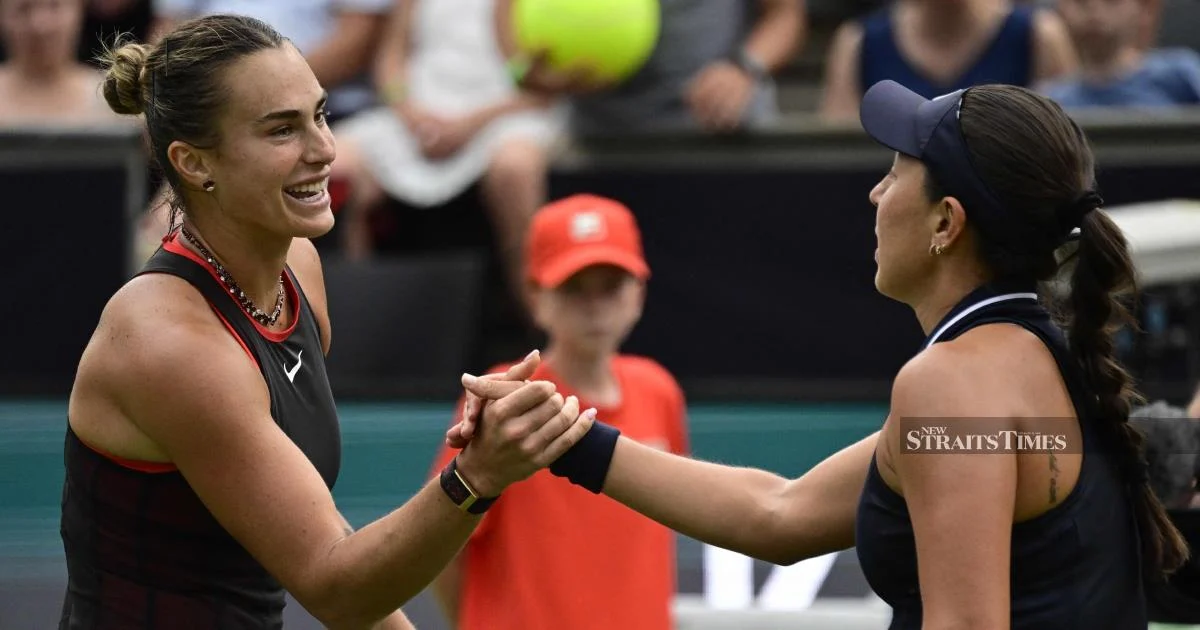
Jessica Pegula delivered a commanding performance on grass at the Berlin WTA Championship, dispatching world number one Aryna Sabalenka with a 6-2, 6-7 (4-7), 6-0 victory to reach the tournament final for the second time in her career. The American's aggressive strokeplay and resilient mindset proved decisive on the verdant courts of Berlin, where grass-court mastery often separates champions from contenders.
Pegula's journey to the final underscores the unpredictability of elite tennis. Sabalenka, despite holding the top ranking and the momentum of recent successes, found herself overwhelmed by an opponent who was tactically sharper and emotionally composed. The opening set demonstrated Pegula's early dominance, as she seized control with precise groundstrokes and timely net play, claiming it 6-2 to signal intent.
The second set proved far more closely contested. Both players raised their intensity, producing longer rallies and showcasing the caliber of tennis required to compete at the highest level. The tiebreaker ultimately favored Pegula's nerve, as she prevailed 7-4 in the championship point moments, maintaining her composure when pressure intensified. This set proved pivotal psychologically, as breaking Sabalenka's resistance in a tight contest shifted momentum decisively.
What followed was a dominant third set that epitomized Pegula's control. Without allowing Sabalenka meaningful opportunities to reset or regain confidence, Pegula overwhelmed her opponent 6-0 in a set that lasted mere minutes. Such one-sided finishes at this level of competition reflect not merely superior tennis but also the mental challenge of recovering from a lost second set, particularly when facing an increasingly assertive opponent.
For Pegula, this success marks a significant achievement on the professional circuit. Reaching Berlin's final twice represents consistency at grass-court tournaments, a surface where many modern players struggle. Grass demands different footwork, quicker reflexes, and a willingness to attack aggressively—qualities Pegula has clearly developed. Her grass-court prowess could yield dividends at Wimbledon, the sport's most prestigious tournament, should she continue this trajectory.
Sabalenka's defeat serves as a reminder that ranking points and winning streaks offer no immunity from upset. The Belarusian's struggles on grass are well-documented; the surface often exposes weaknesses in heavy hitters whose success on harder courts doesn't automatically translate to grass. The tournament's quick court speed and low bounce characteristics suit Pegula's game far more than Sabalenka's power-based approach.
For Malaysian and Southeast Asian tennis enthusiasts, matches of this caliber highlight the evolution of women's professional tennis. Pegula's consistency and tactical intelligence represent the modern blueprint for success. Rather than relying solely on raw power, contemporary champions must possess versatility, mental fortitude, and the ability to adapt strategies mid-match—precisely what Pegula demonstrated against the world's top-ranked player.
The significance of Berlin's tournament extends beyond individual accolades. As a premier grass-court event preceding Wimbledon, it serves as a crucial preparation ground and ranking points source. Pegula's advancement strengthens her positioning for subsequent tournaments and validates the investment in developing specialized surfaces within her training program.
Sabalenka's exit also opens the draw for other contenders, potentially reshaping final projections. With the world number one eliminated, remaining competitors smell opportunity and will compete with renewed belief that the title remains within reach. Such shifts in tournament dynamics often produce compelling tennis in later stages.
Pegula's coaching team and support structure deserve recognition for cultivating a player capable of executing under extreme pressure. Reaching two Berlin finals suggests systematic development rather than luck, indicating that her grass-court competitiveness reflects deliberate preparation and tactical planning. This methodical approach contrasts with players who succeed primarily through individual talent.
The American's trajectory also carries implications for future tournaments. Should she maintain this form, Pegula represents a serious contender in any grass-court competition. For Malaysian observers of professional tennis, her example demonstrates that sustained excellence requires mastery across multiple surfaces and conditions—a lesson relevant to developing domestic talent seeking international advancement.
As Pegula awaits her opponent in Berlin's final, she carries momentum and renewed confidence. Sabalenka, meanwhile, faces the difficult task of reassessing her grass-court approach and managing the psychological aftermath of a one-sided semi-final defeat to a player ranked outside the world's elite. Their contrasting emotional trajectories heading into finals day will undoubtedly influence performance, making the championship match an intriguing clash of momentum and recovery.