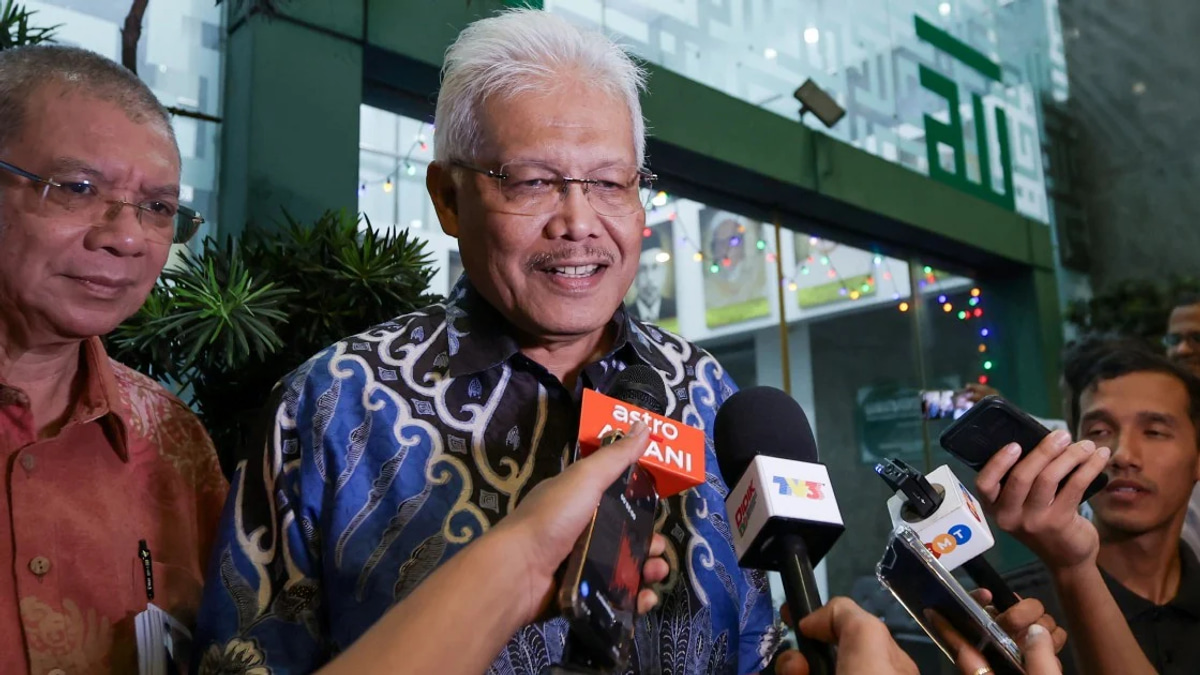
The parliamentary machinery has formally registered a significant administrative shift at the opposition benches, with Dewan Rakyat Speaker Tan Sri Johari Abdul receiving official notification of Datuk Seri Hamzah Zainudin's reappointment as opposition leader. The letter, transmitted by Perikatan Nasional chief whip Datuk Seri Takiyuddin Hassan, marks the formal lodging of the coalition's leadership decision with the country's parliamentary administration.
The reappointment carries considerable institutional weight in Malaysia's legislative framework. The opposition leader position, recognised by parliament's standing orders, grants the officeholder access to government briefings, priority speaking rights during debates, and formal recognition in parliamentary ceremonies. This designation effectively elevates Hamzah's status within the legislature and signals Perikatan Nasional's consolidation of parliamentary strategy following the last general election.
Hamzah Zainudin's continued tenure in this role reflects the relative stability of the opposition coalition's internal dynamics. Perikatan Nasional, comprising primarily the Malaysian Islamic Party (PAS), the National People's Movement (Gerakan), and several other parties, has maintained sufficient parliamentary cohesion to preserve its opposition leadership structure. The coalition secured 74 parliamentary seats in the November 2022 election, positioning it as the second-largest bloc in the Dewan Rakyat after the ruling Pakatan Harapan coalition.
The formal notification mechanism, whilst appearing procedural, underscores the structured nature of Malaysian parliamentary governance. The Speaker's office maintains detailed records of all parliamentary leadership positions and their officeholders, ensuring transparency in the legislative institution. This administrative clarity becomes particularly important during legislative proceedings where questions of parliamentary privilege, speaking order, and procedural precedence arise.
Hamzah's role as opposition leader intersects with his broader political trajectory. Previously serving as Deputy Prime Minister under the Perikatan Nasional government before 2022, his repositioning as opposition leader represents a significant transition in his political influence. His responsibilities now centre on coordinating parliamentary opposition activities, articulating alternative government positions, and mobilising his coalition's legislative strategy across various policy domains.
For Malaysian governance, the opposition leader's effectiveness significantly influences parliamentary discourse quality. A structured, organised opposition with clear leadership facilitates substantive debate on government policies, provides alternative viewpoints on legislation, and maintains parliamentary checks on executive authority. Hamzah's reappointment formalises Perikatan Nasional's commitment to maintaining active opposition engagement rather than fragmented or disorganised resistance to government initiatives.
The timing and notification process reflect Malaysia's constitutional evolution toward regularised parliamentary norms. Whereas earlier periods sometimes witnessed disputes over parliamentary opposition leadership, the contemporary system emphasises documentation and formal recognition. The chief whip's letter to the Speaker exemplifies this institutional maturation, establishing clear paper trails for parliamentary administration and preventing potential future disputes over legitimate opposition representation.
Peikatan Nasional's maintenance of unified opposition leadership suggests the coalition has managed internal differences adequately to preserve external parliamentary coordination. Opposition coalitions globally frequently fragment over resource distribution, leadership ambitions, or policy disagreements. Perikatan Nasional's sustained structure indicates sufficient agreement among member parties regarding strategic priorities and leadership arrangements, at least for the current parliamentary term.
The reappointment also contextualises broader opposition dynamics in Southeast Asia's parliamentary systems. Unlike some regional neighbours where opposition parties face systematic restrictions or face reduced institutional recognition, Malaysia's system formally acknowledges and accommodates an official opposition leader position. This institutionalisation reflects the country's Westminster-influenced democratic structures and the relative pluralism of Malaysia's political environment.
For Malaysian voters and international observers, Hamzah's continued opposition leadership role provides institutional clarity regarding parliamentary representation. Citizens can identify their opposition coalition's primary parliamentary spokesperson, understand the chain of communication within the opposition structure, and assess opposition effectiveness through the activities and statements of its formally designated leader. This transparency, whilst technical in nature, contributes to democratic accountability.
The notification to the Speaker also enables parliament's administrative apparatus to coordinate legislative functions appropriately. Opposition business scheduling, Question Time protocols, and committee assignments all incorporate the opposition leader position. Formal recognition ensures these administrative mechanisms operate smoothly and that opposition members receive entitlements and recognition proportionate to their parliamentary status.
Moving forward, Hamzah's reappointment establishes continuity in opposition leadership as parliament navigates various policy debates and legislative agendas. Whether addressing economic policy, governance issues, or social legislation, the formalised opposition structure provides a clear point of coordination and accountability. The institutional recognition signals that Malaysian parliamentary democracy continues functioning according to established procedures, maintaining the democratic conventions that sustain legislative legitimacy beyond individual personalities or temporary political fluctuations.