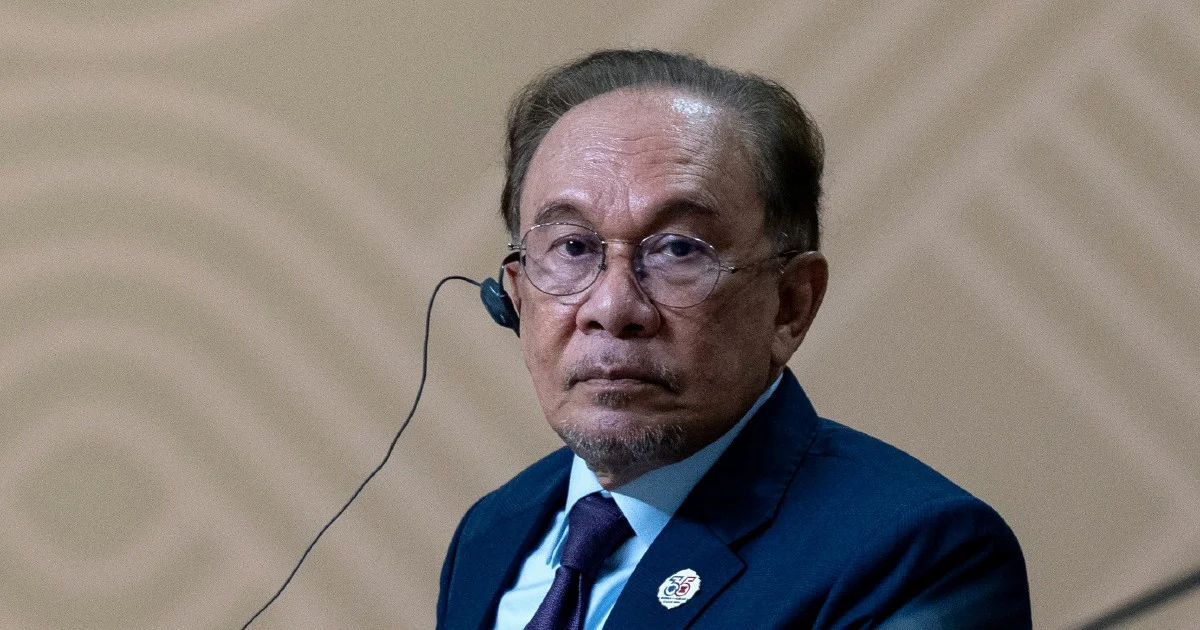
In a significant procedural decision, Malaysia's High Court has upheld an application by Prime Minister Datuk Seri Anwar Ibrahim to be released from the obligation of testifying as a subpoenaed witness in a high-value civil lawsuit. The case, involving businessman Vinod Sekhar and a RM30 million dispute, had required the head of government to attend court proceedings, but Anwar successfully persuaded the bench that his appearance could be set aside.
The court's ruling touches on broader questions about the balance between judicial accountability and the practical demands of running a nation. While the precise grounds cited by the judge for granting the application remain subject to interpretation, such decisions typically hinge on considerations of national interest, executive privilege, or the availability of alternative evidence that can adequately serve the proceedings without requiring the Prime Minister's testimony.
For Malaysian legal observers, the judgment reflects an ongoing tension in Commonwealth-derived legal systems between the principle that no one is above the law and the recognition that certain high officials require operational flexibility. The High Court's approach suggests the judiciary is weighing the public interest in both ensuring justice in private disputes and maintaining the continuity of government functions at the highest level.
The case itself involves Vinod Sekhar, a businessman whose name has appeared in various Malaysian commercial and corporate matters over the years. The nature of the RM30 million dispute remains significant in scope, representing a substantial financial claim that would ordinarily benefit from any available evidence, including testimony from prominent figures with potential knowledge of relevant facts or transactions.
Anwar's legal team likely presented arguments centring on the practical impediments to extracting detailed testimony from a serving Prime Minister in the midst of managing cabinet affairs, parliamentary obligations, and international commitments. The High Court's decision to grant the application suggests the bench found these considerations sufficiently compelling, or determined that the case can proceed effectively without his direct testimony through other admissible evidence and witness accounts.
This ruling arrives at a time when Malaysia continues to grapple with questions about governance, accountability, and the proper boundaries of executive authority. The decision does not absolve the Prime Minister of legal obligations in principle, but rather acknowledges that in certain procedural contexts, the mechanisms of the law must adapt to accommodate the practical realities of high office. The distinction is subtle but legally important—Anwar is not above the law, but his operational role permits the court to modulate how the law applies in practice.
The implications for Malaysian jurisprudence are worth examining. Future litigation involving sitting premiers, chief ministers, or other senior officials may reference this judgment when seeking similar exemptions. The precedent could shape how courts calibrate their approach to mandatory witness attendance, particularly when senior government figures are involved. It may also encourage litigants to develop alternative evidence strategies in cases where direct testimony from top officials appears unlikely to be compelled.
From a Southeast Asian perspective, Malaysia's handling of such matters carries symbolic weight. Courts in the region have historically varied in their willingness to accommodate senior officials' schedules or to grant procedural favours that might be perceived as elevating the powerful above ordinary constraints. That Malaysia's High Court has taken this approach may reflect judicial confidence in the country's commitment to rule of law, even as specific applications are granted on a case-by-case basis.
The RM30 million sum at stake underscores that this is not a minor commercial dispute where the absence of prominent testimony might be readily overlooked. The disputed amount is substantial enough to warrant serious judicial scrutiny and robust evidence, yet the court has determined that the case's resolution does not hinge on extracting the Prime Minister's firsthand account. This suggests either that the contested facts can be adequately established through other means, or that the nature of Anwar's potential evidence is such that its loss does not materially prejudice the claimant.
Vinod Sekhar will now need to chart a course forward in this lawsuit without the opportunity to compel testimony from the nation's chief executive. This places greater weight on documentary evidence, corporate records, testimony from other parties with direct knowledge, and expert witnesses who may be able to reconstruct events and transactions without relying on Anwar's personal account. Legal practitioners following the case will be particularly attentive to how the plaintiff's counsel reorganises its evidentiary strategy in response.
The ruling also reflects the Malaysian legal system's ongoing maturation in handling high-profile cases involving government figures. Rather than either blanket immunity or automatic compliance with all subpoenas, the High Court has chosen a more nuanced path, examining the specifics of the case and the competing interests at stake. This balanced approach may become increasingly important as Malaysia's legal framework continues to evolve in response to modern governance challenges.
Moving forward, the case will proceed without Anwar's testimony, but not without effect. The judgment itself becomes part of the legal record and may inform future applications by sitting officials in similar circumstances. The decision serves as a reminder that while the judiciary must respect the functional requirements of government, it does so within carefully defined limits and on a basis of reasoned judgment rather than deference to power.