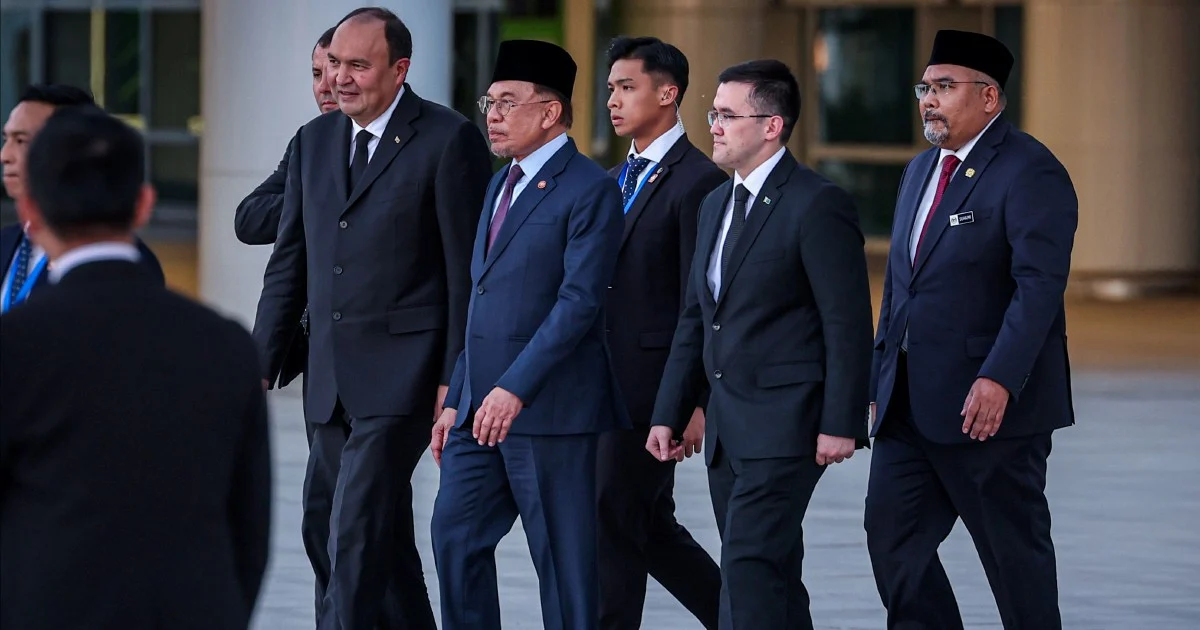
Prime Minister Datuk Seri Anwar Ibrahim is engaging in a comprehensive series of diplomatic meetings on the final day of his official visit to Turkmenistan, signalling Malaysia's intent to forge deeper economic and political bonds with the strategically positioned Central Asian state. The concluding phase of his tour reflects growing interest among Malaysian policymakers in expanding Malaysia's footprint beyond traditional trading partners in Southeast Asia and the Middle East towards emerging opportunities in Central Asia.
Turkmenistan, situated along the eastern shoreline of the Caspian Sea, has emerged as an increasingly significant player in global energy markets and regional geopolitics. The country possesses vast natural gas reserves and serves as a critical transit hub connecting Asia with Europe and the Middle East. For Malaysia, establishing stronger relations with Turkmenistan opens pathways to tap into Central Asian markets while diversifying its international business portfolio beyond existing regional concentrations.
The scheduled talks between Anwar and Turkmenistan's president are expected to address bilateral commerce, investment frameworks, and potential sectoral collaborations. Malaysia has progressively sought to position itself as a bridge between Asia and the Middle East, and expanding ties with Central Asia represents a logical extension of this strategic vision. The region offers opportunities across energy, infrastructure, technology, and financial services—sectors where Malaysian companies and institutions possess competitive advantages.
For Malaysian businesses, Turkmenistan and the broader Central Asian region present untapped markets with growing demand for expertise in Islamic finance, halal products, telecommunications, and construction services. The stability of relations between Malaysia and Turkmenistan could facilitate easier market entry for Malaysian enterprises seeking to establish operations in this geographically distant but economically significant area. Investment protection agreements and trade facilitation mechanisms are likely components of discussions aimed at reducing barriers for bilateral commercial activity.
Turkmenistan's energy wealth provides Malaysia with potential partnership opportunities in liquefied natural gas and petrochemicals, sectors where Malaysian expertise and capital could play constructive roles. Conversely, Turkmenistan's participation in regional infrastructure initiatives such as those connecting Central Asia to South Asia and Southeast Asia creates opportunities for Malaysian involvement in transport corridors and logistics networks that could reshape regional trade patterns.
Anwar's visit underscores Malaysia's broader diplomatic reorientation towards non-aligned positioning and economic pragmatism. Rather than limiting engagement to traditional Western allies or Islamic-majority nations, Malaysia seeks to cultivate relationships with diverse partners offering economic merit and geopolitical complementarity. This approach reflects recognition that sustainable prosperity requires diversified trade relationships and investment sources, particularly as global economic patterns shift and emerging markets gain prominence.
The timing of this visit also reflects Malaysia's response to evolving regional dynamics in Asia. As great powers compete for influence across the continent, countries like Malaysia are strategically building bilateral relationships that enhance their autonomy and economic resilience. Strengthening ties with Central Asian nations like Turkmenistan insulates Malaysia from overdependence on any single partnership while creating multiple pathways for growth and development.
Central Asia has historically remained peripheral to Southeast Asian concerns, but globalisation and interconnected supply chains have altered traditional geographies of economic interest. Malaysian companies in manufacturing, logistics, and services find increasing incentives to understand and access Central Asian markets. Government-level engagement through high-profile visits creates the diplomatic foundation necessary for private sector expansion and meaningful commercial relationships.
The investment and trade discussions will likely encompass financial cooperation through Malaysian Islamic banking institutions, which have developed sophisticated expertise in structuring transactions compliant with Sharia principles—an advantage in engaging Muslim-majority nations like Turkmenistan. Such discussions may also address currency swap arrangements, preferential trade agreements, and mechanisms for reducing transaction costs that currently hinder bilateral commerce between geographically distant countries.
Anwar's concluding engagements in Ashgabat represent investment in long-term strategic positioning rather than immediate transactional gains. Building trust and establishing institutional frameworks for cooperation require sustained diplomatic effort and high-level political commitment. The Malaysian Prime Minister's personal participation in these talks signals seriousness and provides the political weight necessary to ensure that negotiated agreements translate into meaningful implementation by relevant government agencies and private sector stakeholders.
As Malaysia navigates complex regional environments characterised by evolving power dynamics and economic competition, cultivating partnerships across diverse geographies becomes increasingly valuable. Turkmenistan's location, resources, and growing international engagement make it a logical partner for Malaysia's continuing expansion of global economic influence. These talks may establish foundations for sustained cooperation spanning trade, investment, education, technology transfer, and cultural exchange—building relationships that benefit both nations over decades rather than years.
The success of Anwar's Turkmenistan visit will ultimately be measured not merely by agreements signed but by whether these engagements catalyse meaningful commercial activity and institutional cooperation. Malaysian policymakers will monitor progress through implementation metrics, business establishment rates, and investment flows. If managed effectively, this visit could represent a significant step in Malaysia's broader strategy of economic diversification and strategic positioning within evolving global and regional systems.