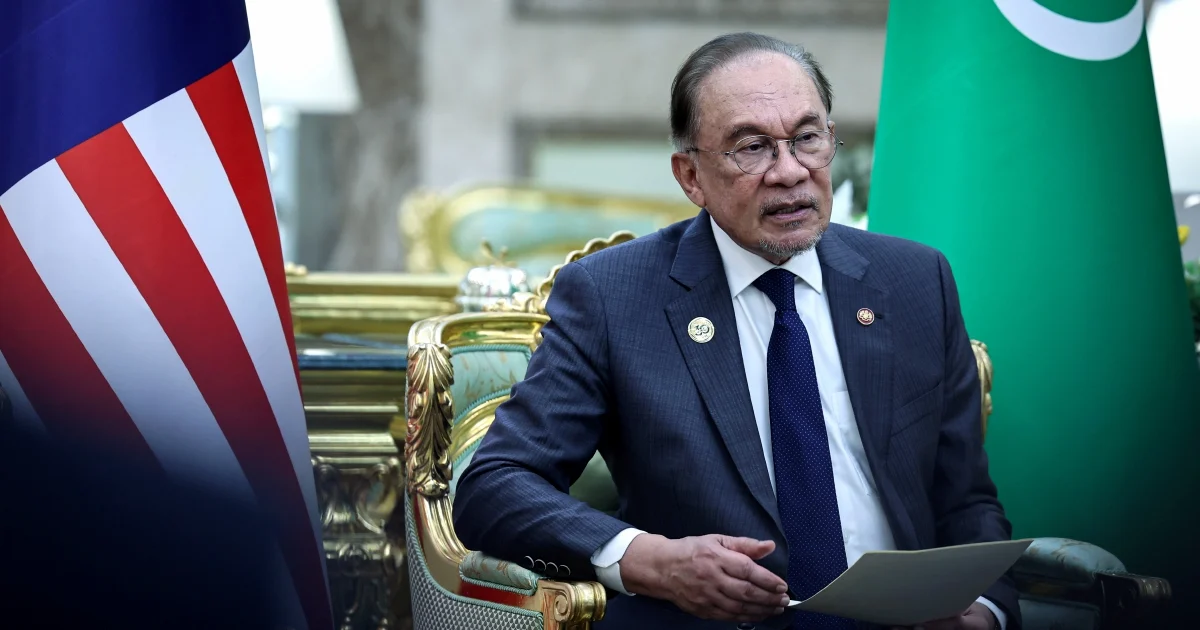
Prime Minister Datuk Seri Anwar Ibrahim has voiced support for a preliminary accord emerging from talks between Washington and Tehran, framing the diplomatic engagement as encouraging progress for global stability. Speaking in Batu Kawan, Malaysia's leader highlighted the significance of such overtures in an increasingly fractious geopolitical landscape, where Middle Eastern tensions have reverberated across supply chains and strategic partnerships affecting nations worldwide, including Malaysia.
The preliminary understanding between the United States and Iran represents a notable shift in a relationship historically defined by antagonism and sanctions regimes. For a region accustomed to cycles of confrontation, any diplomatic thaw carries substantial weight beyond bilateral interests. Anwar's affirmation reflects Malaysia's longstanding position as a non-aligned nation that favours dialogue over escalation, a posture embedded in Malaysian foreign policy through decades of engagement across ideological divides.
Malaysia's embrace of dialogue-based solutions aligns with the country's membership in the Non-Aligned Movement and its broader commitment to peaceful conflict resolution. When major powers negotiate rather than escalate, emerging economies like Malaysia benefit tangibly through more predictable commodity prices, reduced insurance costs for shipping through critical straits, and lower regional military expenditure that might otherwise divert development resources. The Persian Gulf, through which approximately one-third of global maritime oil traffic flows, remains vital to Malaysia's energy security and economic planning.
The breakthrough also carries implications for Malaysia's diplomatic architecture in Southeast Asia. Regional stability depends partly on the actions of extra-regional powers. When US-Iran tensions spike, they can destabilise global markets and complicate Malaysia's trade relationships. Conversely, movement toward normalisation creates space for Malaysian diplomacy to operate more effectively across the Middle East, where the country maintains significant economic and cultural ties through its Muslim-majority population and historical trading networks.
Anwar's measured optimism, while welcoming, comes with implicit acknowledgement of the fragility inherent in such agreements. Preliminary understandings often collapse when implementable details emerge or political circumstances shift. The Malaysian Prime Minister's framing—describing the development as positive while stopping short of triumphalism—reflects the seasoned diplomatic caution expected of leaders familiar with international relations' unpredictability.
The timing of Anwar's comments underscores Malaysia's interest in seeing international disputes resolved through negotiated settlement rather than military confrontation. Malaysia itself faces territorial claims and maritime disputes in Southeast Asia; its advocacy for peaceful resolution mechanisms carries credibility born from directly navigating similar complexities. When Anwar endorses US-Iran talks, he implicitly reinforces principles applicable to his own region's disputes.
Regional observers interpret such statements as signals of Malaysia's foreign policy orientation. By welcoming US-Iran progress, Anwar signals that Malaysia values international order based on mutual respect and negotiated outcomes rather than hegemonic assertion. This positioning resonates with Malaysia's approach to great power competition, where the country attempts to maintain equidistant relationships rather than aligning exclusively with any single power bloc.
The economic dimensions merit consideration as well. Energy markets have become increasingly sensitive to Middle Eastern developments. Oil price stability supports Malaysia's downstream petrochemical industries and maintains predictable energy costs for domestic consumers and manufacturers. Sustained tensions between the US and Iran tend to introduce volatility that penalises importing nations like Malaysia, while diplomatic progress encourages gradual price stabilisation and investor confidence in long-term planning.
Looking forward, Anwar's support for continuing US-Iran engagement reflects Malaysia's strategic preference for a multilateral international system where disputes are mediated through dialogue rather than unilateral coercion. This philosophy, consistent with Malaysia's foreign policy over decades, positions the country as supportive of international law and institutional frameworks for conflict resolution, even as Malaysia pursues its own national interests robustly within that system.
The preliminary US-Iran agreement, should it advance toward a more comprehensive arrangement, would represent vindication of Malaysia's persistent advocacy for negotiated solutions to international disputes. Anwar's welcoming remarks affirm that Malaysia views global peace and stability not merely as abstract ideals but as prerequisites for the sustained economic development and security that Malaysians expect from their government.