Prime Minister Datuk Seri Anwar Ibrahim's two-day working visit to Kazan has delivered tangible gains for Malaysia's energy security, with Russia pledging to establish long-term frameworks for supplying petroleum products, oil, and gas to the country. The engagement at the 35th ASEAN-Russia Commemorative Summit represents a strategic pivot towards securing Malaysia's energy future through stable, predictable supply chains rather than the customary annual or seasonal arrangements that have dominated past practice. This shift signals recognition among Malaysian policymakers that global energy volatility and geopolitical uncertainties demand more durable commercial relationships with major suppliers.
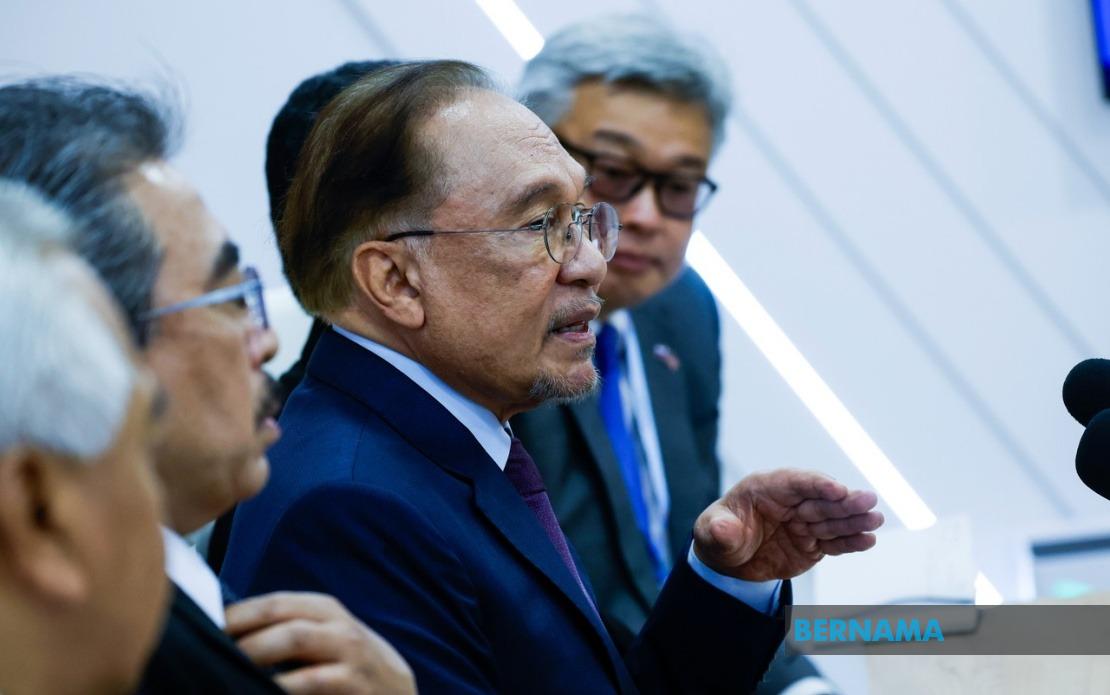
The breakthrough hinges on transitioning from conventional spot-market or short-duration contracts to comprehensive multi-year agreements that provide both parties with pricing certainty and supply reliability. Anwar revealed during his closing press conference that the groundwork for these arrangements has advanced considerably, with company representatives already participating in negotiations and draft agreements circulating among stakeholders. The Malaysian delegation has committed to accelerating finalisation upon returning home, with both sides having already settled on core principles. The remaining tasks centre on technical review and formal execution—procedural steps Anwar described as routine rather than substantive obstacles.
The energy breakthrough must be understood within the context of Malaysia's broader vulnerability to supply disruptions and price fluctuations in global hydrocarbon markets. Southeast Asia's largest economy has long depended on a diversified portfolio of suppliers to hedge against geopolitical shocks, regional instability, and the structural unpredictability of fossil fuel markets. Russia, as a major global energy producer with significant proven reserves, offers both scale and geographic diversity. The commitment to long-term supply agreements provides Malaysian refineries, petrochemicals producers, and power utilities with the operational predictability required for capital investment and production planning. Petronas, Malaysia's national oil company, appears positioned as the principal commercial vehicle for executing these arrangements, underscoring the state's central role in energy diplomacy.
Anwar's diplomatic mission extended beyond energy into a comprehensive agenda encompassing trade, investment, finance, tourism, and technology cooperation. The Prime Minister articulated a notably assertive position on Malaysia's international economic engagement, explicitly rejecting what he characterised as excessive caution in pursuing opportunities with emerging partners and non-traditional allies. This rhetorical stance reflects frustration with Malaysia's historical risk-aversion in developing economies outside established Western spheres, positioning the Kazan visit as emblematic of a more pragmatic, opportunity-oriented foreign economic policy. The bilateral meeting with Rustam Minnikhanov, Head of the Republic of Tatarstan, further widened the aperture for cooperation, identifying downstream petroleum activities, refining, petrochemicals, education, tourism, and technology as priority sectors.
The quantitative dimensions of Malaysia-Russia economic engagement remain modest relative to Malaysia's total trade footprint, yet demonstrate meaningful growth trajectories. Russia ranked as Malaysia's ninth-largest European trading partner in 2025, with bilateral commerce valued at RM8.72 billion (US$2.04 billion). Malaysian exporters primarily sell electrical and electronic products, machinery, equipment components, and processed foods into Russian markets, while imports concentrate heavily on petroleum derivatives, minerals, chemicals, and chemical-based commodities. This asymmetry, reflecting Malaysia's competitive advantage in manufacturing and Russia's dominance in raw materials and energy, provides a rational foundation for deepening commercial ties. The broader ASEAN-Russia trading relationship reached US$18.1 billion in 2024, with Russian foreign direct investment across the bloc totalling RM367.90 million (US$92.97 million), suggesting substantial untapped potential for expansion.
The conclusion of the ASEAN-Russia Strategic Programme on Trade and Investment Cooperation 2026-2035 represents the institutional architecture undergirding this economic ambition. By extending the cooperation framework across the entire decade ahead, participating nations have signalled commitment to sustained engagement beyond cyclical fluctuations in political attention or bilateral relations. For Malaysia, this agreement positions the country to leverage collective ASEAN bargaining power in energy negotiations while maintaining bilateral channels with Moscow. The strategic programme encompasses not only traditional sectors like energy and manufacturing but extends into emerging domains including cybersecurity, digital technology, agricultural development, and scientific research—areas where Southeast Asian expertise and Russian capabilities might generate synergies.
Anwar's advocacy for facilitative infrastructure—specifically visa-free travel and direct flight services between Malaysia and Russia—reflects recognition that deepening economic relationships depend on enabling people-to-people contact and reducing transactional costs. Tourism flows between Malaysia and Russia have historically remained constrained by visa procedures and limited air connectivity, despite latent demand from both markets. Direct flights would compress travel time and operational costs for business delegations, tourists, and students, multiplying opportunities for informal networks to develop alongside formal diplomatic and commercial channels. The relatively modest tourism exchange between Malaysia and Russia, compared to the relationship's economic potential, suggests significant room for growth once procedural and logistical barriers diminish.
The Kazan visit concludes a carefully sequenced diplomatic tour through Central Asia, with Anwar proceeding to Turkmenistan for a two-day official engagement focused on analogous energy cooperation objectives. Turkmenistan, possessing substantial proven reserves of natural gas and petroleum deposits, complements Russia's role in Malaysia's energy diversification strategy. The dual-track approach—simultaneously cultivating relationships with multiple Central Asian energy producers—reflects sophisticated recognition that no single supplier relationship eliminates exposure to disruption, political volatility, or price shocks. Malaysia's deliberate cultivation of alternative energy sources underscores the country's vulnerability to supply concentration and desire to construct redundancy into its energy infrastructure.
The geopolitical context framing these negotiations deserves emphasis. Russia faces economic sanctions from Western nations and restricted access to traditional markets, creating incentive to deepen commercial relationships with Asian partners positioned outside Western-led sanctions regimes. Malaysia, conversely, seeks to insulate its energy security from geopolitical confrontation between great powers while maintaining pragmatic relationships across multiple centres of power. This alignment of interests, though distinct in motivation, creates genuine commercial opportunity. The commitment to long-term energy supply agreements reflects mutual recognition that both parties benefit from stable, predictable commercial frameworks transcending the volatility of spot markets and seasonal contracting.
Anwar's explicit optimism regarding potential peace agreements between the United States and Iran introduces a secondary strategic consideration into Malaysia's energy calculations. Resolution of the Iran nuclear conflict and associated sanctions would theoretically expand global energy supply and potentially lower crude oil prices, benefiting energy-importing nations. However, the remarks appear designed primarily to signal Malaysian interest in regional stability in West Asia—a region of enormous importance to Malaysian trade, investment, tourism, and diaspora communities. The reference subtly acknowledges Malaysia's broader strategic interest in defusing geopolitical tensions that might disrupt global energy markets and regional security.
Malaysia's energy security challenges extend beyond simple supplier diversification. The country faces medium-term domestic production declines as mature oil and gas fields deplete, while energy consumption continues expanding with economic development and population growth. Long-term import agreements with stable pricing mechanisms provide the certainty required for utilities and industrial users to plan capital investments in generation infrastructure, refining capacity, and downstream facilities. The move toward multi-year contracts therefore represents not merely a commercial transaction but a structural adaptation to Malaysia's evolving energy position and the imperatives of planning across longer time horizons.
The diplomatic choreography surrounding Anwar's Central Asian tour reflects Malaysia's conscious positioning as a nation capable of engaging substantial powers across multiple domains simultaneously. By combining energy negotiations with discussions of trade, investment, technology, education, and tourism, the Malaysian delegation presented a holistic vision of bilateral partnership extending well beyond transactional commodity exchanges. This comprehensive approach appeals to Russian and Central Asian counterparts seeking recognition as partners across multiple sectors rather than suppliers of resources. The explicit emphasis on halal industry cooperation, higher education partnerships, and talent development identifies sectors where Malaysian institutional capacity and market position offer genuine advantage.
The Kazan outcomes should be evaluated not as a sudden transformation of Malaysia-Russia relations but rather as consolidation and acceleration of existing trajectories. The two nations have maintained diplomatic channels and modest commercial relationships for decades. What distinguishes the current initiative is the deliberate decision to upgrade energy cooperation from spot-market purchases to structured long-term frameworks, coupled with articulated political will at the highest levels to implement supporting infrastructure including visa liberalisation and direct aviation services. Success in executing the energy agreements and implementing the supporting measures will substantially influence whether these diplomatic initiatives translate into durable economic partnerships or remain largely symbolic gestures.