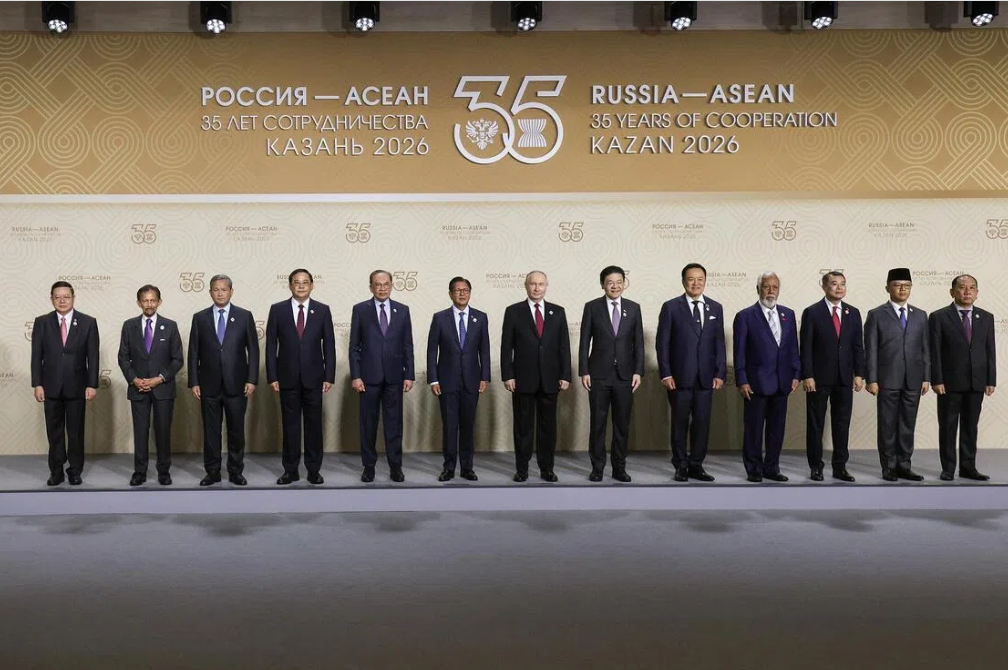
The Association of Southeast Asian Nations and Russia have renewed their partnership pledge at a commemorative summit in Kazan, the industrial heartland of southwest Russia. The two-day gathering served as a milestone moment, celebrating three and a half decades of formal relations while establishing fresh parameters for engagement through the remainder of this decade. The convergence reflects growing efforts by both sides to sustain dialogue channels despite the complex geopolitical landscape reshaping international relations across Europe and Asia.
Three significant instruments were endorsed during the June 17-18 summit, according to Singapore's Ministry of Foreign Affairs. The Kazan Declaration serves as the overarching statement, documenting achievements across the 35-year relationship while outlining priorities for future collaboration. A separate Joint Statement on Cultural Cooperation emphasises strengthening bonds between peoples through educational and cultural initiatives. Most operationally significant is the Asean-Russia Comprehensive Plan of Action covering 2026 to 2030, which translates political commitment into concrete bilateral and multilateral projects across multiple sectors.
The domains flagged for expanded cooperation span traditional and emerging areas of shared concern. Maritime cooperation assumes particular importance given both regions' reliance on secure shipping lanes and resource extraction from sea territories. Trade and investment frameworks face recalibration as global supply chains adjust to geopolitical fragmentation. Energy partnerships remain strategically vital, especially as Russia seeks alternative markets to Western economies and Southeast Asia pursues energy security diversification. Digital connectivity initiatives and infrastructure development also feature prominently, reflecting recognition that economic integration requires modern logistics networks. Additionally, both sides identified disaster management and counter-narcotics efforts as domains where coordinated action delivers tangible benefits to populations.
Singapore's Prime Minister Lawrence Wong articulated the regional perspective during his June 18 address, framing the partnership within Asean's broader strategic calculus. He emphasised that cooperation should concentrate on areas where interests genuinely overlap rather than attempting consensus on contested geopolitical questions. Notably, Wong positioned Asean Centrality—the bloc's insistence on remaining the cornerstone of regional architecture—as a shared priority, highlighting Russia's sustained engagement with Asean-led mechanisms including the ASEAN Regional Forum and East Asia Summit. This framing acknowledges Moscow's recognition that Southeast Asian relevance requires participation in regional institutions that Washington also attends, effectively maintaining Moscow's seat at the table even amid tensions with Western powers.
Singapore's upcoming rotational chairmanship of Asean in 2027 offers opportunities to deepen Russia's institutional integration with the bloc. Wong signalled that Singapore expects Russian participation in the Philippines-hosted forum meetings scheduled for later this year and indicated intentions to leverage Moscow's cooperation when Singapore assumes the rotating leadership position. This suggests Asean views sustained dialogue with Russia as stabilising, despite international law concerns surrounding Russian conduct in Ukraine. The approach reflects regional pragmatism: Southeast Asian states navigate great power competition by maintaining multiple partnerships rather than embracing exclusive blocs.
Yet Wong's remarks also reflected careful diplomatic positioning on fundamental rules-based order questions. He reiterated that Asean champions international law and territorial sovereignty, citing these principles when explaining Singapore's stance on Ukraine—a formulation that neither endorses nor condemns Russian actions explicitly but situates opposition within legalistic frameworks. Similarly, Wong welcomed reported progress on US-Iran negotiations and expressed hope for Strait of Hormuz reopening, interests that transcend great power divides since Southeast Asian shipping depends on unimpeded passage through critical waterways. This demonstrates how regional concerns can be articulated without aligning with any particular pole.
Singapore's official position on Russia remains fractured by sanctions imposed in 2022 following the Ukraine invasion, which remain in force. This sustained response distinguishes Singapore's approach from some regional governments that have maintained warmer relations with Moscow. Yet Wong's summit visit and bilateral meeting with President Vladimir Putin signalled that sanctions coexist with selective engagement, a balancing act increasingly characteristic of middle-power statecraft in Asia. The bilateral discussion between the two leaders, held at Putin's initiative, covered bilateral relations and international developments, according to the Ministry of Foreign Affairs, suggesting both capitals value maintained communication channels.
Wong also convened separately with Rustam Minnikhanov, the Rais of Tatarstan, indicating that Russia's federal structure creates additional diplomatic entry points for Southeast Asian capitals. Tatarstan's distinct identity as a Muslim-majority constituent republic within Russia resonates with Asean's religious diversity and creates alternative partnership pathways. The historical precedent of Lee Kuan Yew's 2007 visit to the region underscores longstanding connections between Singapore and Tatarstan spanning culture, education and people-to-people contacts. These subnational relationships supplement central government ties and provide resilience to bilateral engagement even when national-level tensions fluctuate.
The summit's timing reflects evolving calculations about Russia's regional role. Moscow has systematically invested in Southeast Asian engagement over recent years, recognising that isolation from Asia jeopardises its status as a great power. Conversely, Asean nations recognise that preserving dialogue with Moscow maintains options and prevents complete strategic division. Neither the regional bloc nor individual member states desire bifurcation into competing spheres of influence, viewing such polarisation as destabilising to smaller powers lacking the military or economic weight to defend independence within zero-sum competitions.
The Asean-Russia relationship occupies distinctive space in contemporary geopolitics. Unlike partnerships built on shared values or military alliances, the engagement rests on pragmatic interests: Russia seeks markets and diplomatic weight in Asia, while Southeast Asia values Moscow as a counterweight preventing any single external power from achieving hegemonic influence. The maritime cooperation provisions address mutual interests in resources and freedom of navigation without requiring alignment on political systems or regional conflicts beyond Southeast Asia's immediate periphery. Energy collaboration reflects complementary supply-demand dynamics transcending ideology.
Yet significant asymmetries constrain the partnership's depth. Russia's economic weight in Southeast Asia pales beside China's or America's, limiting incentives for deep integration. Moscow's ability to contribute to regional development or security challenges remains circumscribed compared to Beijing's infrastructure investments or Washington's technological ecosystem. Consequently, Russia functions as a secondary partnership for most Asean members, useful primarily for diversifying engagement rather than forming the foundation of foreign policy.
The summit also symbolises Asean's determination to preserve its autonomy amid great power competition intensifying across the Indo-Pacific region. By hosting Russia in high-level forums, the bloc demonstrates commitment to principles of non-alignment and inclusive regionalism. This approach contrasts with more confrontational regional architecture that would require Southeast Asian states to choose sides in geopolitical rivalries. The comprehensive cooperation plan for 2026-2030 suggests both sides intend this engagement to become more institutionalised, reducing volatility that might arise from ad hoc diplomatic interactions.
Looking forward, the partnership's trajectory depends on several variables beyond Asean's control. Evolution in the Ukraine situation could alter calculations regarding Russia's international standing and capacity to contribute to regional initiatives. Climate change impacts on shared maritime interests and energy transitions may reshape cooperation priorities. Additionally, internal Asean dynamics—particularly divergent member state relationships with Moscow—will influence the bloc's ability to maintain unified positions toward Russia. Nevertheless, the Kazan summit reaffirmed that both Asean and Russia view continued dialogue as preferable to isolation, suggesting engagement will persist despite geopolitical headwinds.