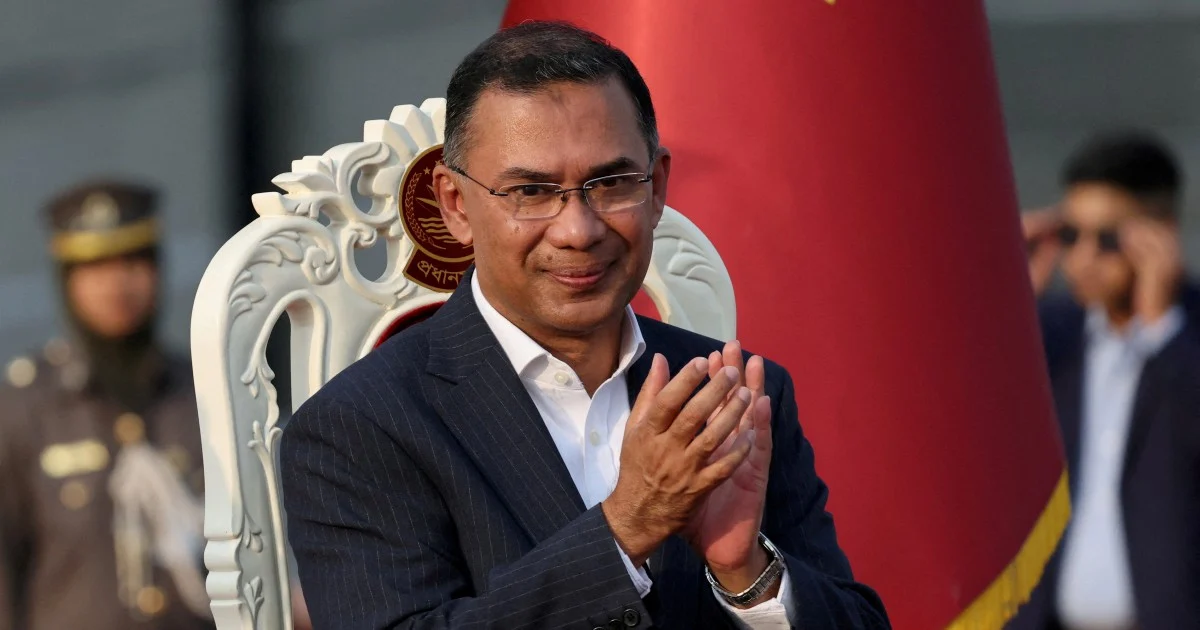
Bangladesh Prime Minister Tarique Rahman touched down in Sepang today, marking the beginning of a significant diplomatic engagement between Dhaka and Kuala Lumpur. The visit underscores growing momentum in relations between the two Muslim-majority South and Southeast Asian nations, as both governments seek to capitalise on shared regional interests and historical ties.
The timing of Rahman's arrival reflects broader regional dynamics reshaping South and Southeast Asia. Bangladesh, with its 170 million population and strategic location astride global shipping lanes, has become an increasingly important player in Indo-Pacific affairs. Malaysia, as a major economic hub and ASEAN chair in recent years, represents a natural partner for deepening economic and diplomatic coordination. The visit signals mutual recognition of these complementary interests.
Bilateral trade between the nations has traditionally centred on Bangladesh's readymade garment exports and Malaysia's investments in infrastructure and services. However, officials on both sides have long recognised untapped potential in sectors ranging from energy and technology to education and tourism. This visit is expected to explore mechanisms for expanding these traditional commercial channels while identifying new opportunities aligned with contemporary regional challenges.
Cooperation in maritime security and logistics features prominently on the agenda. The Malacca Strait, through which a substantial portion of Bangladesh's international trade transits, remains vital to both nations' prosperity. Coordinating approaches to piracy, smuggling, and freedom of navigation aligns with their shared security interests and broader ASEAN frameworks that Bangladesh values as a dialogue partner.
Education and cultural exchange represent another pillar of engagement. Malaysian universities attract significant numbers of Bangladeshi students, while cultural and religious ties bind the populations. Expansion of scholarship programmes and academic partnerships could yield long-term dividends in building people-to-people connections and professional networks across sectors from engineering to medicine.
Energy security dominates contemporary discussions across South and Southeast Asia, and Bangladesh's experiences with liquefied natural gas imports and renewable energy transitions may interest Malaysian counterparts exploring similar diversification. Conversely, Malaysia's advanced manufacturing capabilities and technology sector offer models from which Bangladesh could benefit as it pursues industrial upgrading and digital transformation.
The visit occurs against a backdrop of Bangladesh's ongoing political transition following significant upheaval in 2024. Rahman's government has prioritised stabilising institutions and rebuilding international confidence. Engagement with established Southeast Asian partners like Malaysia serves to demonstrate Bangladesh's commitment to regional integration and stable governance, providing reassurance to foreign investors and development partners concerned about domestic conditions.
For Malaysia, the visit offers opportunity to strengthen its position as a bridge between South Asia and Southeast Asia. With Bangladesh seeking deeper ASEAN engagement and Malaysia holding considerable influence within the bloc, the relationship could facilitate Bangladesh's participation in regional forums addressing everything from climate change to counterterrorism. This positioning aligns with Malaysia's long-standing diplomatic strategy of maintaining centrality in regional architectures.
Bilateral security cooperation, including law enforcement and counterterrorism coordination, will likely feature in discussions. Both nations confront similar challenges related to transnational crime, human trafficking, and extremist networks. Formalising cooperation mechanisms through joint working groups or intelligence-sharing protocols could enhance both countries' capacity to address these threats effectively.
The economic dimension extends beyond traditional trade. Both governments are exploring infrastructure partnerships, including possible Malaysian investment in Bangladesh's Special Economic Zones and port development projects. Conversely, Bangladesh's competitive advantages in labour-intensive manufacturing could complement Malaysian economic diversification strategies focused on higher-value sectors.
Regional institutions provide additional scaffolding for deepened ties. Bangladesh's participation in forums like the Bangladesh-China-India-Myanmar (BCIM) forum and the Bay of Bengal Initiative creates natural intersection points with Malaysian interests in broader Asian connectivity. Coordinating approaches through these mechanisms could amplify both nations' influence in shaping regional outcomes.
The visit underscores how traditional bilateral relations remain foundational in an era of complex multilateralism. While both nations engage through numerous international organisations and regional frameworks, direct high-level engagement allows for candid discussion of strategic priorities and negotiation of specific cooperation agreements that formal multilateral settings often cannot accommodate.
Looking forward, observers should anticipate announcements covering expanded defence cooperation, enhanced trade facilitation mechanisms, and possibly new cultural or educational initiatives. The depth of agreements emerging from these discussions will indicate whether both governments view this relationship as strategically important or primarily symbolic.