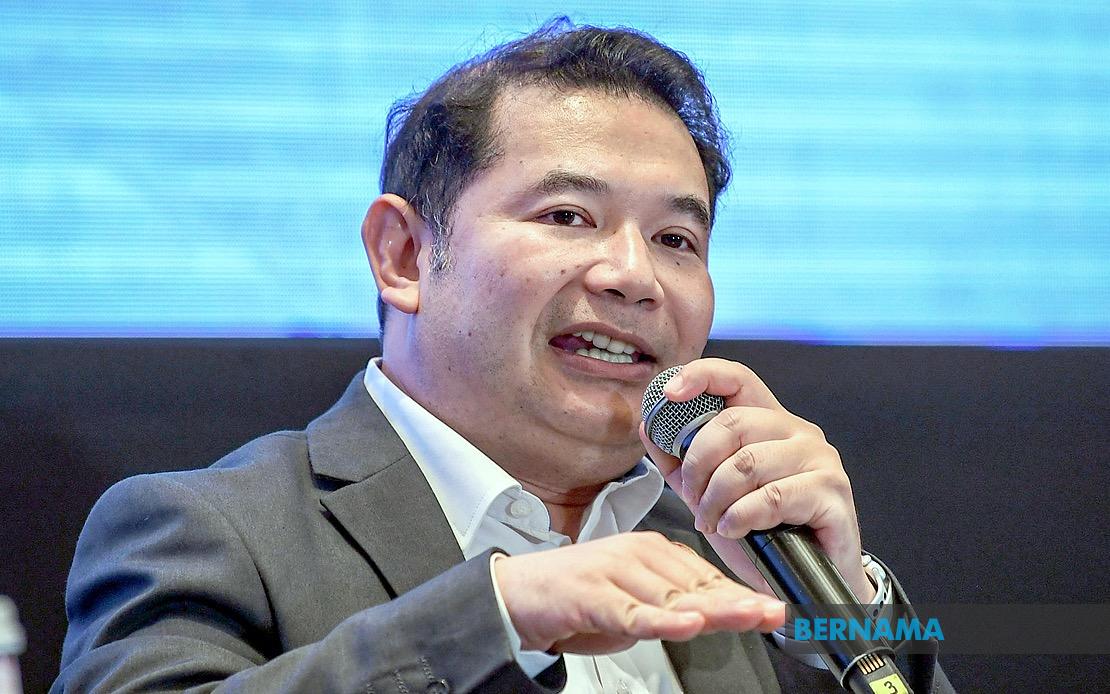
Parti Bersama Malaysia is set to unveil its slate of candidates for the upcoming Johor state election on Friday in Johor Bahru, party leader Datuk Seri Rafizi Ramli announced during a campaign event in Kota Bharu on Wednesday. The revelation marks a significant milestone in the fledgling political outfit's preparations for what is shaping up to be a competitive three-way contest in the southern state, where the party is looking to establish itself as a credible political force beyond its initial strongholds.
Rafizi did not specify how many seats Bersama intends to contest, maintaining strategic ambiguity that allows flexibility as negotiations with potential coalition partners and internal deliberations continue. The party has completed its vetting procedures for prospective candidates, suggesting that a comprehensive evaluation process examined the suitability and viability of hopefuls across multiple dimensions. This methodical approach reflects the party's ambition to project professionalism and avoid early missteps that could undermine credibility ahead of polling day.
The response to Bersama's candidate recruitment drive has exceeded initial expectations, with over 300 individuals submitting applications since the party opened nominations slightly more than a week prior. The substantial volume of interest underscores growing curiosity about the newcomer in Malaysia's political landscape, particularly among ambitious individuals seeking alternative avenues for political participation and advancement outside the established coalitions and party structures.
All applicants underwent rigorous evaluation mechanisms designed to assess their capacity to represent constituents effectively. The screening framework required candidates to complete comprehensive application documentation and participate in structured interviews where evaluators posed contextual questions exploring personal background, professional experience, and policy understanding. This multi-tiered filtering process aimed to identify individuals whose attributes and track records aligned with the party's stated values and electoral objectives, though the final candidate selections will ultimately shape public perception of Bersama's seriousness and competence.
The Johor state election unfolds within a compressed timeline that constrains campaign efforts and strategic maneuvering. The Election Commission designated July 11 as polling day, with nomination proceedings scheduled for June 27 and early voting permitted on July 7. This relatively tight schedule means that the candidate announcement on Friday initiates a fortnight-long intensified campaign phase where public scrutiny of nominees and their platforms will intensify dramatically.
Bersama's participation in the Johor contest reflects the party's broader expansion strategy following its emergence in Malaysia's fragmented political environment. By simultaneously recruiting candidates for both Johor and Negeri Sembilan state elections, the party signals its ambition to establish geographically dispersed electoral presence rather than remaining confined to particular regions. This multi-state approach demands substantial organizational capacity and financial resources, testing whether Bersama possesses the institutional infrastructure necessary to sustain meaningful electoral operations across different political terrain.
For Malaysian voters, the emergence of an additional political actor in state-level contests introduces variables that could reshape coalition arithmetic and policy discourse. Bersama's positioning and candidate quality in Johor may influence whether the party gains traction as a genuine alternative or remains a marginal contestant. The caliber of individuals announced on Friday will furnish crucial indicators of whether Bersama has attracted substantive political talent or merely compiled a list of lesser-known aspirants with limited local influence.
The party's recruitment success also carries implications for established political organizations, potentially fragmenting voter bases and complicating coalition negotiations. If Bersama attracts candidates with significant grassroots networks or professional credentials, it could siphon support from existing parties and force recalibration of electoral strategies. Conversely, if the revealed candidate lineup disappoints in terms of experience and prominence, the party's electoral impact may prove negligible despite the voluminous applications received.
Rafizi's announcement during the Jelajah Kancil programme in Pantai Cahaya Bulan represented a deliberate choice to deploy campaign machinery for candidate publicity purposes. This grassroots engagement approach contrasts with more centralized media strategies, reflecting confidence that direct voter interaction will effectively communicate Bersama's political message and candidate credentials. The decision to announce candidates in Johor Bahru itself, rather than Kuala Lumpur or other locations, emphasized the party's focus on regional mobilization and local political engagement.
For Johor observers and political analysts, Friday's candidate announcement constitutes the defining moment determining whether Bersama enters the electoral contest as a consequential participant or peripheral distraction. The revealed slate's composition—encompassing factors such as demographic representation, professional backgrounds, incumbency status, and factional orientations—will immediately generate assessments regarding whether the party has positioned itself competitively against established competitors. These early judgments, communicated through media coverage and social discourse, will substantially influence subsequent campaign momentum and voter receptivity toward Bersama's broader political message during the abbreviated campaign period preceding July 11 polling.
%22%2F%3E%3C%2Fpattern%3E%3C%2Fdefs%3E%3Crect%20width%3D%22100%25%22%20height%3D%22100%25%22%20fill%3D%22url(%23ph4oa4pg)%22%2F%3E%3Crect%20width%3D%22100%25%22%20height%3D%22100%25%22%20fill%3D%22url(%23ph4oa4pp)%22%2F%3E%3Ctext%20x%3D%2250%25%22%20y%3D%2250%25%22%20text-anchor%3D%22middle%22%20dominant-baseline%3D%22central%22%20fill%3D%22rgba(255%2C255%2C255%2C0.95)%22%20font-family%3D%22Georgia%2C%20'Times%20New%20Roman'%2C%20serif%22%20font-weight%3D%22700%22%20font-size%3D%22272%22%20letter-spacing%3D%22-0.02em%22%3EJohor%3C%2Ftext%3E%3C%2Fsvg%3E)