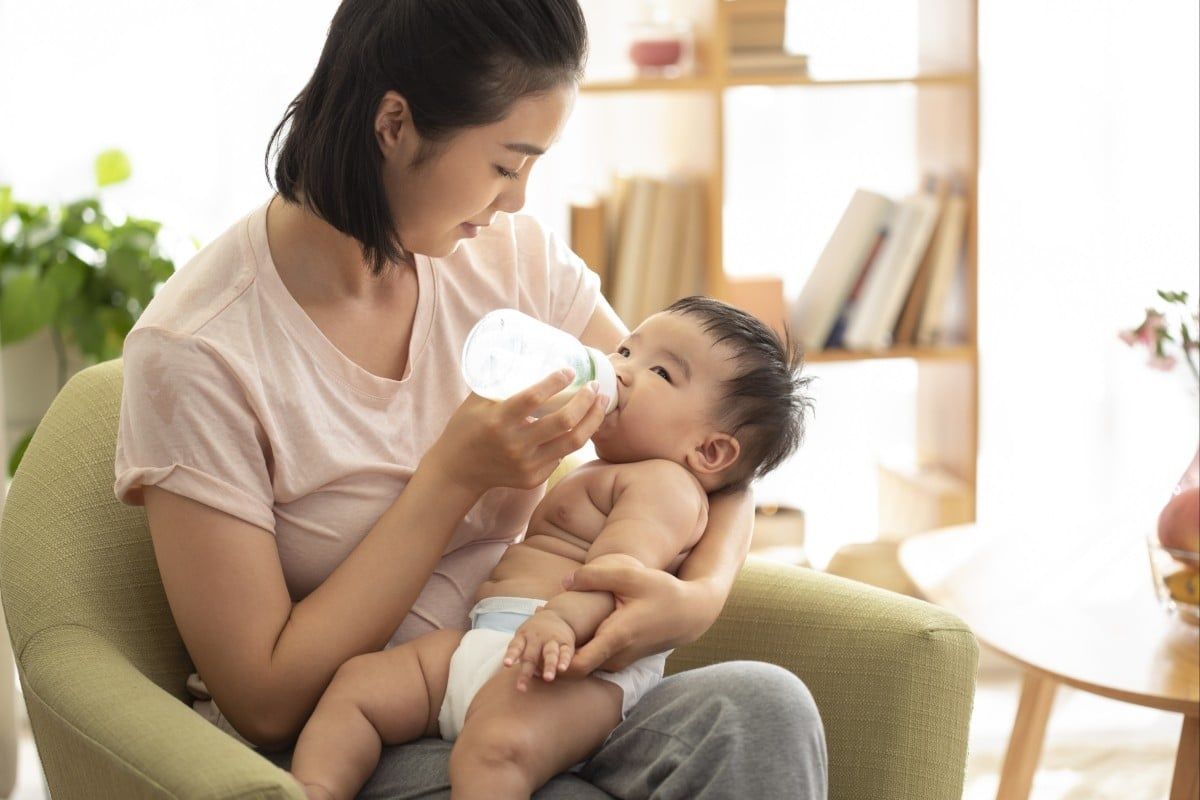
A three-month-old baby in southern China's Guangdong province was rushed to hospital in critical condition after his parents prepared his milk formula using vegetable juice instead of plain water, inadvertently exposing the infant to toxic nitrite levels. The case, reported by Zonglan News, underscores the sometimes hazardous consequences when well-intentioned but medically uninformed feeding practices encounter the fragile physiology of newborns. The incident has prompted warnings from paediatricians across China about the dangers of substituting unconventional liquids for water when preparing infant formula.
The baby boy was brought to Zhongshan Women and Children's Hospital displaying severe distress symptoms including a purplish discoloration across his body, bluish hue around his mouth, and respiratory difficulty. Medical staff noted these alarming signs had materialised shortly after the infant consumed his formula milk. The parents revealed they had deliberately chosen to mix the powdered formula with vegetable juice rather than water, motivated by the belief that juice offered superior nutritional content compared to plain water. This misunderstanding about infant nutrition and dietary safety became the catalyst for the medical emergency that followed.
Hospital physicians determined the infant had suffered acute nitrite poisoning, a metabolic threat that proved serious enough to warrant intensive care admission. The underlying mechanism behind this toxicity relates directly to how vegetables are prepared in household kitchens. When vegetables undergo prolonged boiling, the cooking process converts natural nitrates present in the produce into nitrites, which accumulate in the resulting liquid. Parents who repurpose this vegetable-infused water as a carrier for infant formula inadvertently concentrate these toxic compounds into a preparation intended for consumption by medically vulnerable infants.
The particular vulnerability of three-month-old infants to nitrite poisoning stems from their developmental immaturity. At this age, a baby's digestive system remains incompletely developed, and renal function has not yet matured sufficiently to efficiently process and eliminate nitrate metabolites. The kidneys, which would normally filter out excess nitrites in older children and adults, lack the enzymatic capacity to manage elevated concentrations of these chemicals. This physiological limitation leaves newborns essentially defenceless against substances that older individuals might tolerate without incident.
Once nitrites entered the baby's bloodstream, they triggered a biochemical cascade that severely compromised oxygen transport throughout his body. Nitrite molecules interfere with haemoglobin's fundamental function, reducing the protein's ability to bind and distribute oxygen to tissues and organs. Medical professionals describe this as a blunting of the blood's oxygen-carrying capacity, a disturbance subtle enough to escape immediate detection but profound enough to manifest visibly. The characteristic purple discoloration observed on the infant's skin, mouth, and fingernails reflected this underlying oxygenation failure—tissues starved of adequate oxygen manifesting the telltale cyanotic appearance that alarmed his parents.
Following two days of intensive medical intervention, the infant's condition stabilised sufficiently to allow discharge from hospital in mid-June. While the case concluded favourably, it provided a cautionary lesson that circulated through Chinese medical communities and family networks. Doctors at Zhongshan Women and Children's Hospital were explicit in their guidance to the parents and, by extension, to the broader public: formula powder should be mixed exclusively with warm water. Alternative liquids including vegetable broths, rice water, fruit juices, and other home-prepared soups must be avoided entirely when preparing infant feeds, regardless of perceived nutritional advantages.
Paediatrician Cao Qi from Nanning No 1 People's Hospital in Guangxi Zhuang autonomous region amplified these warnings through social media channels, emphasising the time-critical nature of nitrite poisoning recognition and treatment. His statement that delays of even minutes could prove fatal underscores how rapidly nitrite toxicity can compromise vital functions in infants. Cao urged parents to resist the influence of trending feeding practices and their own intuitive judgments about what might benefit their babies' nutritional development. This plea reflects a broader challenge in modern parenting: the proliferation of alternative health claims and traditional remedies circulating through social networks often contradicts evidence-based paediatric guidance.
Cao's reflection on the tension between natural foods and infant suitability carries particular resonance given recent incidents affecting Chinese families. The previous year had witnessed another hospitalisation in Henan province involving a 52-day-old infant poisoned by Clostridium botulinum bacteria, the causative agent of botulism. That case involved a grandmother adding honey to the infant's drinking water—another instance where traditional food wisdom failed to account for the specific physiological vulnerabilities of very young children. Honey, entirely appropriate in the diet of older children and adults, poses a documented botulism risk for infants under twelve months whose intestinal flora cannot prevent spore germination.
These recurring incidents reveal a pattern of hazardous feeding practices rooted in gaps between intuitive assumptions about nutrition and the scientific realities of neonatal physiology. Many well-meaning caregivers operate under the assumption that natural, whole-food ingredients inherently provide superior nutrition compared to formulated alternatives specifically engineered to meet infant requirements. For parents in Malaysia and other Southeast Asian regions where traditional and natural food practices remain culturally significant, these cases from China carry immediate relevance. Similar feeding practices—vegetable broths for formulas, honey additions, or other home remedies—may exist within regional family traditions without corresponding awareness of the medical risks they present.
For Malaysian healthcare providers and public health authorities, these cases highlight the ongoing need for accessible education about infant formula preparation and the specific developmental vulnerabilities of newborns. Parents and caregivers require clear, culturally sensitive information distinguishing between foods and practices appropriate for older infants and those posing genuine hazards to neonates. The medical consensus remains unambiguous: infant formula should be prepared according to manufacturer instructions using water as specified, without substitutions or enhancements intended to boost perceived nutritional value. This straightforward guidance, though sometimes contradicted by family traditions or internet-sourced alternative recommendations, reflects hard-won medical knowledge derived from cases precisely like that of the Guangdong infant whose brush with serious toxicity serves as a sobering reminder of why these protocols exist.


%22%2F%3E%3C%2Fpattern%3E%3C%2Fdefs%3E%3Crect%20width%3D%22100%25%22%20height%3D%22100%25%22%20fill%3D%22url(%23ph4oa4pg)%22%2F%3E%3Crect%20width%3D%22100%25%22%20height%3D%22100%25%22%20fill%3D%22url(%23ph4oa4pp)%22%2F%3E%3Ctext%20x%3D%2250%25%22%20y%3D%2250%25%22%20text-anchor%3D%22middle%22%20dominant-baseline%3D%22central%22%20fill%3D%22rgba(255%2C255%2C255%2C0.95)%22%20font-family%3D%22Georgia%2C%20'Times%20New%20Roman'%2C%20serif%22%20font-weight%3D%22700%22%20font-size%3D%22272%22%20letter-spacing%3D%22-0.02em%22%3EJohor%3C%2Ftext%3E%3C%2Fsvg%3E)