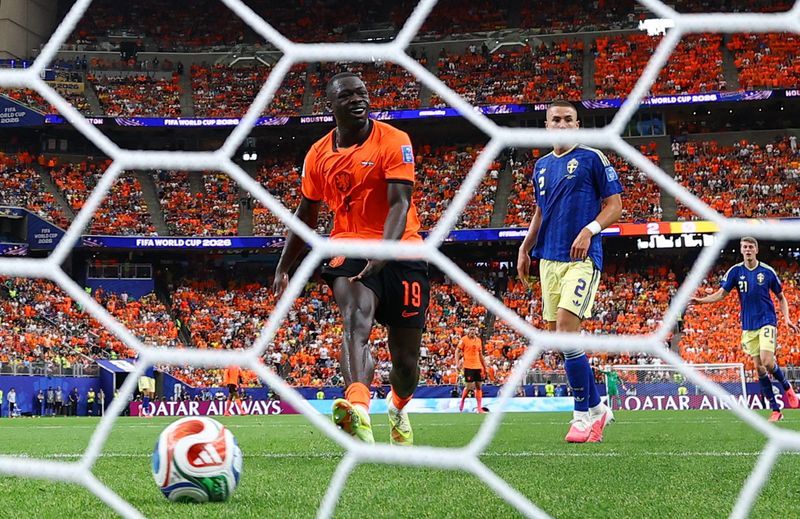
Netherlands coach Ronald Koeman faced considerable criticism for his tactical decisions during the Dutch team's opening World Cup fixture last weekend, with observers questioning his substitution choices as the side struggled to break through in a 2-2 draw with Japan in Dallas. The narrative shifted dramatically following Saturday's commanding 5-1 demolition of Sweden, a performance that vindicated Koeman's selection strategy and centred largely on an unexpected starring role from 24-year-old striker Brian Brobbey. The speed with which football opinion can reverse—from scathing to adulatory within the span of a single match—was on full display as Koeman's team topped Group F, with the coach's gamble on Brobbey emerging as the decisive factor in transforming the tournament's trajectory for the Netherlands.
Brobbey's impact was immediate and undeniable. The Ajax-developed forward netted twice within the opening seventeen minutes against Sweden, establishing a platform from which the Netherlands could build their devastating attacking display. His performance represented far more than simple goal-scoring prowess; it signalled that the Netherlands had found a viable path forward in addressing a long-standing succession question. The Dutch have been searching for a credible long-term replacement for Memphis Depay, their record international goalscorer, and Brobbey's clinical finishing on Saturday suggested he possesses the requisite qualities for that demanding role.
What makes Brobbey's selection particularly noteworthy is his unconventional journey to this prominence. He had been relegated to the periphery of the Dutch squad, overlooked during qualifying matches for the 2026 World Cup and absent from international selection for an entire year before his recall in March. His path back into favour coincided with an improving trajectory at club level following a season in England's Premier League with Sunderland. This combination of factors—renewed form abroad and tactical recognition from his coach—created the circumstances for his breakthrough performance against the Swedes.
Brobbey himself has articulated the transformation in his game, emphasizing how his spell in the Premier League enhanced not merely his physicality but his overall tactical awareness. Speaking at the Dutch training camp earlier this month, he reflected on his evolution as a striker, noting that he had moved beyond the stereotype of a centre-forward whose primary function is battling defenders. Instead, he has developed the subtler dimensions of positioning, making intelligent off-the-ball runs that exploit defensive gaps, dropping deeper to link play, and finding space in congested areas. These technical improvements distinguish him from the more limited profile he possessed during his earlier international appearances.
The supporting cast surrounding Brobbey will prove critical to his sustained success at the tournament. The presence of creative players such as Cody Gakpo, operating from the left flank, provides technical ammunition from wider areas. Denzel Dumfries' overlapping runs from right-back generate additional attacking width and passing options, while the introduction of Crysencio Summerville adds further attacking depth. This collection of talent creates multiple avenues for chance creation, meaning that whoever leads the Netherlands' attack enjoys abundant supply. Brobbey demonstrated on Saturday that he possesses the finishing quality to convert the opportunities this system generates.
The contrast with Memphis Depay's current condition underscores Brobbey's advantage at this precise moment. Depay, despite his celebrated status and proven goal-scoring record, returns from a lengthy injury absence that has inevitably affected match sharpness and rhythm. The physical and mental demands of international football at the tournament's highest level require players to operate at peak condition, and Depay's recent rehabilitation places him at a disadvantage compared to Brobbey's immediate availability and competitive match fitness. This temporal advantage may prove decisive in determining the Netherlands' attacking leadership over the coming weeks.
For Malaysian and Southeast Asian football enthusiasts, Brobbey's emergence carries broader significance beyond Netherlands football. The World Cup serves as football's premier meritocratic competition, where players demonstrate their capabilities on the sport's biggest stage. Brobbey's success illustrates how club form in the Premier League—a competition increasingly followed across Asia—translates into international prominence and selection. His pathway demonstrates that performances in Europe's elite competitions attract attention from international coaches seeking solutions to their tactical puzzles. The narrative also resonates with young players throughout the region who aspire to football careers at the highest level, showing that patience, technical development, and timely opportunity can combine to create breakthrough moments.
Koeman's tactical acumen in identifying and deploying Brobbey represents a significant counterweight to the legitimate criticism following the Japan match. While the Dutch laboured initially in their Group F campaign, the manager's ability to recognize that Brobbey's attributes offered a superior solution to his attacking problems demonstrates the analytical capacity required at international level. Football management frequently demands rapid adjustments between matches, and Koeman's decision to fundamentally alter his attacking approach rather than attempt incremental modifications proved profoundly vindicated by the outcome.
Looking ahead, Brobbey's performances will substantially influence how the Netherlands approach their remaining World Cup fixtures. Should he maintain this standard, he will effectively close the succession debate that has preoccupied Dutch football for several years. The position of lead striker carries particular weight in Dutch football philosophy, given the country's historical emphasis on intelligent, technically proficient centre-forwards who function as pivotal players within attacking structures rather than purely target-men. Brobbey's demonstrated capabilities in both finishing and positional play suggest he can fulfil this demanding role with distinction, potentially establishing himself as the defining figure in a new era of Netherlands football.