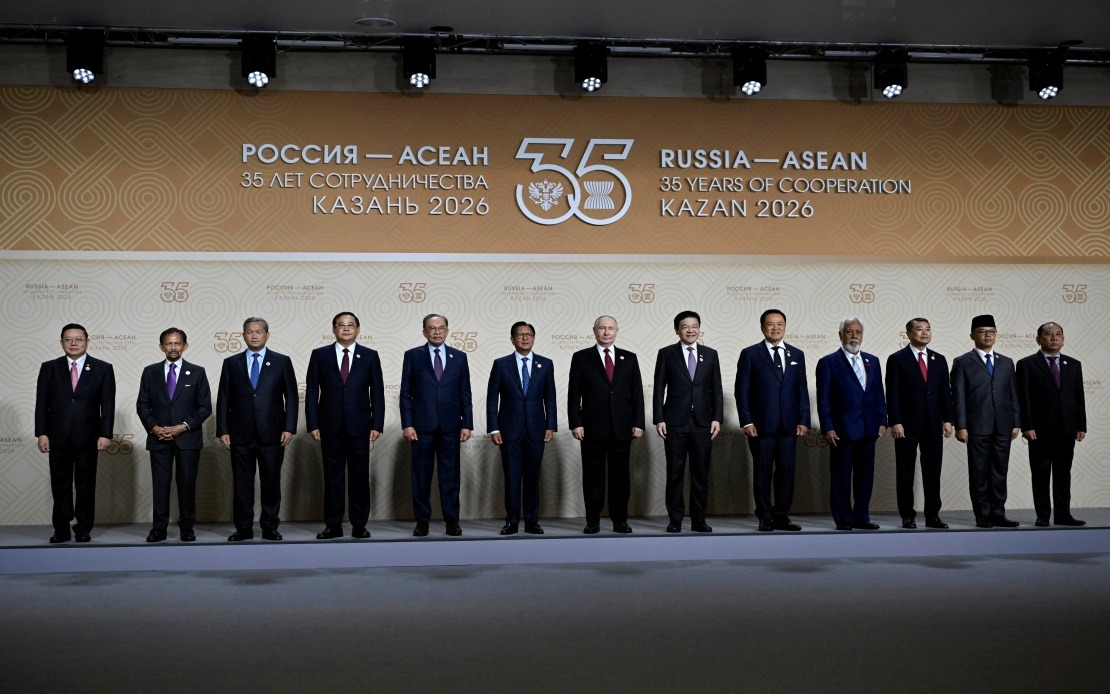
President Ferdinand R. Marcos Jr. has signalled the Philippines' commitment to deepening ties between ASEAN and Russia, particularly in sectors that represent a departure from traditional economic collaboration. Speaking following the ASEAN-Russia Commemorative Summit in Kazan, Marcos emphasised that the regional bloc and Moscow have barely scratched the surface of what their partnership could achieve, despite maintaining formal relations for over three decades.
The relationship between ASEAN and Russia, whilst steadily developing, has long been constrained by a lack of momentum and uneven engagement across the bloc's ten member states. Marcos acknowledged this disparity candidly, noting that progress has varied significantly depending on which ASEAN nations are involved. Some countries have pursued bilateral connections with Moscow more aggressively than others, creating an uneven landscape of cooperation that the ASEAN-Russia summit sought to address through collective frameworks.
What distinguishes the current moment, according to Marcos, is the emergence of entirely new domains for collaboration that barely existed in earlier decades. Advanced technology, artificial intelligence, data centres, and power generation represent frontier areas where neither ASEAN nor Russia has fully developed their mutual potential. Russia's growing technical capabilities and investments in these sectors open pathways for innovation-driven partnerships that transcend Cold War-era patterns of engagement.
The Philippines' leader framed this evolution as symptomatic of broader geopolitical realignment. ASEAN's traditional alignment patterns are giving way to a more flexible, pragmatic approach to international partnerships. The bloc is, in Marcos' words, "growing up fast," meaning it is learning to navigate a multipolar world where diversified external relationships serve national and regional interests better than exclusive alignments. This maturation reflects ASEAN's recognition that old bipolar frameworks no longer adequately describe contemporary international relations.
Marcos' vision extends beyond merely adding new cooperation areas to existing frameworks. He characterised this phase as a "new day" for ASEAN-Philippine relations broadly, marked by fundamental shifts in how the region conceptualises its role and priorities. Science and technology have become central to this repositioning, replacing traditional trade and diplomatic engagement as the primary drivers of partnership value. The implication is that ASEAN members increasingly view technological advancement and innovation capacity as essential to long-term development, requiring international partnerships across ideological and strategic boundaries.
The practical outcomes of the Kazan summit reinforce this strategic direction. The adoption of the Kazan Declaration 2026 and the ASEAN-Russia Comprehensive Plan of Action for 2026–2030 provides institutional scaffolding for expanded cooperation. These documents establish timelines and mechanisms for implementing concrete initiatives, signalling that both parties view this partnership as more than rhetorical. Supporting agreements on culture and energy cooperation further diversify the relationship beyond security or narrow economic concerns.
For Malaysia and other ASEAN members, Marcos' statements carry several implications. First, they suggest that individual ASEAN states should anticipate increased Russian outreach in technology and energy sectors, requiring careful navigation of opportunities and risks. Second, the emphasis on innovation-driven partnerships suggests that ASEAN members lacking significant tech sectors may face pressure to develop capabilities or risk being marginalised in future regional initiatives. Third, the framing of ASEAN as a bloc "growing up" diplomatically implies member states should expect greater complexity in managing multiple, sometimes competing, relationships with external powers.
The energy dimension deserves particular attention given Southeast Asia's ongoing transition from fossil fuels toward renewable and nuclear power. Russia possesses substantial nuclear technology expertise and maintains significant hydrocarbon reserves. ASEAN nations grappling with energy security and decarbonisation goals may find Russian participation in these sectors attractive, though this would require navigating Western restrictions and technology transfer concerns. The summit's focus on energy cooperation suggests these discussions are already substantive.
Data centres and artificial intelligence represent even more transformative domains. ASEAN's rapid digitalisation has created surging demand for data infrastructure and AI applications across finance, manufacturing, and public services. Russian technology companies and research institutions could contribute meaningfully here, provided geopolitical and cybersecurity concerns can be addressed through appropriate governance frameworks. The summit's inclusion of these sectors in future planning indicates both parties recognise their strategic importance.
Marcos' candid admission that ASEAN has not fully leveraged available opportunities reflects a refreshing pragmatism in regional diplomacy. Rather than defending existing bilateral relationships as adequate, he acknowledged the need for strategic reassessment and expansion. This approach contrasts sharply with rhetoric that presents ASEAN as either definitively aligned with Western powers or passive in managing external relationships. Instead, Marcos portrayed ASEAN as an active strategic agent capable of identifying and pursuing partnerships serving its interests.
The thirty-five-year history of ASEAN-Russia dialogue provides foundation but also caution. Previous decades of engagement produced limited tangible outcomes, suggesting that rhetorical expansion must be accompanied by institutional capacity and political will to implement agreed initiatives. The comprehensive plan of action for 2026–2030 will be tested by whether ASEAN members actually execute agreed projects and whether Russia delivers on cooperation promises despite ongoing international sanctions and strategic tensions.
For Southeast Asian observers, the broader significance lies in witnessing ASEAN's increasing willingness to diversify strategic partnerships across traditional geopolitical lines. The region's size, growth trajectory, and geographic position make it valuable to multiple external powers. Malaysia and fellow ASEAN members should monitor how these expanding relationships with Russia develop, particularly in technology and energy domains, whilst ensuring such partnerships serve genuine developmental objectives rather than merely replicating Cold War patterns in new technological guises.