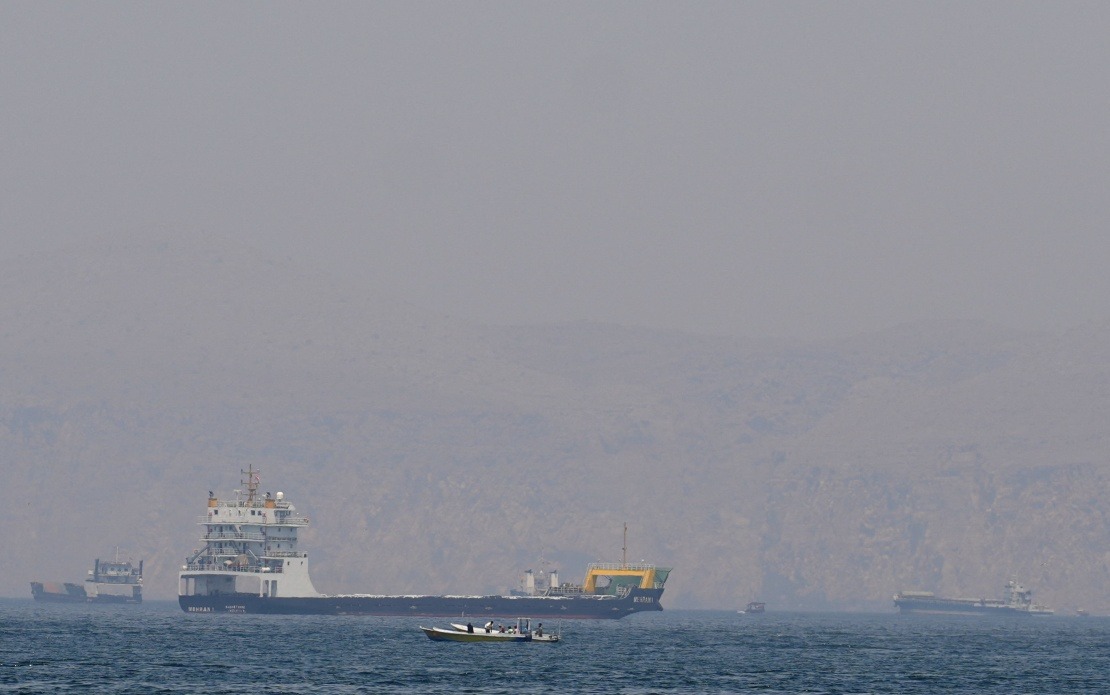
US President Donald Trump declared Saturday that the Strait of Hormuz will remain free from maritime tolls throughout a 60-day ceasefire, but signalled an abrupt policy shift could follow once that period expires. The ultimatum, posted on his Truth Social platform, represents a dramatic escalation in Washington's approach to one of the world's most strategically vital waterways, through which roughly a third of global seaborne oil passes annually. For nations across Southeast Asia and the wider Indo-Pacific region that depend heavily on stable energy supplies and unimpeded trade, Trump's conditional guarantee has thrown into sharp relief the geopolitical uncertainties surrounding the Middle East.
The US president suggested that after the initial 60 days, Washington would seek financial compensation from Gulf allies for what he characterised as regional security services. Trump framed potential future levies as reimbursement for America's role as "the guardian angel" of West Asia, describing them as necessary to recover costs incurred in maintaining stability. This language signals a fundamental departure from the post-World War II international order, under which the United States provided security guarantees to partner nations as part of broader strategic alliances, rather than through explicit fee-for-service arrangements. The prospect of the world's largest economy unilaterally imposing tolls on one of global commerce's most critical passages would overturn decades of maritime convention.
Trump's declaration came in response to escalating rhetoric from Iran's Khatam al-Anbiya Central Headquarters, which had threatened to close the Strait in protest against what Tehran characterised as repeated American breaches of commitment and Israeli violations of ceasefire terms in Lebanon. The Iranian military body presented the closure threat as a proportional response to perceived Western bad faith, framing maritime disruption as a defensive measure rather than an aggressive act. For Malaysian policymakers and business leaders, such tit-for-tat threats carry profound implications: any actual closure or disruption of Hormuz traffic would instantly disrupt energy markets, drive up fuel prices, and threaten the region's export-dependent manufacturing and logistics sectors.
Washington moved swiftly to rebut Iranian claims about its commitment to the ceasefire and its ability to enforce compliance. US Central Command countered that American military forces remain "present and vigilant" throughout the region and that maritime traffic continues to flow freely. Captain Tim Hawkins, a CENTCOM spokesperson, issued a pointed statement to media outlets asserting that "Iran does not control the Strait of Hormuz," a direct challenge to any Iranian assertion of dominion over the waterway. This terse formulation underscores the military dimension of the current standoff and reflects American determination to maintain the balance of power in the Gulf, where competing interests collide around petrodollars, regional hegemony, and access to vital energy corridors.
The 60-day ceasefire framework itself remains opaque in its details and enforcement mechanisms. Neither side has fully clarified what specific commitments each party has undertaken or how violations will be adjudicated. This ambiguity heightens regional anxiety and complicates the calculus for countries like Malaysia that maintain relationships across multiple Middle Eastern actors. Malaysian exporters, refineries, and energy importers face genuine uncertainty about whether the current arrangement will hold, whether Trump's toll ultimatum will be implemented, and what precedent might be set for future crises. The broader question of whether major powers can unilaterally impose fees on international commons through military dominance rather than international law has seized the attention of maritime nations worldwide.
For Southeast Asian governments, the situation exemplifies the structural vulnerability of the region's economy to external shocks emanating from the Middle East. Malaysia's economy remains petroleum-intensive and oil-price-sensitive; any disruption to Hormuz traffic or spike in global crude prices cascades through the region's supply chains and inflation metrics. Moreover, the dispute between Washington and Tehran has become entangled with broader US commitments to Israel and the ceasefire negotiations in Lebanon, creating a complex web of regional tensions that could reignite rapidly. The notion that America might monetise its security presence in the Gulf departs sharply from the implicit bargains that have underwritten regional order since the 1970s, when the US anchored its Middle East strategy in the twin pillars of Saudi Arabia and Iran before that relationship fractured in 1979.
Trump's framing of security provision as a commercial service with explicit pricing represents a transactional approach to international relations that differs markedly from his predecessors' rhetorical strategies. Rather than emphasising shared interests, alliance cohesion, or the mutual benefits of regional stability, Trump portrayed American military presence as a valuable commodity for which compensation was overdue. This language resonates with certain constituencies in the United States but unsettles international partners accustomed to the post-war security architecture. It also raises uncomfortable questions about what Washington considers negotiable and non-negotiable in its regional posture and whether traditional alliances can survive a shift toward fee-based security arrangements.
The 60-day window itself creates a countdown dynamic that may either concentrate minds toward a permanent settlement or intensify brinkmanship as the deadline approaches. Parties on all sides must now consider whether they can fashion a comprehensive agreement before Trump's toll threat materialises. For Malaysia and other regional stakeholders, this compressed timeline underscores the urgency of tracking negotiations closely and preparing contingency plans should the ceasefire collapse. The involvement of ceasefire violations in Lebanon further complicates matters, suggesting that the durability of any arrangement depends on parallel diplomatic progress across multiple theatres simultaneously.
Looking ahead, the strategic implications for Southeast Asia extend beyond immediate energy security to questions of systemic reliability and the resilience of rules-based order. If the United States successfully imposes tolls on Hormuz traffic, the precedent could inspire other powers to monetise critical chokepoints or leverage military dominance to extract economic rents from global commerce. Conversely, if the threat fails to materialise or faces effective international resistance, it might signal that unilateral attempts to restructure maritime governance remain constrained by practical realities and diplomatic pushback. Malaysian analysts and policymakers would be wise to view Trump's ultimatum not as an isolated statement but as part of a broader recalibration of American grand strategy toward transactionalism and away from the post-1945 security consensus that had governed the region.

%22%2F%3E%3C%2Fpattern%3E%3C%2Fdefs%3E%3Crect%20width%3D%22100%25%22%20height%3D%22100%25%22%20fill%3D%22url(%23ph2538fg)%22%2F%3E%3Crect%20width%3D%22100%25%22%20height%3D%22100%25%22%20fill%3D%22url(%23ph2538fp)%22%2F%3E%3Ctext%20x%3D%2250%25%22%20y%3D%2250%25%22%20text-anchor%3D%22middle%22%20dominant-baseline%3D%22central%22%20fill%3D%22rgba(255%2C255%2C255%2C0.95)%22%20font-family%3D%22Georgia%2C%20'Times%20New%20Roman'%2C%20serif%22%20font-weight%3D%22700%22%20font-size%3D%22272%22%20letter-spacing%3D%22-0.02em%22%3EAnwar%3C%2Ftext%3E%3C%2Fsvg%3E)