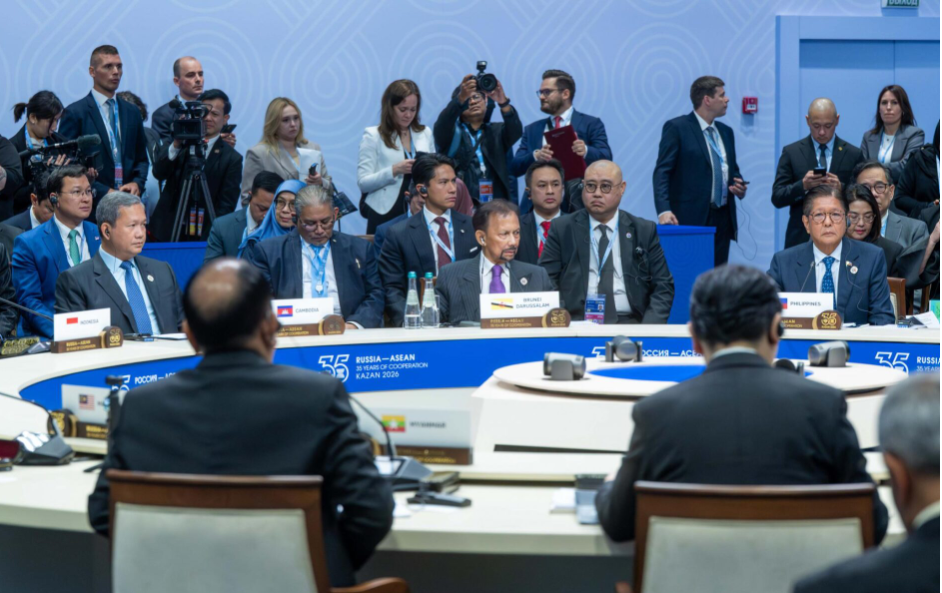
Brunei's Sultan Hassanal Bolkiah travelled to the Russian city of Kazan this week to participate in a landmark summit bringing together the ten-member Association of Southeast Asian Nations and Moscow, where he stressed the strategic importance of deepening ties between the two regions. Speaking at the Asean-Russia Commemorative Summit held at the Kazan Expo International Exhibition Centre, the Sultan expressed gratitude to Russian President Vladimir Putin, the government of Tatarstan, and local authorities for receiving the regional delegation. Accompanying the Brunei monarch on the official visit was Prince 'Abdul Mateen, the country's Minister of Foreign Affairs, signalling the high-level importance Bandar Seri Begawan places on this diplomatic engagement.
The 35-year dialogue partnership between Asean and Russia has endured despite shifting global circumstances, a resilience the Sultan highlighted as testament to the relationship's maturity and mutual benefit. Over three and a half decades, cooperation has broadened substantially across the three pillars of the Asean Community framework—namely the political-security, economic, and socio-cultural dimensions—demonstrating that the partnership extends well beyond narrow bilateral interests into comprehensive regional architecture. The tangible outcomes of this extended cooperation have fortified interpersonal connections among citizens and officials alike, creating networks of understanding that transcend formal diplomatic channels and contribute organically to shared objectives of regional peace and shared prosperity.
As Asean navigates the implementation of its Vision 2045 agenda, the Sultan underscored Russia's relevance to the bloc's long-term strategic planning. The Southeast Asian region faces an interlocking set of pressures in the coming decades: persistent political tensions that threaten stability, fragmentation of the global economic system that could isolate smaller economies, accelerating climate impacts that threaten food and water security, and technological disruption that demands substantial human capital investment. Russia, with its vast resources, technological capabilities, and permanent seat on international security bodies, represents a counterweight to excessive concentration of power elsewhere and offers alternative pathways for development cooperation that reflect the region's commitment to strategic autonomy and non-alignment principles.
The Sultan identified several concrete domains where Asean-Russia cooperation merits intensification and expansion. Energy security has become paramount for the region's economies, with growing demand for both conventional hydrocarbons and renewable sources requiring diversified supply chains and partnership frameworks beyond traditional Western suppliers. Food security remains equally pressing given Asean's role as a major food producer and the vulnerabilities exposed by recent global supply chain disruptions. Disaster management capabilities require regional coordination and knowledge-sharing, particularly as extreme weather events become more frequent and severe. Non-traditional security challenges—from maritime piracy and cybercrime to pandemic preparedness—transcend national borders and demand multilateral responses that benefit from Russia's expertise and institutional frameworks.
Beyond commercial and technical cooperation, the Brunei leader emphasised the human dimension of the partnership. Education exchange programmes, professional training initiatives, and cultural interactions form the foundation upon which sustainable diplomatic relations rest. By equipping younger generations with exposure to Russian institutions, languages, and perspectives, Asean and Russia invest in the long-term viability of their partnership. These educational and cultural flows create generations of leaders and professionals with embedded understanding of each other's societies, reducing miscalculation and building constituencies within each country that benefit from closer cooperation.
The summit concluded with the formal adoption of four substantive outcome documents reflecting areas of priority agreement. The Kazan Declaration 2026, framed around the theme of unity in diversity after 35 years of dialogue, provides the political umbrella for the partnership going forward. The Comprehensive Plan of Action targeting 2026 through 2030 translates aspirational language into specific projects and measurable commitments. Parallel statements on energy and cultural cooperation demonstrate the breadth of the engagement, addressing both material economic interests and the softer power dimensions that build lasting diplomatic foundations.
A second working session conducted as a lunch forum tackled integration processes in Eurasia, a topic of direct relevance to Southeast Asia given the region's geographic position bridging the Indian and Pacific Oceans and its growing economic ties with Central Asian states. Remarks from the Asean Secretary-General, representatives of the Shanghai Cooperation Organisation, and officials from the Eurasian Economic Commission reflected the multi-layered institutional frameworks through which regional cooperation now operates. These overlapping arrangements, while sometimes appearing complex or redundant to outsiders, allow regional powers to coordinate across different forums suited to particular issues and combinations of participants.
Complementing the formal diplomatic track, the Asean-Russia Business Forum convened on the preceding day, bringing together private sector representatives to explore commercial opportunities and joint ventures. This business dimension adds substance to political dialogue, creating constituencies of merchants and investors with financial stakes in deepening bilateral and regional ties. Companies identifying profitable cooperation across energy, agriculture, technology, and manufacturing sectors generate momentum for government-level agreements and create mechanisms for ongoing contact and coordination beyond periodic summits.
For Malaysian and Southeast Asian observers, the summit underscores Asean's continued commitment to pragmatic engagement across the international system. Rather than aligning exclusively with Western-led frameworks, the region maintains relationships with multiple major powers, using these connections strategically to advance developmental and security interests. Russia's emphasis on respecting national sovereignty and non-interference, even when selectively applied, resonates with Asean members' historical preference for independence from great power spheres of influence. The energy and food security focus reflects genuine regional vulnerabilities that demand diverse partnership portfolios and supply chains not overly dependent on any single provider or bloc.
The timing of this commemoration—marking 35 years of structured dialogue—arrives at a moment when global order undergoes significant strain. Asean's cultivation of relationships across competing blocs, including with Russia despite Western sanctions and geopolitical tensions, demonstrates the region's determination to maintain strategic space. For smaller Southeast Asian economies, such diversification is essential insurance against being forced into zero-sum choices between rival great powers. The substantive agreements on energy, food, disaster management, and cultural exchange provide concrete mechanisms through which this partnership creates tangible benefits for ordinary citizens rather than remaining an abstract diplomatic exercise.
Looking ahead, the 2026-2030 strategic action plan signals commitment to institutionalising cooperation across multiple dimensions of regional life. The outcomes adopted at Kazan reflect Asean's evolution into a more assertive actor capable of structuring partnerships with major powers on terms reflecting regional priorities rather than simply accepting external prescriptions. For Malaysia and other Asean members, monitoring how these commitments translate into actual projects—whether in renewable energy development, food production networks, educational exchanges, or disaster preparedness—will determine whether this 35-year dialogue genuinely advances shared prosperity or remains primarily ceremonial.