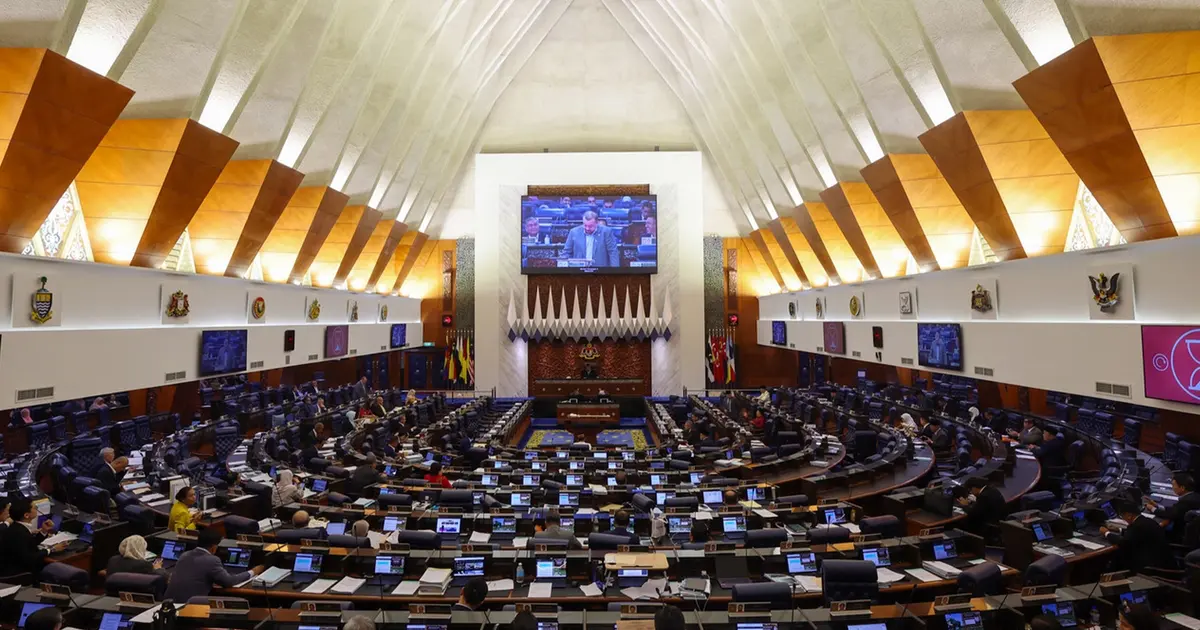
Parliament is poised to revisit constitutional reform this week as the Dewan Rakyat convenes with four major legislative items on its agenda, headlined by renewed efforts to impose a tenure restriction on the office of prime minister. The centrepiece proposal seeks to establish a constitutional ceiling of 10 years for any individual serving as the nation's chief executive, representing a significant structural change to Malaysia's parliamentary system. This amendment represents a continuation of parliamentary work that stalled during the last sitting, when the measure failed to muster the supermajority support required under Malaysia's constitutional amendment procedures.
The failure to secure the necessary two-thirds parliamentary majority in the previous session has created urgency around the reintroduction of the bill, as government supporters seek to build the additional backing needed to shepherd the legislation through its final hurdles. Constitutional amendments in Malaysia require broad cross-party consensus, a challenging threshold that often necessitates careful negotiation and sustained political commitment. The decision to bring the bill back to the floor suggests confidence within the administration that conditions have shifted sufficiently to enable passage, or at minimum, to advance the proposal further through the legislative process.
The 10-year limit represents a middle ground in constitutional design, neither imposing the strictest restrictions nor leaving the position entirely unrestricted as currently stands. For Malaysian readers, this reflects international precedent—many Commonwealth nations and presidential systems worldwide employ term limits as a constitutional safeguard against indefinite executive tenure. The proposal fundamentally shapes how power transitions occur at the highest levels of government, with implications for succession planning, political party dynamics, and the stability of long-term policy frameworks. A defined endpoint to a premiership also creates predictability around leadership transitions, potentially reducing political volatility during the final years of an administration's tenure.
The contextual backdrop to this reform extends beyond simple procedural matters. Malaysia has experienced extended premierships in its post-independence history, with some prime ministers serving considerably longer than a decade. The framing of a 10-year cap thus carries political significance regarding the concentration of executive authority and the democratisation of intra-party power succession. It also speaks to contemporary global conversations about term limits as a democratic safeguard, conversations that have intensified as several regional leaders have moved to extend or remove tenure restrictions.
Beyond the prime ministerial term limit amendment, the parliamentary sitting brings three additional bills requiring attention, though the source material does not specify their individual contents. The presence of four major legislative items suggests a packed agenda aimed at advancing the government's reform programme during this session. The stacking of multiple significant bills indicates either a compressed legislative timetable or deliberate strategy to address several priority items in concentrated fashion, reflecting perhaps urgency around specific policy objectives or capitalising on current parliamentary configurations.
For Southeast Asian observers, Malaysia's constitutional tinkering holds regional relevance. As a mature democracy with entrenched constitutional processes, Malaysian legislative developments often set examples or cautionary tales for neighbouring countries grappling with similar questions about executive power and democratic structures. The difficulty in assembling supermajorities for constitutional change itself demonstrates the built-in friction that Malaysia's founders deliberately embedded into the amendment process—a feature that both complicates reform efforts and protects against hasty constitutional revision.
The timing of this reintroduction carries political weight. Bringing the bill back after its previous failure requires calculating whether sufficient movement has occurred in parliamentary sentiment. This might reflect genuine shift in opposition thinking, changing circumstances within coalition partners, or successful behind-the-scenes negotiations that were absent from the previous sitting. The transparency around this procedural progression also demonstrates how constitutional matters, despite their technical nature, remain inherently political negotiations requiring careful management of competing interests and ideological positions.
From a governance perspective, implementing a prime ministerial term limit would represent the most substantial structural reform to Malaysia's executive branch in decades. It would alter succession dynamics, potentially reducing the tendency toward lengthy power consolidation and creating more predictable transition periods. Such provisions also typically encourage earlier identification of successor candidates, reshaping internal party mechanics and generational advancement within the ruling establishment. The practical implementation questions—whether the limit applies to aggregate tenure across multiple terms or consecutive terms only—represent important technical details that shape the measure's actual effect.
For Malaysian citizens and the broader Southeast Asian region watching these proceedings, the outcome signals the government's capacity to advance reform agendas despite constitutional constraints. Successfully passing the amendment would demonstrate legislative discipline and coalition cohesion, while renewed failure would raise questions about the durability of parliamentary support for the government's broader reform programme. Either outcome carries implications for political stability and the credibility of institutional processes in Malaysia's democracy.