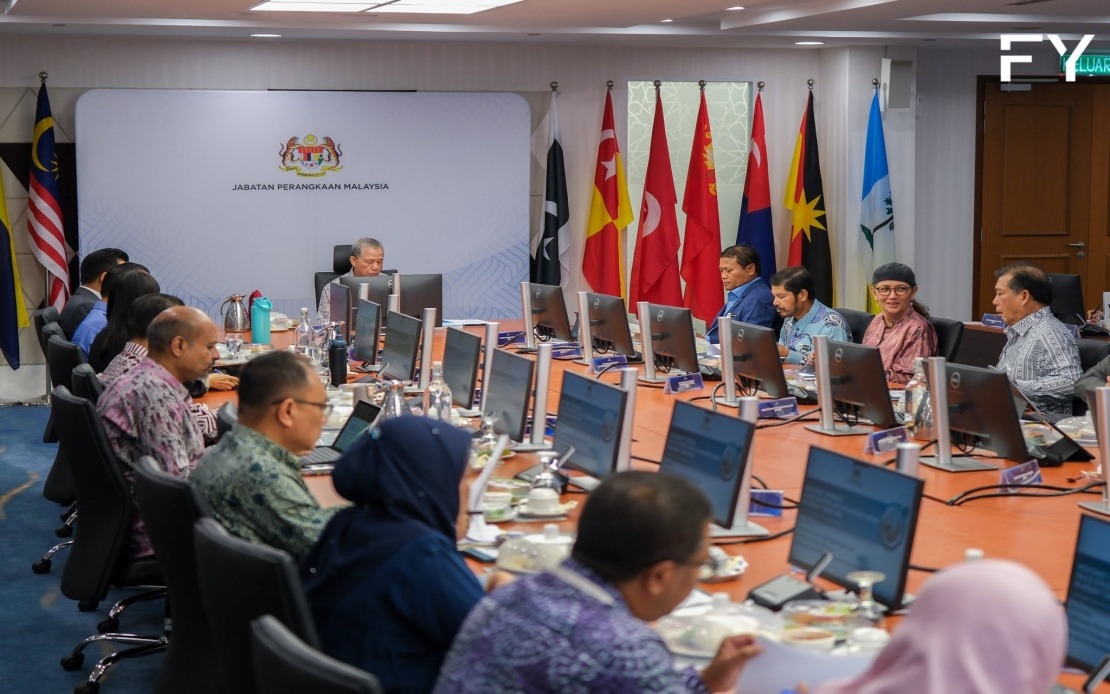
Malaysia's government is placing data analytics and artificial intelligence at the heart of its strategic planning framework for the 13th Malaysia Plan (13MP), which will guide national development from 2026 to 2030. Deputy Prime Minister Datuk Seri Fadillah Yusof underscored this commitment while chairing a high-level meeting of the National Statistics and Data Council (MSDN) in Kuala Lumpur, emphasizing that robust data infrastructure and analytical capabilities are no longer optional luxuries but fundamental requirements for modern governance.
In an increasingly complex global environment marked by economic volatility, geopolitical realignments, rapid digital innovation, climate crises and technological disruption, nations must ground their policy decisions in empirical evidence rather than intuition or historical precedent. Fadillah framed this reality as the primary rationale for investing heavily in Malaysia's National Statistical System, arguing that the quality, timeliness and integrity of data directly correlate with the effectiveness of government interventions and their real-world impact on citizens. This perspective reflects a broader international trend towards data-driven governance, where governments use sophisticated analytics to identify problems, design solutions and measure outcomes with greater precision.
The deputy prime minister pointed to Malaysia's recent economic resilience as evidence that this approach yields tangible results. The Malaysian economy expanded by 5.4 per cent during the first quarter of 2026, a performance that Fadillah attributed partly to development policies formulated on the basis of rigorous data analysis. This growth rate suggests that the current administration's investment in statistical capacity and evidence-based planning is producing measurable dividends, though broader global and regional factors also contribute to this outcome. For Malaysian policymakers and investors, this economic momentum creates both opportunity and pressure—opportunity to sustain growth through continued innovation, and pressure to avoid complacency that might undermine competitiveness.
Strengthening the National Statistical System requires far more than simply collecting more numbers. Fadillah emphasized that the enhancement process must involve strategic coordination across multiple sectors and levels of government, including ministries, federal agencies, state governments, the private sector, academic institutions and research organizations. This multi-stakeholder approach reflects recognition that valuable data exists across numerous institutions and domains, and that siloed information systems waste resources and limit insights. The challenge lies in establishing data-sharing protocols that respect privacy and security concerns while enabling the kind of comprehensive analysis that supports effective decision-making.
The digital era has introduced both opportunities and complexities for national data systems. Fadillah stressed that Malaysia must develop the capacity to integrate information from diverse sources in ways that are simultaneously secure, ethically sound and analytically productive. This requires not only technological infrastructure but also institutional frameworks, regulatory standards and human expertise. Southeast Asian nations including Malaysia face particular challenges in this regard, as many government systems and private organizations still operate on legacy technology platforms incompatible with modern data integration approaches. Building this capacity demands sustained investment and international knowledge-sharing.
Artificial intelligence emerges as a critical complementary technology in this data ecosystem. Rather than viewing AI as a replacement for human judgment, Fadillah positioned it as a tool for enhancing the nation's productivity, innovation and competitive standing. When applied to large datasets, AI algorithms can identify patterns, forecast trends and generate insights that would be impractical for humans to extract manually. For Malaysia, sectors such as energy transition, climate resilience, water resource management and sustainable development represent priority areas where AI-enabled analytics could unlock significant value. These are also domains where investment requirements are substantial and hence where analytical precision in project selection and resource allocation becomes especially important.
The meeting reviewed several concrete initiatives that embody this strategy. These included standardizing Malaysia's official statistical definitions and methodologies, establishing coherent data governance frameworks, integrating administrative records from various government systems, creating dedicated databases for science and technology talent, mobilizing data insights for youth development programmes, and implementing comprehensive national systems for tracking road asset conditions. Each of these initiatives addresses a specific governance challenge while contributing to a broader vision of an integrated, trustworthy and development-oriented national data infrastructure. The comprehensiveness of this agenda suggests serious governmental commitment, though implementation challenges remain significant.
For Malaysian enterprises and international investors, this policy direction carries important implications. A government increasingly reliant on data-driven decision-making may become more predictable and transparent, as policies flow from publicly available statistics rather than political discretion. Conversely, companies that can generate, analyze or provide data services face expanding market opportunities. The emphasis on data security and ethical governance also signals that Malaysia will impose standards on data handling practices, potentially creating compliance costs but also building consumer and investor confidence in the integrity of digital transactions.
Regionally, Malaysia's strategic investment in data infrastructure and AI capacity positions it as a potential hub for data-driven governance innovation in Southeast Asia. Countries across the region face similar developmental challenges and capacity constraints, suggesting potential for knowledge transfer and collaborative development of regional data standards and analytical tools. This could enhance Malaysia's soft power and technical influence within ASEAN while generating economic benefits through the export of expertise and technology.
The success of the 13MP will ultimately depend on whether this emphasis on data and AI translates into better policy outcomes. Improving the statistical system is a necessary but not sufficient condition for effective governance—decision-makers must actually use the evidence that quality data provides, and must possess the political will to adjust policies when data indicates they are failing. Fadillah's public emphasis on these themes suggests at least rhetorical commitment, though the test will come in observing whether difficult policy decisions are made in response to contrary evidence.