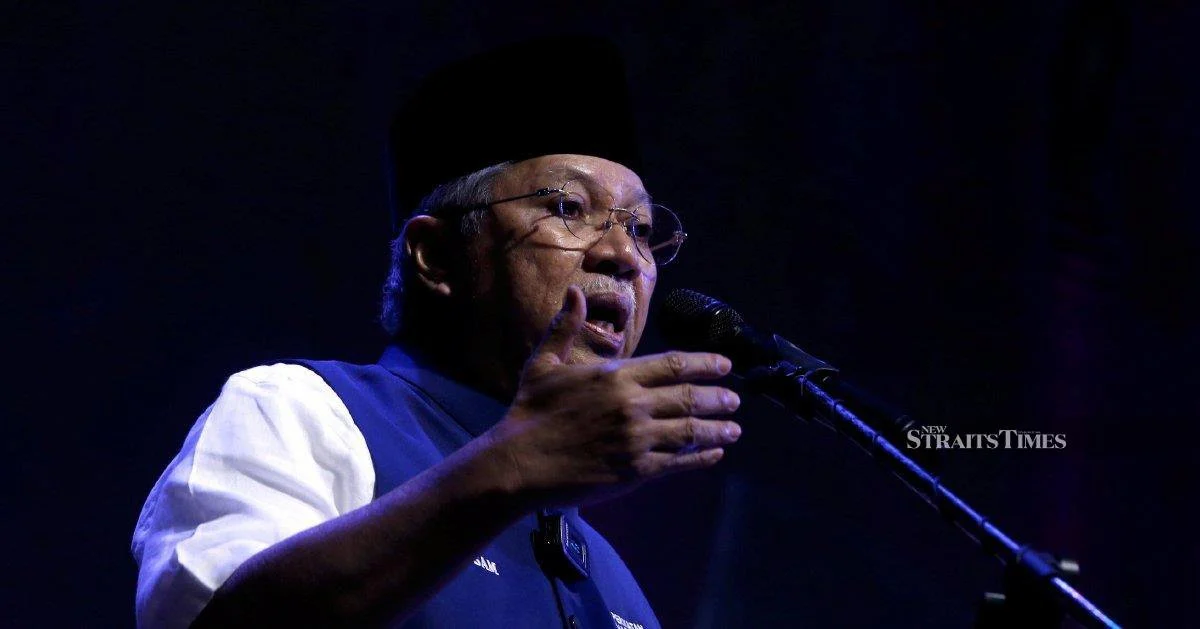
Finance Minister Annuar Musa has called on Bersatu to adopt a measured approach and refrain from making hasty public pronouncements regarding recent developments within Perikatan Nasional (PN), as the opposition coalition contends with escalating internal friction that threatens its political stability and unity.
The appeal underscores rising tensions within PN, the political bloc that has positioned itself as a counter-force to the ruling coalition and sought to galvanise support among opposition voters nationwide. Bersatu, led by former Prime Minister Mahathir Mohamad, forms a crucial component of the alliance and has historically wielded significant influence within the broader PN framework. However, recent disagreements within the coalition have exposed fault lines that could undermine the opposition's electoral prospects and legislative effectiveness should the tensions persist unresolved.
For Malaysian observers and political analysts, the call for restraint reflects a delicate balancing act within PN at a moment when the coalition faces multiple strategic challenges. Coalition members must navigate competing priorities, leadership ambitions, and policy differences while maintaining a united front against the government. The coalition's effectiveness depends substantially on member parties managing their differences privately rather than escalating disputes through public statements, which can amplify divisions and embolden the ruling alliance.
Bersatu's position within PN carries particular weight given its parliamentary representation and its capacity to influence electoral outcomes in crucial constituencies. The party's actions and rhetoric invariably shape coalition dynamics, making Musa's intervention a signal that senior figures across PN are concerned about internal management and unity preservation. Any deterioration in PN's cohesion could reverberate across Malaysian politics, potentially weakening the opposition's ability to present a credible alternative government at the next general election.
The tensions emerging within PN must be understood within the broader context of Malaysian coalition politics, where alliances frequently prove volatile and member parties pursue competing agendas while ostensibly committed to broader objectives. Opposition coalitions have historically struggled to maintain unity when confronting the entrenched advantages of ruling coalitions, particularly regarding resources, institutional control, and established voter constituencies. PN's current difficulties reflect enduring structural challenges that plague multi-party coalitions attempting to govern or provide electoral opposition across Southeast Asian democracies.
For regional observers, Malaysia's coalition management challenges mirror experiences elsewhere in Southeast Asia, where opposition alliances frequently fragment or weaken when internal pressures mount. Thailand, Indonesia, and the Philippines have all witnessed opposition coalitions collapse or splinter when member parties prioritised individual advancement over collective goals. Malaysia's political trajectory will substantially depend on whether opposition coalitions can transcend these patterns and maintain sufficient unity to offer genuine policy alternatives and governance models.
Musa's intervention suggests that PN's leadership recognises the stakes involved in managing current tensions effectively. Coalition leaders evidently fear that unguarded public statements could trigger cascading withdrawals or defections that might fundamentally alter parliament's political arithmetic and the opposition's competitive position. The call for calm reflects pragmatic recognition that coalition maintenance requires discipline, particularly among senior members whose utterances carry substantial weight and can influence rank-and-file member behaviour.
The timing of these tensions carries significance as Malaysian politics continues adjusting to post-2022 realignments that followed the collapse of Sheraton Move dynamics and the formation of the Unity Government. Perikatan Nasional emerged as the primary opposition force after those upheavals, positioning itself as fundamentally different from the ruling coalition and capable of offering Malaysian voters genuine policy and governance alternatives. However, PN's capacity to realise these aspirations depends substantially on overcoming internal cohesion challenges that persistently plague opposition coalitions across the country's political history.
For Bersatu specifically, maintaining restraint serves multiple strategic interests beyond immediate coalition management concerns. The party must consider its individual brand positioning, its relationship with grassroots members who may hold diverse views on coalition strategy, and its long-term political survival regardless of PN's ultimate trajectory. Untempered public statements that escalate internal disputes could damage Bersatu's credibility and compound existing governance challenges while simultaneously weakening its bargaining position within any coalition architecture.
The broader implications for Malaysian governance extend beyond immediate coalition politics. The nation's democratic quality and electoral competitiveness depend substantially on whether multiple coalitions can field credible alternatives and maintain sufficient internal discipline to offer voters meaningful choices. When coalitions fragment or suffer chronic instability, government accountability diminishes and voters face constrained options, potentially contributing to disengagement or cynicism regarding democratic participation. Consequently, Musa's appeal for measured response carries significance beyond mere coalition housekeeping, touching on fundamental questions regarding Malaysia's democratic health and competitive political environment.