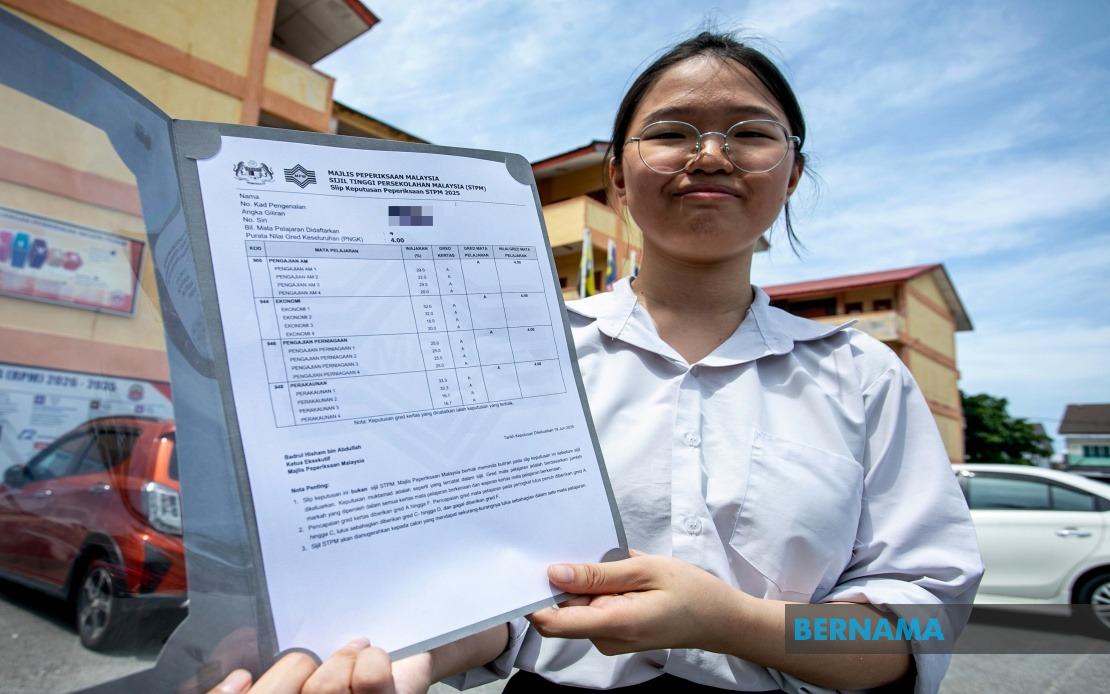
Twenty-year-old Yong Xin Yi has become an exemplar of academic excellence at Sekolah Menengah Kebangsaan Jalan Tasek in Ipoh, obtaining four A grades in the 2025 Sijil Tinggi Persekolahan Malaysia (STPM) examination. The only child and Ipoh native achieved a perfect Cumulative Grade Point Average of 4.00 across General Studies, Principles of Accounting, and Economics, joining a select group of five students from her school who attained the same distinction this year.
The foundation of Xin Yi's success rests on a meticulously structured daily routine that demonstrates how consistency and strategic time management can transform academic outcomes. Every evening from 5:00 pm to 10:00 pm, she devoted five uninterrupted hours to revising and consolidating what she had learnt throughout the school day. This disciplined approach to after-hours study forms only half of her academic strategy, however. Equally crucial to her results was the attention she maintained during classroom instruction itself, where she ensured maximum concentration during teaching and learning sessions to absorb explanations directly from her teachers.
Xin Yi's philosophy on classroom engagement reflects a sophisticated understanding of how learning efficiency works. By focusing intently during lessons, she minimized confusion later when tackling material independently, reducing the cognitive load on her evening revision sessions. This dual emphasis on both in-class absorption and systematic home study creates a feedback loop where each component strengthens the other. Her approach stands in contrast to students who rely heavily on revision to compensate for inattention during lessons, a more laborious path that ultimately demands greater time investment.
Completion of assigned homework formed another non-negotiable element of her study regimen. Rather than viewing homework as a mere compliance exercise, Xin Yi recognized it as a practical opportunity to deepen mastery of taught concepts. This perspective transformed routine assignments into active learning opportunities rather than tasks to be rushed through. The cumulative effect of this thoroughness became evident in her examination performance, where comprehensive understanding rather than superficial familiarity with content clearly distinguished her results.
Among her four subjects, General Studies presented the most formidable challenge. The subject demands not only subject knowledge but also refined writing skills, precise adherence to specified formats, and clear comprehension of the marking scheme's weightings and expectations. Recognizing this weakness early, Xin Yi strategically allocated additional focus to General Studies compared with her other subjects, demonstrating the adaptive capacity to identify areas requiring reinforcement and act accordingly. This self-aware approach to academic vulnerability prevented potential weakness from becoming a limiting factor in her final grades.
The significance of parental support in Xin Yi's achievement cannot be understated, a reality she acknowledges with maturity and gratitude. Her parents—a clerk and a phone salesman—provided continuous encouragement throughout her secondary and pre-university education despite their own professional demands. This emotional and psychological backing created an environment where studying felt purposeful rather than burdensome, a distinction that often determines whether discipline becomes sustainable or collapses under pressure.
Xin Yi's motivation transcends personal academic ambition, rooted instead in a desire to honor her parents' sacrifices and improve her family's circumstances. She articulates a clear intention to leverage her educational success as a means of creating better prospects for her household, a perspective reflecting the values of filial responsibility deeply embedded in Malaysian culture. This purpose-driven approach likely sustained her through challenging periods of study when immediate gratification was unavailable.
Her aspiration to become an economist demonstrates careful consideration of both personal aptitude and career trajectory. Rather than selecting a field based on prestige or parental expectation, Xin Yi assessed her genuine interests against realistic appraisal of employment prospects and professional growth potential in economics. This deliberative approach suggests maturity beyond her years and a willingness to align personal capabilities with market realities.
Following her STPM success, Xin Yi intends to pursue a degree in economics at Universiti Putra Malaysia (UPM), a institution well-regarded in the Malaysian higher education landscape for its applied research and industry connections. This choice positions her favorably for subsequent specialization in fields such as development economics, policy analysis, or financial services—sectors where Malaysia increasingly requires sophisticated local talent.
The trajectory of students like Yong Xin Yi offers valuable insights for Malaysian educators and parents navigating the increasingly competitive educational landscape. Her success was not dependent on exceptional innate ability, extraordinary financial resources, or access to elite tuition. Rather, it emerged from the intersection of disciplined habits, strategic focus, parental support, and a sense of purpose extending beyond individual achievement. For other secondary school students confronting STPM preparation, Xin Yi's example demonstrates that systematic daily practice, classroom engagement, and honest recognition of one's weaknesses constitute a replicable formula for academic excellence. Her story particularly resonates given the socioeconomic background of her family, suggesting that structured dedication and supportive family environments can overcome resource constraints.