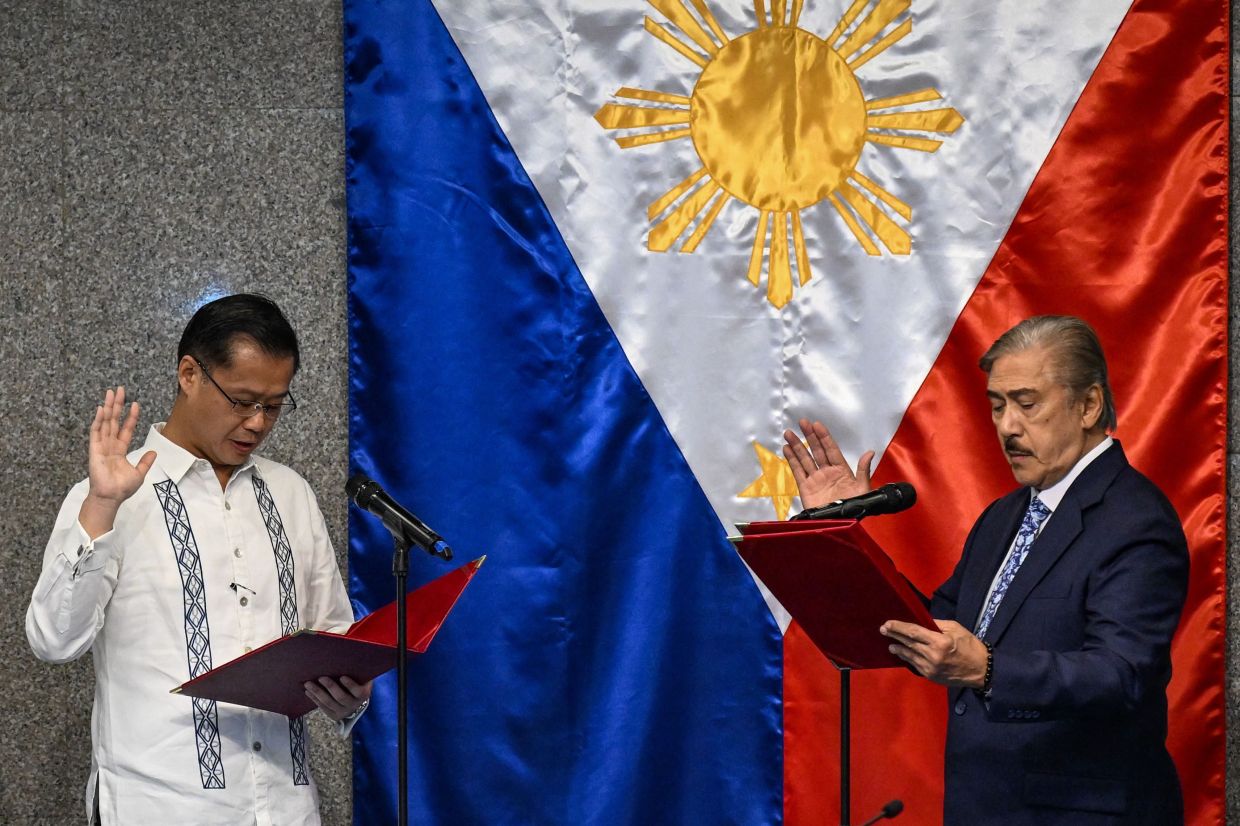
Senator Sherwin Gatchalian has been elected president of the Philippine Senate following a special session on Wednesday in which 13 members cast their votes to install him as head of the 24-member chamber. The vote represents a significant shift in the chamber's leadership after weeks of internal dispute and procedural wrangling that highlighted deep fissures within the upper house of Congress.
Gatchalian's path to the presidency was marked by considerable political drama. The former Valenzuela City mayor and House Representative had been elected Senate president pro tempore on June 3 by 12 colleagues, an action that simultaneously sought to unseat Alan Peter Cayetano from the position he had assumed on May 11. However, the legality and legitimacy of this move became immediately disputed, with Cayetano insisting he retained the presidency and arguing that a proper election requiring at least 13 senators would be necessary to remove him or elect a successor.
The mathematics of Senate politics shifted unexpectedly when Senator Joel Villanueva, who had previously aligned with Cayetano's faction, switched his support to Gatchalian's bloc. This defection proved decisive in tipping the balance and creating the necessary quorum for a formal election. Villanueva's change of allegiance appears to have been decisive enough that by Tuesday, Cayetano acknowledged the arithmetic had fundamentally altered and signalled his willingness to step aside, essentially conceding defeat before the Wednesday vote took place.
Gatchalian brings considerable political experience to the role, having served in various capacities before entering the Senate. His tenure as Valenzuela City mayor gave him local governance experience, while his previous work in the House of Representatives provided him with understanding of legislative processes. These credentials position him as someone with practical administrative experience, though his presidency begins amid questions about the fractious nature of his election and the procedural tensions that preceded it.
The timing and execution of Gatchalian's election must be understood within the broader context of the Senate's current operational challenges. The chamber is functioning with only 22 sitting members rather than its full complement of 24. Senator Jinggoy Estrada surrendered to police earlier this month and subsequently faced a 90-day suspension order from the anti-graft court, the Sandiganbayan, on charges related to his graft case. This suspension removes him from active legislative duties during a critical period. Additionally, Senator Ronald Dela Rosa remains a fugitive sought by the International Criminal Court, with his whereabouts unknown, further reducing the effective working membership of the Senate.
These absences have created both practical and symbolic complications for Senate operations. With 22 active members, achieving quorum requires a significant proportion of senators to be present. The minimum threshold of 13 votes that Gatchalian secured represents barely more than half of the full 24-member body, underscoring how the current circumstances have compressed the chamber's ability to conduct business and made leadership elections more fragile. Any further departures or suspensions could create situations where procedural legitimacy becomes increasingly difficult to establish.
The leadership transition also reflects deeper ideological or factional divisions within the Senate that extend beyond personality conflicts. The fact that senators were willing to engage in the procedural dispute surrounding Cayetano's tenure, and that votes could shift based on individual calculations rather than stable bloc alignments, suggests that the chamber lacks the kind of institutional consensus that typically provides stability. Cayetano's relatively swift decision to step down once the numerical reality became apparent suggests that even he recognised the futility of attempting to hold office without meaningful support.
For Philippine governance, the resolution of this leadership question provides some measure of clarity moving forward, though the manner of its resolution raises questions about institutional health. That a Senate president could be elected by marginally more than half of the full chamber's strength, operating in a period when the chamber is already operating below capacity, demonstrates how contingent and fragile leadership mandates can become. Future legislative initiatives will depend significantly on Gatchalian's ability to build broader consensus and maintain the coalition that elevated him to office.
Regionally, the Philippine Senate's internal dynamics matter because the chamber handles significant matters affecting Southeast Asia, including foreign policy, trade relations, and security arrangements. A fractured leadership structure can slow decision-making on important regional issues. As the Philippines navigates complex relationships with regional powers and manages its own security concerns, a Senate presidency that lacks overwhelming support may complicate the institution's ability to respond decisively to emerging challenges or opportunities requiring legislative action.
Gatchalian will now face the task of governing a chamber dealing with reduced membership, prior factionalism, and questions about the legitimacy foundation of his election. His success will depend partly on his ability to bridge the divisions that the recent leadership dispute exposed and to establish working relationships with senators across different factional alignments. The coming months will test whether his election marks a genuine reset of Senate dynamics or merely a temporary truce in ongoing institutional tensions.