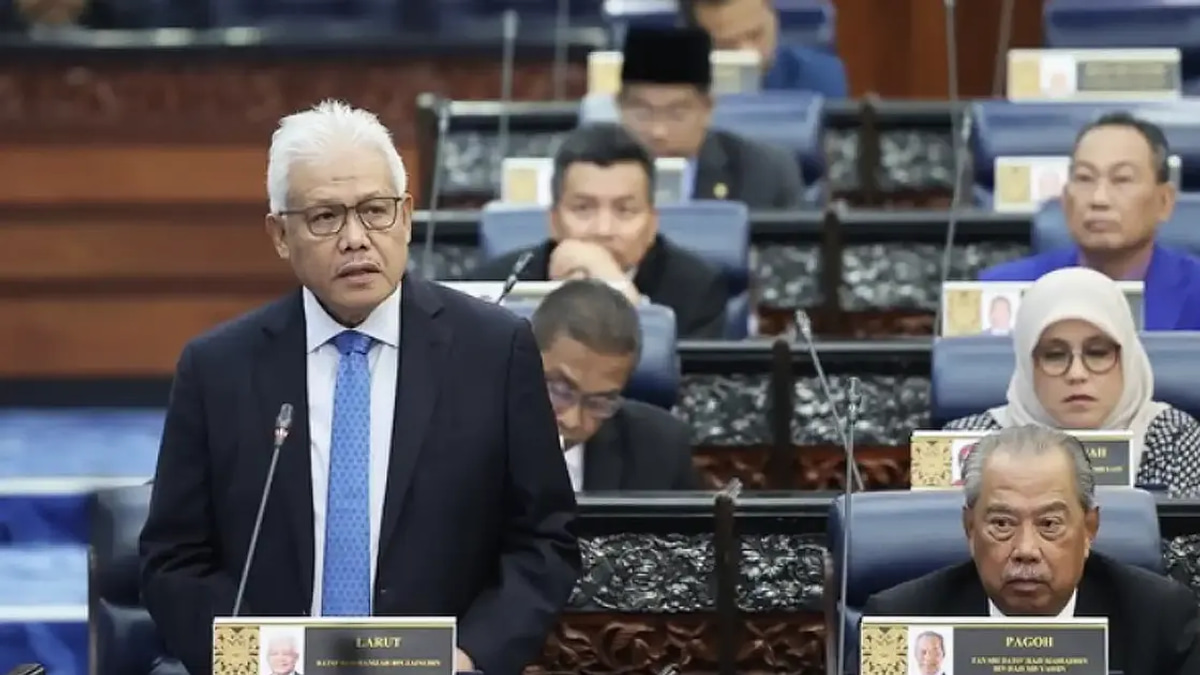
Parti Wawasan Negara has formally unveiled its full central leadership structure in Kuala Lumpur, assembling a coalition of seasoned political veterans, former government ministers, sitting parliamentary representatives, and accomplished professionals. The announcement represents a substantive development within Malaysia's increasingly fragmented political scene, introducing a new entity with ambitions to challenge established parties and reshape the competitive dynamics at federal and state levels.
The appointment of Hamzah and Rais Yatim to head the party's leadership hierarchy signals an attempt to leverage their accumulated political experience and networks built across decades in governance. Both figures command significant recognition among Malaysian political circles, having held portfolios and navigated the complexities of national governance during their tenures. Their prominence at the helm suggests Wawasan Negara aspires to position itself as a serious contender rather than merely another political vehicle, relying on the credibility these veteran politicians bring to attract both established networks and new adherents.
The inclusion of former ministers within the leadership ranks underscores a deliberate strategy to incorporate individuals with executive experience and institutional knowledge. Such appointments enable the party to articulate policy positions informed by direct experience implementing governmental functions, potentially differentiating it from newer political entities lacking such operational depth. These individuals understand budgetary constraints, legislative procedures, and the practical complexities of translating political promises into actionable governance, assets that typically enhance a party's perceived viability among pragmatic voters.
The participation of sitting members of parliament reflects the party's capacity to draw support from currently elected representatives, though their motivations warrant examination. For some MPs, joining a new political movement might represent genuine ideological realignment or dissatisfaction with their current party structures. For others, it could signal hedging against electoral uncertainties or repositioning ahead of anticipated political shifts. Regardless of individual motivations, the presence of active parliamentarians provides immediate legislative representation and demonstrates existing grassroots support translated into electoral success.
Integrating professionals beyond politics into the leadership structure addresses an increasing voter demand for competence-based governance. Malaysian voters, particularly urban and educated demographics, increasingly expect political parties to demonstrate technical expertise across economic policy, fiscal management, technological innovation, and public service delivery. Professionals from private sector, corporate, academic, and technical backgrounds can potentially enhance policy credibility and attract votes from constituencies fatigued by what they perceive as ideologically driven but pragmatically ineffective governance.
The timing of Wawasan Negara's formal leadership announcement reflects Malaysia's volatile political environment. The country has experienced several significant realignments over the past five years, including the 2018 general election that toppled an incumbent government, subsequent coalition reorganisations, and shifting parliamentary mathematics. In this context, new political movements offering alternative governance narratives find receptive audiences among voters dissatisfied with existing options, particularly if they can assemble credible leadership teams capable of articulating coherent visions for national development.
For regional observers, Wawasan Negara's emergence contributes to a broader Southeast Asian pattern of political fragmentation and realignment. Thailand, Indonesia, and the Philippines have all witnessed similar phenomena where traditional political structures fracture and new movements emerge claiming to represent alternative approaches. Malaysia's institutional maturity and democratic frameworks mean such transitions occur through elections rather than extrajudicial means, yet the underlying dynamics reflect comparable tensions between entrenched political establishments and constituencies demanding fresh alternatives.
The party's structure, combining veteran political experience with professional expertise, appears calibrated to appeal across demographic and income segments. Urban middle-class voters attracted to professional competence may find the party's professional representatives appealing, while those valuing political experience and institutional knowledge can point to the veteran politicians. This heterogeneous leadership composition enables the party to pitch itself as a bridge between ideological and pragmatic governing approaches, positioning itself as neither purely reform-oriented nor purely establishment-aligned.
However, assembling prominent individuals does not automatically translate into electoral success or sustained organisational cohesion. Malaysian politics frequently demonstrates that personality-driven coalitions can fragment when immediate electoral goals pass or when internal disagreements emerge. Wawasan Negara's long-term viability will depend on developing genuine institutional structures, articulating distinctive policy platforms, building grassroots organisation in constituencies, and maintaining internal unity despite differing perspectives among its diverse leadership.
The announcement also carries implications for Malaysia's major established parties. Umno, MCA, DAP, PKR, and others must contend with the reality that disaffected members or sympathisers now have an alternative vehicle through which to pursue political engagement. Whether Wawasan Negara successfully mobilises this potential support or merely fragments existing party bases without achieving critical mass remains uncertain, but its mere existence reshapes the competitive landscape and forces established parties to reassess strategies, messaging, and organisational effectiveness.
Looking ahead, observers should monitor how Wawasan Negara translates its leadership announcements into concrete electoral outcomes. Upcoming state elections and the next federal general election will test whether the party's leadership structure generates sufficient appeal to capture meaningful parliamentary representation. The party's performance will reveal whether Malaysian voters genuinely desire the alternative that Wawasan Negara claims to represent, or whether established political structures retain sufficient institutional advantages and voter loyalty to withstand this challenge.