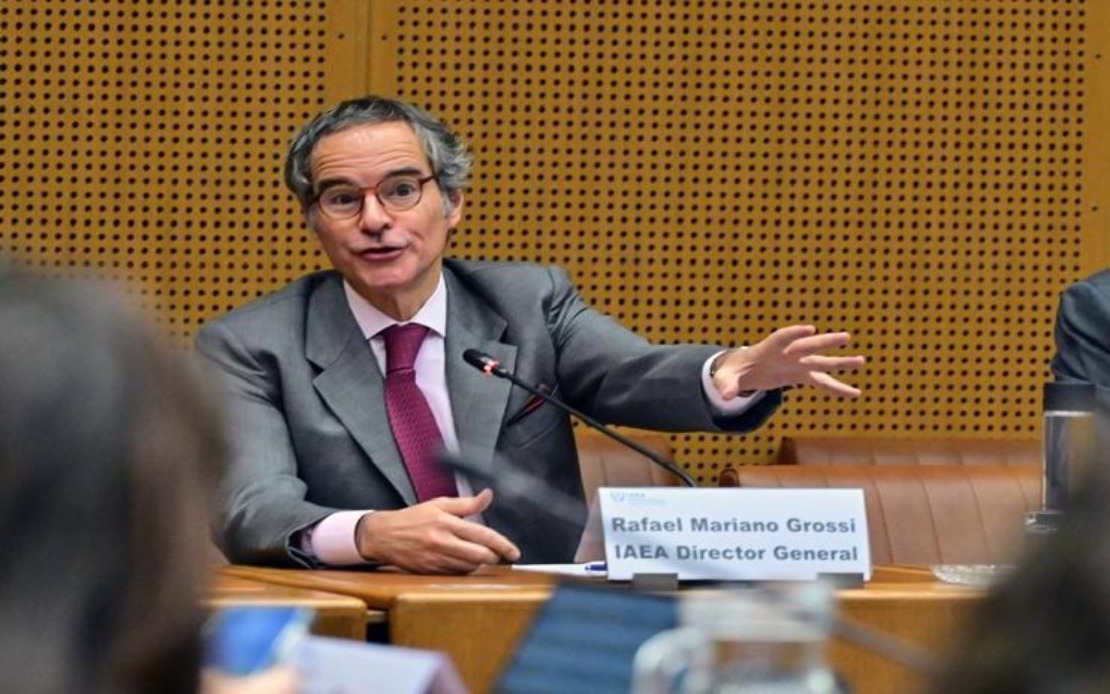
The head of the United Nations' nuclear oversight body has made a forceful plea for sustained diplomatic engagement as Washington and Tehran position themselves for face-to-face discussions in Switzerland on Sunday. International Atomic Energy Agency Director General Rafael Mariano Grossi issued his statement via social media, underscoring that the current juncture demands every available avenue for negotiation be explored and allowed to flourish without unnecessary constraints or preconditions.
Grossi's intervention carries particular weight given the IAEA's central role in monitoring compliance with nuclear agreements and verifying the technical aspects of any potential settlement between the two nations. His remarks reflect the agency's understanding that successful diplomacy hinges not merely on the quality of proposals tabled but on the political will and atmospheric conditions that enable negotiators to move beyond entrenched positions. The timing of his statement suggests international stakeholders recognise that this moment represents a genuine opportunity, albeit a delicate one that requires careful handling.
The Swiss location for these talks is no coincidence. Switzerland has long served as a neutral ground for sensitive international negotiations, and Grossi took the opportunity to meet with Swiss Foreign Minister Ignazio Cassis at Burgenstock to discuss recent developments regarding Iran's nuclear programme and to acknowledge Switzerland's historical commitment to multilateral problem-solving. Cassis himself hosted separate meetings with both parties, functioning as a diplomatic intermediary who ensures each side understands the other's concerns and constraints ahead of their direct engagement.
The upcoming talks represent a significant escalation from the existing pattern of indirect communications. For months, American and Iranian representatives have relied on intermediaries and shuttle diplomacy, with third parties carrying messages back and forth rather than sitting across the table from one another. Direct dialogue implies a readiness to invest political capital and risk the exposure that comes with face-to-face negotiation, where misstatements cannot easily be reframed and commitments carry greater weight.
Preceding this diplomatic breakthrough was the signing of the Islamabad Memorandum of Understanding between US President Donald Trump and Iranian President Masoud Pezeshkian on Wednesday. This bilateral accord served as the foundational agreement paving the way for the Switzerland discussions, establishing the framework within which more detailed nuclear negotiations could proceed. The memorandum itself remains largely confidential in its specific terms, though both governments have indicated it represents a mutual commitment to pursue peaceful resolution of outstanding disputes.
For Malaysian and Southeast Asian observers, these developments carry broader strategic implications. The region has long harboured concerns about potential military conflict between Washington and Tehran, which would inevitably disrupt global energy markets and shipping lanes vital to Malaysia's trade and energy security. A destabilising confrontation in the Middle East would reverberate through supply chains, insurance costs, and the broader economic environment on which regional prosperity depends. Thus there is considerable interest in whether diplomatic channels can hold and produce concrete agreements.
The nuclear question at the heart of these negotiations remains technically complex and politically charged. Previous international agreements, such as the 2015 Joint Comprehensive Plan of Action, have foundered over verification procedures, sanctions relief timelines, and the scope of permitted uranium enrichment activities. Current negotiations must grapple with these same fundamental issues whilst operating in a somewhat different geopolitical context than existed a decade ago. The IAEA's role in any new arrangement will be crucial, as the agency must possess sufficient access and inspection authority to maintain confidence among international parties.
Grossi's emphasis on giving diplomacy adequate opportunity reflects a recognition that premature declarations of failure or excessive pressure from third parties can undermine productive negotiation. Once delegations sit down, the negotiating dynamic depends heavily on creating space for creative problem-solving, face-saving compromises, and the incremental trust-building that allows seemingly intractable differences to be bridged. The IAEA director's public statement serves partly as a plea to outside governments and commentators to permit this process to unfold without constant demands for immediate breakthroughs or declarations of victory.
The involvement of Switzerland as host venue and Cassis as diplomatic facilitator also signals that both sides have accepted a framework emphasising international law and multilateral norms rather than unilateral pressure or coercive diplomacy. This institutional context, combined with the IAEA's technical expertise and monitoring capacity, creates conditions potentially more favourable for sustainable agreements than would exist if talks occurred in a context of mutual recrimination or military threat.
In the coming days, observers will scrutinise both the tone and substance of initial exchanges. Early signals regarding mutual recognition of legitimate concerns, acceptance of verification procedures, and willingness to address historical grievances will suggest whether this diplomatic window can produce meaningful progress. For the broader international community, including nations in Southeast Asia dependent on stable Middle Eastern relations and energy supplies, the success or failure of these talks represents a matter of considerable consequence. The IAEA chief's call for diplomatic space represents not merely a procedural request but a recognition that regional and global security depend substantially on whether rational negotiation can prevail over confrontation.
%22%2F%3E%3C%2Fpattern%3E%3C%2Fdefs%3E%3Crect%20width%3D%22100%25%22%20height%3D%22100%25%22%20fill%3D%22url(%23ph44705g)%22%2F%3E%3Crect%20width%3D%22100%25%22%20height%3D%22100%25%22%20fill%3D%22url(%23ph44705p)%22%2F%3E%3Ctext%20x%3D%2250%25%22%20y%3D%2250%25%22%20text-anchor%3D%22middle%22%20dominant-baseline%3D%22central%22%20fill%3D%22rgba(255%2C255%2C255%2C0.95)%22%20font-family%3D%22Georgia%2C%20'Times%20New%20Roman'%2C%20serif%22%20font-weight%3D%22700%22%20font-size%3D%22226%22%20letter-spacing%3D%22-0.02em%22%3EHamzah%3C%2Ftext%3E%3C%2Fsvg%3E)