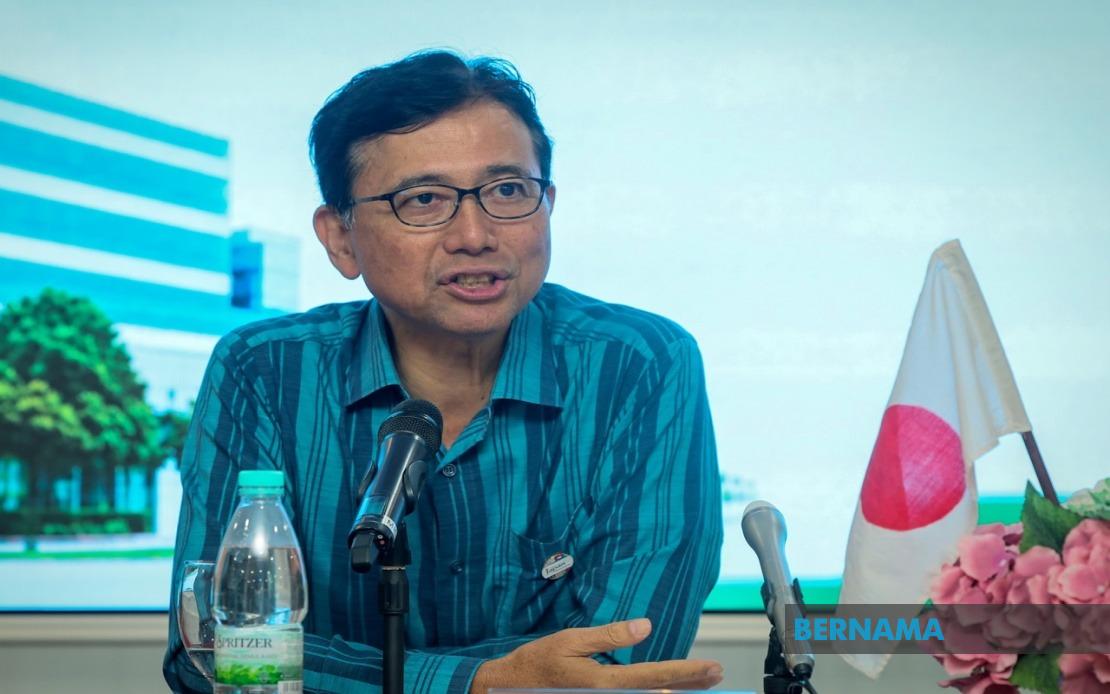
Japan's modernised approach to regional engagement creates substantial opportunities for Malaysia's ambitions to establish itself as a leading Southeast Asian technology and innovation centre, according to Japanese Ambassador to Malaysia Noriyuki Shikata. The updated Free and Open Indo-Pacific framework, unveiled by Prime Minister Sanae Takaichi in May, represents a deliberate shift toward practical economic collaboration, particularly in emerging sectors where Malaysia possesses significant competitive advantages and growth potential.
The FOIP concept itself originated from former Prime Minister Shinzo Abe's 2016 vision for preserving peace and fostering development across the Indo-Pacific. Rather than remaining static, Japan's leadership has progressively refined this framework to address contemporary geopolitical and economic challenges. Takaichi's iteration moves beyond broad principles toward concrete action in areas ranging from artificial intelligence infrastructure to satellite communications networks and undersea cable systems—domains critical to regional digital connectivity and economic security.
Ambassador Shikata characterises this evolution as a pragmatic recalibration that prioritises economic security, industrial sustainability and genuine partnership with developing economies in the Global South. This approach dovetails remarkably well with ASEAN's own Indo-Pacific Outlook, creating a rare alignment where Japan's regional strategy and Southeast Asia's collective interests reinforce rather than compete with one another. For Malaysia specifically, this convergence translates into enhanced opportunities for attracting investment and expertise in high-technology manufacturing and digital services.
Underpinning the updated framework is a substantial financial commitment through the POWERR Asia initiative, which channels US$10 billion toward supporting ASEAN nations in energy security, critical material sourcing and fuel accessibility. Beyond its obvious energy implications, this funding mechanism signals Japan's willingness to underwrite regional resilience in ways that extend beyond traditional aid or soft power gestures. Malaysia stands to benefit from these resources as it navigates global supply chain disruptions and seeks to establish more secure, diversified sources for advanced technology inputs.
For Japanese corporations already operating in Malaysia and those considering expansion, the updated framework creates a more stable operational context. The shift toward knowledge-intensive partnerships rather than labour-cost arbitrage reflects broader industrial trends in both nations. Japanese enterprises increasingly view Malaysia not as a low-cost manufacturing base but as a sophisticated technology partner capable of collaboration in advanced sectors. This reorientation opens pathways for substantial capital inflows into next-generation industries rather than traditional manufacturing expansion.
Malaysia's reputation as a regional semiconductor processing hub receives particular emphasis in Shikata's analysis. Japanese companies recognise the island's technical capabilities and strategic location for developing advanced chip packaging, supporting artificial intelligence infrastructure development and expanding cloud computing services. Given Japan's own semiconductor industry strengths and Malaysia's growing capabilities, bilateral cooperation in this sector could yield distinctive competitive advantages for both economies while reducing reliance on external suppliers for critical components.
The relationship between the two nations has entered a new phase following the establishment of the Comprehensive Strategic Partnership in December 2023. This framework transcends the historic Look East Policy that guided Malaysia's engagement with Japan throughout the 1980s and 1990s. Rather than seeking to emulate Japan's development model, Malaysia now positions itself as an equal partner in innovation ecosystems, with both nations contributing complementary strengths to shared technological challenges. This evolution reflects Malaysia's maturation as an industrial economy with its own research capabilities and technological aspirations.
Malaysian Prime Minister Datuk Seri Anwar Ibrahim's recent engagements with leading Japanese industrial figures—including representatives from Mitsubishi Corporation, ENEOS, DENSO, IBM and Marubeni—established concrete momentum for deepening technological collaboration. These interactions moved beyond diplomatic pleasantries toward substantive discussions of investment intentions and partnership structures in cutting-edge domains. The quality of participants signals that Japan's largest multinational enterprises see genuine commercial opportunities in expanding their Malaysian footprint beyond conventional operations.
The prospect of joint development initiatives focused on artificial intelligence and quantum computing represents a frontier where Malaysia could position itself as more than a manufacturing location. Collaboration with Japanese technology leaders in these domains would enable Malaysian researchers and companies to participate in defining next-generation solutions rather than simply implementing solutions designed elsewhere. Such partnerships cultivate indigenous technical capabilities that generate higher-value employment and create foundation for Malaysia's own technology enterprises to emerge.
Beyond purely commercial dimensions, joint infrastructure protection initiatives reflect shared concerns about supply chain vulnerability and geopolitical instability. Both nations recognise that critical infrastructure underpinning digital economy requires coordinated security approaches and shared intelligence. By establishing mechanisms for mutual protection of supply chains and critical systems, Malaysia and Japan can demonstrate the advantages of practical security cooperation among like-minded economies.
Ambassador Shikata's emphasis on Japan's commitment as a reliable long-term partner carries significance beyond rhetorical flourish. Unlike transactional relationships that shift with commodity prices or political cycles, Japan's updated regional framework suggests sustained strategic interest in Southeast Asian development. For Malaysia, this consistency provides confidence for making substantial policy adjustments and infrastructure investments designed to deepen the technological partnership.
The broader context reveals how regional powers are responding to contemporary challenges through frameworks emphasising prosperity over confrontation. Japan's FOIP update and Malaysia's tech hub ambitions represent complementary strategies for leveraging regional strengths to navigate global uncertainties. As both nations implement these visions through concrete investments and partnerships, other Southeast Asian economies will likely observe outcomes closely, potentially inspiring broader regional alignment around technology-driven development models that balance growth with security and sustainability concerns.