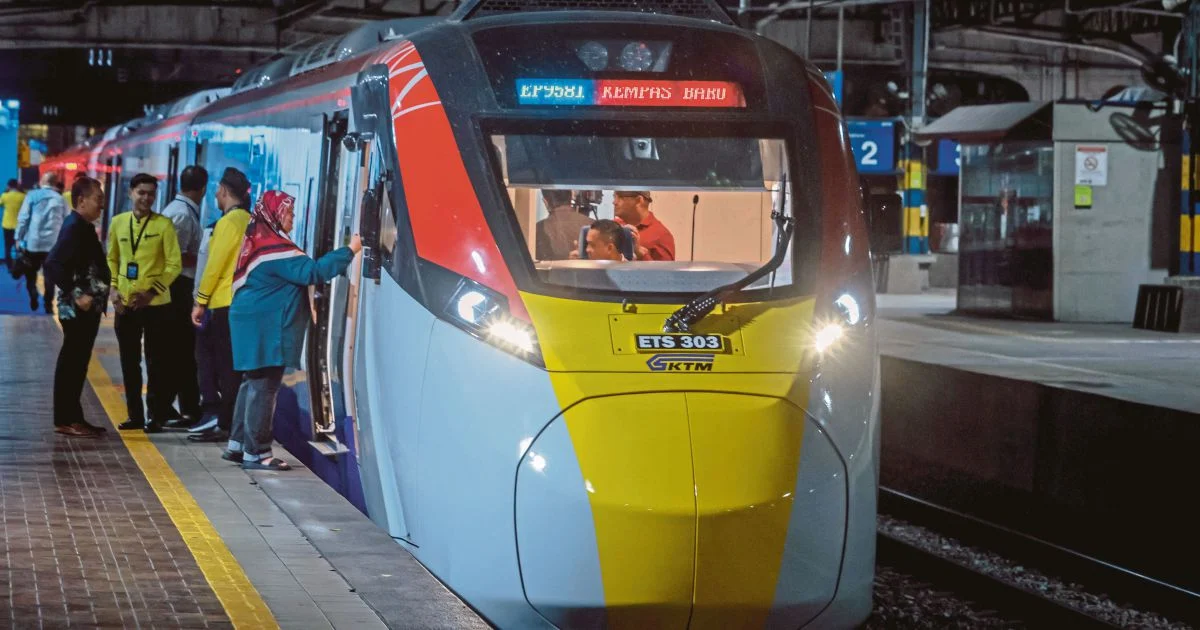
Keretapi Tanah Melayu Bhd (KTMB), the nation's primary rail operator, is responding to expected travel surges by expanding Electric Train Service (ETS) capacity on routes heading south into Johor ahead of the upcoming state election. The decision reflects broader efforts across Malaysia's transport network to facilitate voter mobility during major democratic events, a recurring pattern seen in previous federal and state polls.
The enhanced service schedule specifically targets commuters and voters planning to journey back to Johor for election day, a critical logistics consideration in a state where significant portions of the working-age population reside outside their constituencies for employment. By introducing supplementary train runs alongside its regular timetable, KTMB aims to prevent the bottlenecks and overcrowding that typically characterise transport infrastructure during electoral periods when travel demand spikes dramatically.
Elections in Johor carry particular significance for Malaysia's political landscape, given the state's size, economic importance, and traditionally competitive electoral dynamics. The decision to boost rail capacity underscores recognition among transport authorities that providing accessible travel options can reduce friction in the democratic process. When voters face transport constraints, participation rates may suffer, particularly among those who cannot easily afford alternative options such as private vehicles or commercial coach services.
The ETS network has expanded considerably over the past decade, becoming increasingly central to Malaysia's domestic transport infrastructure. The electric trains offer a faster, more reliable alternative to road travel along the west coast corridor and extensions into key urban and industrial zones. For Johor-bound passengers, the ETS represents a particularly attractive option given potential traffic congestion on highways during election periods and the relatively competitive pricing that makes train travel accessible to middle and lower-income voters.
From a practical standpoint, railway infrastructure operates as a neutral public facility during elections, unlike highways or airports which operate under standard commercial constraints. By dedicating additional capacity specifically to support democratic participation, KTMB demonstrates how state enterprises can operationalise their existing assets to strengthen electoral systems. This approach also reduces strain on road networks and parking facilities in Johor's major urban centres, creating secondary benefits for commercial activity and residents not travelling for voting purposes.
The timing of such announcements typically coincides with official election schedules or when electoral commission dates are formally announced. Transport operators across Southeast Asia frequently implement similar measures during national or state elections, recognising that facilitating voter access constitutes a public service obligation that extends beyond standard commercial considerations. Malaysia's approach aligns with international best practices in supporting electoral participation through infrastructure optimisation.
For Johor residents working in Kuala Lumpur, Selangor, and surrounding states, the enhanced ETS service removes a potential obstacle to returning home for voting. Many voters face difficult choices between maintaining income through work and exercising their constitutional right to participate in elections. By reducing travel friction, enhanced rail capacity indirectly supports higher participation rates and therefore greater legitimacy for electoral outcomes. This consideration gains weight in electoral jurisdictions with substantial outmigration, where diaspora voting becomes a meaningful factor in results.
The logistics of scaling transport capacity require advance coordination between KTMB operations, scheduling departments, and crew management systems. Deploying additional train sets means mobilising rolling stock from other routes or maintenance schedules, marshalling extra staff, and ensuring adequate platform capacity at destination stations. These operational complexities explain why transport operators typically make announcements well in advance of election dates, allowing sufficient lead time for systematic planning and implementation.
Regionally, Malaysia's investment in rail infrastructure positions it favourably compared to certain neighbouring countries where transport sector capacity remains constrained. The ETS system exemplifies how modern transport technology can serve both commercial and civic functions. As Johor continues developing economically, with employment centres increasingly dispersed across the state and beyond, transport connectivity becomes ever more important for maintaining voter accessibility.
The enhanced ETS offering also sends a signal about government commitment to operational fairness and reducing barriers to electoral participation. When state entities actively accommodate election-related travel demands, they implicitly acknowledge that voting requires logistical facilitation and that removing unnecessary obstacles represents appropriate public sector conduct. This principle extends beyond railways to encompassing postal services, public holidays aligned with election dates, and other systemic supports for democratic engagement.
For transport planners monitoring these services, the data generated from increased ETS usage during election periods provides valuable insights into demand patterns and capacity requirements for future infrastructure planning. Johor's continued demographic and economic dynamism suggests that transport corridor expansion remains strategically important, with election-period experience offering real-world testing grounds for system resilience and scalability. The integration of ETS capacity enhancement into election preparations illustrates how routine infrastructure decisions ultimately serve Malaysia's democratic functioning.