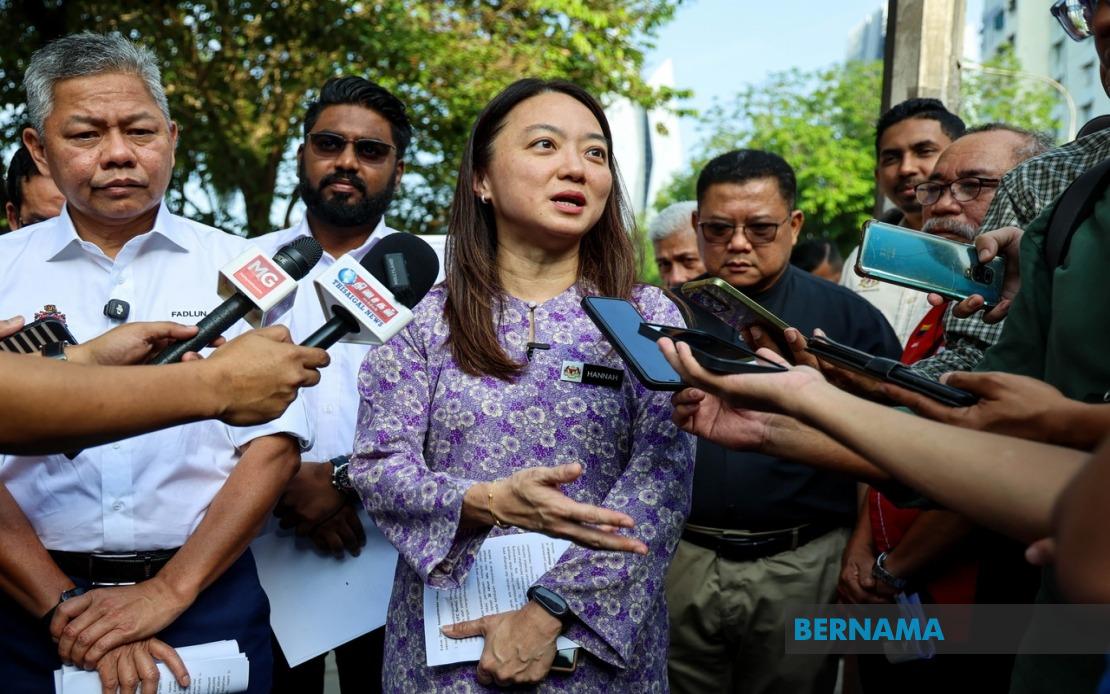
Malaysia's Minister in the Prime Minister's Department (Federal Territories) Hannah Yeoh has issued a direct call for local authorities nationwide to strengthen their approach to public facility maintenance, emphasising that consistent upkeep of cleanliness and safety standards should occur continuously rather than in response to viral social media complaints. Speaking after inspecting a hawker facilities upgrading project near the Urban Transformation Centre Sentul in Kuala Lumpur, Hannah addressed growing public frustration over deteriorating conditions in key tourist destinations, particularly Putrajaya, where recent complaints about damaged lifts and escalators sparked online criticism.
The statement reflects an underlying tension between rapid urban development and the maintenance infrastructure required to sustain public spaces. While large-scale renovation projects may indeed demand additional budgetary allocation from state or federal governments, Hannah argued that fundamental housekeeping duties fall within existing operational responsibilities and should be non-negotiable regardless of financial constraints. Her emphasis on the distinction between major capital works and routine maintenance addresses a common excuse cited by municipal officials when defending inadequate upkeep of public amenities.
Putrajaya's status as a premium tourism destination amplifies the importance of this directive. As Malaysia's administrative capital and a showcase for national development, the city's public infrastructure serves as a barometer for government efficiency and competence in the eyes of both domestic and international visitors. When lifts malfunction or escalators remain broken for extended periods, the reputational damage extends beyond inconvenience to visitors and residents; it signals systemic neglect at the institutional level. Hannah's reference to Putrajaya Corporation's recent ground-level repairs and inspection activities suggests that corrective measures have begun, but her tone indicates dissatisfaction with the reactive rather than anticipatory nature of these responses.
The minister's call for more frequent site visits by local authority leadership represents a management approach centred on visibility and accountability. By insisting that officials conduct regular inspections, Hannah is pushing for a culture shift where problems are identified and resolved before they accumulate to the point of public outcry. This proactive methodology, common in private sector facility management, requires investment of personnel time rather than substantial financial resources, making it achievable across municipalities facing budget constraints. The implication is clear: resource limitations cannot justify the absence of systematic oversight.
Crucially, Hannah also addressed the role of social media in amplifying infrastructure grievances, cautioning users to exercise discernment before sharing complaints online. Her observation that videos circulating on digital platforms often capture only ten percent of the actual situation reflects a broader concern about information fragmentation and the power of partial truths in shaping public perception. While her counsel about wise consumption of social media content carries merit—context matters, and full circumstances are rarely evident in brief clips—the statement also touches on the tension between legitimate public accountability and the challenge posed by instant, unfiltered criticism in the digital age.
For Malaysian readers and policymakers, the implications extend beyond Putrajaya. Local authorities throughout the country face similar pressures to maintain aging infrastructure, manage growing urban populations, and respond to heightened public expectations. Hannah's directive essentially establishes a new standard: that municipalities should operate under the assumption that public scrutiny is constant and that preventive maintenance is not optional. This reframes facility management from a discretionary service to a core governmental obligation, particularly in high-visibility locations.
The acknowledgement that Putrajaya Corporation management has been contacted and that repair works have commenced suggests coordination between state and federal levels, though questions remain about whether such interventions will institutionalise longer-term solutions or represent one-off corrective actions. The effectiveness of Hannah's call will ultimately depend on whether local authorities translate her words into revised maintenance schedules, increased inspection frequencies, and reallocated budgets that prioritise preventive action over crisis management.
The issue also underscores a broader challenge facing Southeast Asian cities: balancing aesthetic development aspirations with the unglamorous but essential work of maintaining basic infrastructure. Tourism-dependent destinations particularly cannot afford to project an image of decline, yet the continuous maintenance required to prevent deterioration often lacks political visibility compared to ribbon-cutting ceremonies for new facilities. Hannah's intervention, by explicitly connecting maintenance standards to Putrajaya's tourism status and national reputation, elevates housekeeping to a strategic imperative rather than treating it as routine operational detail.
Moving forward, the effectiveness of this directive will be measured not merely by announcements of improved practices but by sustained improvements in facility conditions across Malaysian cities. The challenge lies in institutionalising preventive maintenance cultures within local authority structures where staffing levels may be insufficient and budget competition fierce. Hannah's statement represents necessary leadership signalling, yet translating such directives into systemic change requires sustained monitoring, adequate resourcing, and accountability mechanisms that extend beyond ministerial attention.