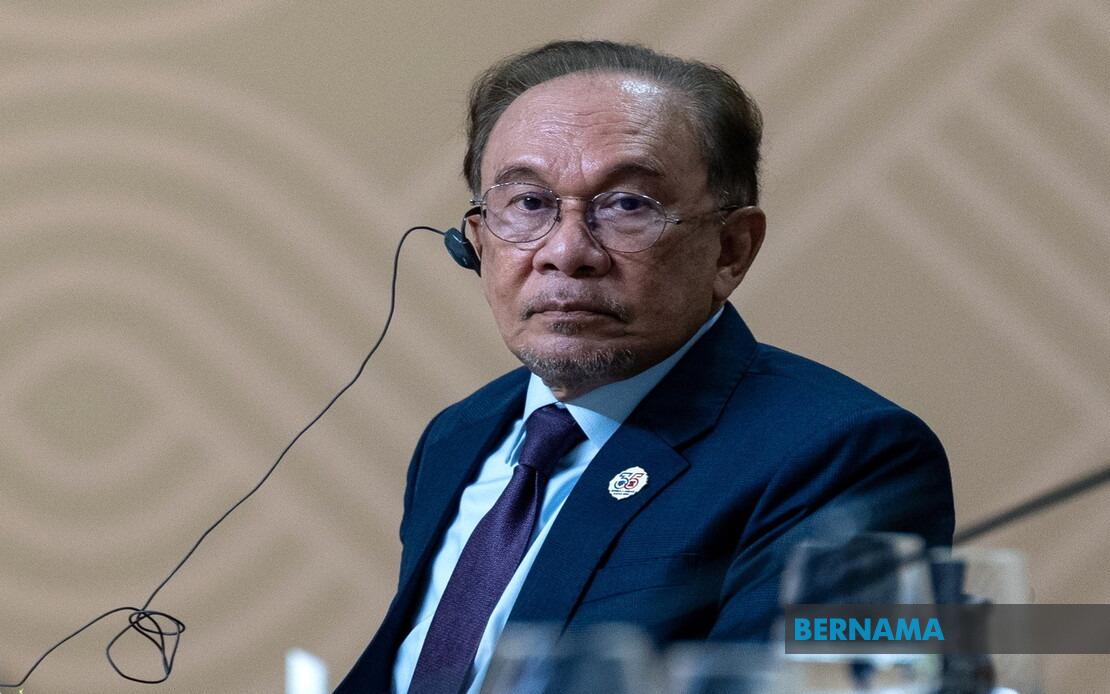
Malaysian Prime Minister Datuk Seri Anwar Ibrahim has signalled cautious optimism about the possibility of resolving the long-standing tensions between the United States and Iran through diplomatic channels, suggesting that a memorandum of understanding could represent a critical turning point for regional stability across West Asia. His remarks, delivered during an international forum in Kazan, reflect growing confidence among key stakeholders that negotiations between Washington and Tehran may finally yield concrete results after years of diplomatic stalemate and escalating tensions.
Anwar's assessment draws substantially on conversations with Pakistan Prime Minister Shehbaz Sharif, who has taken on an active mediating role in facilitating dialogue between the two adversarial powers. According to the Malaysian leader, Sharif has maintained close involvement throughout the negotiation process, positioning himself as an informed observer with direct access to developments at each critical juncture. This proximity to the talks has apparently provided Anwar with confidence that substantive progress is occurring behind closed doors, despite the inherent fragility of such high-stakes diplomacy.
The timeframe for achieving a final agreement presents both a constraint and a measure of urgency: negotiators are working within a 60-day window to produce a binding accord. While this deadline might seem compressed for resolving complex geopolitical disputes, Anwar's comments suggest that both sides recognise the importance of moving decisively toward resolution. The relatively tight timeline could actually work in favour of agreement, as it focuses attention and prevents negotiations from drifting into indefinite limbo.
Russian President Vladimir Putin appears to share a similar perspective on the trajectory of these talks. During bilateral discussions at the ASEAN-Russia Commemorative Summit in Kazan, Putin conveyed to Anwar his own optimism regarding the peace process. This alignment of views among major powers with differing geopolitical interests—Malaysia as a Southeast Asian voice, Russia as a significant regional player—suggests that there may be broader international consensus around the viability of a negotiated settlement. When multiple countries with distinct strategic positions converge on optimistic assessments, it can sometimes indicate genuine movement in previously deadlocked situations.
Anwar acknowledged that the involvement of US President Donald Trump's administration introduces an element of unpredictability that cannot be entirely discounted. Trump's approach to international negotiations has historically been unconventional, characterised by sudden shifts in strategy and willingness to depart from established diplomatic protocols. This variable adds complexity to any assessment of the likelihood of successful conclusion, as the US administration's calculus regarding Iran policy could shift based on domestic political considerations or newly emerging circumstances.
The broader context for Malaysia's interest in this matter reflects the country's strategic positioning in an increasingly multipolar world. As a major Southeast Asian economy with significant maritime interests and energy security concerns, Malaysia has vested interests in regional stability. Tensions in West Asia directly or indirectly affect global energy markets, maritime trade routes, and international security dynamics that ripple across the Indo-Pacific region where Malaysia operates. A resolution of the US-Iran conflict would reduce geopolitical friction points that could otherwise destabilise global supply chains and security arrangements.
Anwar's characterisation of negotiations as moving in a "more positive direction" stands in contrast to the pessimism that has long characterised international assessments of US-Iran relations. For much of the past two decades, prospects for rapprochement have appeared dim, with cycles of escalation, sanctions, and diplomatic breakdown dominating the narrative. The fact that credible observers now perceive momentum suggests either that underlying conditions have shifted or that mediators have identified novel frameworks for agreement that previous attempts may have overlooked.
The significance of Pakistan's mediating role cannot be understated. As an Islamic republic with longstanding ties to Iran and pragmatic relationships with Western powers, Pakistan occupies a unique diplomatic position. Sharif's apparent engagement in these negotiations reflects Islamabad's recognition that a sustainable regional peace framework would benefit all stakeholders, including Pakistan itself, which faces its own security challenges and economic pressures partly stemming from regional instability.
Malaysia's public endorsement of the peace process, expressed through Anwar at an international summit, carries symbolic weight. It demonstrates that the Non-Aligned Movement and broader Global South perspectives increasingly favour negotiated resolution of international disputes over continued confrontation. This stance also reflects Malaysia's longstanding diplomatic tradition of seeking consensus-based solutions and championing dialogue as a mechanism for addressing seemingly intractable conflicts.
The outcome of these negotiations will have far-reaching implications extending well beyond bilateral US-Iran relations. A successful agreement could reshape geopolitical alignments across the Middle East, influence energy market dynamics, and potentially reduce the urgency that some regional actors currently feel regarding military buildups and strategic hedging. Conversely, failure could entrench existing divisions and potentially trigger renewed escalation cycles that would further destabilise an already volatile region.