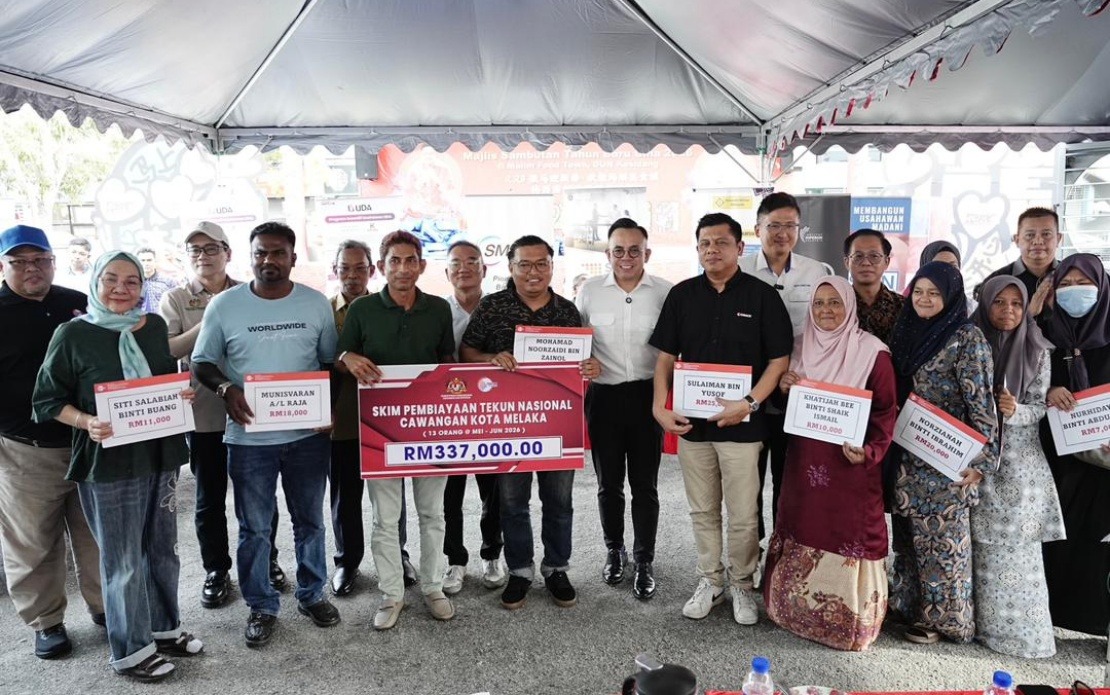
The Ministry of Entrepreneur Development and Cooperatives (KUSKOP) has distributed nearly RM100 million in financing to over 4,300 entrepreneurs in Melaka as of the end of May, marking significant progress in the government's efforts to bolster microenterprise and small-to-medium enterprise activity across the state. This capital allocation underscores the ministry's strategic commitment to ensuring that business owners across Malaysia have sufficient access to funds needed to scale operations and contribute meaningfully to the broader economy.
Minister Steven Sim emphasised during a three-day working visit to Melaka that channelling capital to entrepreneurs remains central to the government's economic agenda. He articulated a vision in which financing functions as a circulatory mechanism within the Malaysian economy, benefiting not only business proprietors but also their employees, supply chain partners, and the communities in which they operate. This interconnected approach reflects growing recognition that MSME growth generates ripple effects beyond individual business success, creating employment pathways and strengthening local commercial ecosystems.
During his visit from June 19 to 21, coinciding with the Hebatkan Perniagaan Malaysia Carnival (KHPM), Sim engaged directly with traders and entrepreneurs to assess how government initiatives are translating into tangible business opportunities. The carnival served as a platform for the ministry to review programme implementation and gather feedback on barriers entrepreneurs face when accessing capital and support services. This hands-on engagement distinguishes the ministry's approach from purely bureaucratic financing distribution.
At a dedicated meet-and-greet session at Malim Food Town, Sim presented approximately RM1 million in fresh financing to 18 recipients through both TEKUN Nasional and SME Corp Malaysia. The beneficiaries represent a diverse cross-section of the MSME landscape, spanning food and beverages, wholesale trading, professional services, construction contracting, retail operations, digital commerce, automotive sectors, and other service industries. This sectoral diversity indicates that government financing mechanisms are reaching across multiple economic verticals rather than concentrating capital in a single industry.
Walking through Malim Food Town alongside Melaka's Entrepreneur Development, Cooperatives and Consumer Affairs Committee chairman Seah Soo Chin, Sim observed daily business operations and interacted with local traders. These walkabouts provide the ministry with on-the-ground intelligence about entrepreneurial challenges and opportunities, information that desk-based policy-making cannot capture. Such visibility also signals government recognition of grassroots business activity and may boost merchant confidence in public sector support mechanisms.
Zooming out to the national picture, KUSKOP has channelled RM5 billion in financing during the first five months of 2024, benefiting approximately 180,000 entrepreneurs nationwide. These figures demonstrate the scale at which the ministry is now operating and suggest that Melaka's performance—drawing nearly RM100 million of the RM5 billion nationally—reflects proportionate engagement with the state's entrepreneurial base. The consistency of fund distribution across states and sectors indicates systematic rollout rather than ad-hoc or politically motivated allocation.
The ministry has set an ambitious target through its PowerUp10K initiative, aiming to distribute RM15 billion in MSME financing throughout 2024. If current monthly run-rates persist, achieving this annual target appears feasible, though the second half of the year will test whether momentum can be sustained. For Malaysian entrepreneurs, particularly those in less densely populated regions, this expanded financing pipeline offers material relief from chronic capital constraints that have historically limited MSME expansion and competitiveness.
Sim articulated a strategic perspective on Malaysia's competitive positioning that extends beyond the immediate financing discussion. He highlighted Malaysia's ethnic, linguistic, and cultural diversity as economic assets, arguing that this pluralism enhances the talent pool available to businesses and makes the country more appealing to multinational investors seeking diverse teams and market insights. This framing represents a deliberate attempt to position Malaysia's multicultural character not as a potential liability but as a genuine commercial advantage in increasingly globalised business environments.
For Malaysian entrepreneurs, particularly in competitive sectors like food service, retail, and professional services where Melaka shows concentration, access to government-backed financing can mean the difference between stagnation and growth. Many MSMEs operate with minimal working capital and reinvested profits, making external financing sources critical for acquiring modern equipment, expanding premises, or hiring additional staff. Removing financial barriers through programmes like TEKUN enables entrepreneurs to move from survival mode to genuine expansion mode.
The broader significance of Melaka's financing surge lies in its implications for regional economic development. Melaka, as a historic trading hub and increasingly important tourist destination, serves as a testing ground for government financing initiatives that may subsequently scale to other states. The diversity of sectors now accessing capital suggests that the ministry is moving beyond narrow targeting towards a more inclusive model of MSME support. This approach aligns with Malaysia's need to strengthen its bottom tier of enterprises before they can compete effectively in the emerging digital economy.
Looking ahead, the question becomes whether this financing momentum will translate into measurable improvements in MSME survival rates, revenue growth, and employment creation. Government-backed loans, while valuable, do not eliminate other challenges entrepreneurs face, including access to skilled labour, digital capability gaps, and supply chain vulnerabilities. The financing component of economic development policy must work in concert with skills training, mentorship programmes, and regulatory reform to achieve lasting impact on MSME sector vitality.
%22%2F%3E%3C%2Fpattern%3E%3C%2Fdefs%3E%3Crect%20width%3D%22100%25%22%20height%3D%22100%25%22%20fill%3D%22url(%23phebuqg)%22%2F%3E%3Crect%20width%3D%22100%25%22%20height%3D%22100%25%22%20fill%3D%22url(%23phebuqp)%22%2F%3E%3Ctext%20x%3D%2250%25%22%20y%3D%2250%25%22%20text-anchor%3D%22middle%22%20dominant-baseline%3D%22central%22%20fill%3D%22rgba(255%2C255%2C255%2C0.95)%22%20font-family%3D%22Georgia%2C%20'Times%20New%20Roman'%2C%20serif%22%20font-weight%3D%22700%22%20font-size%3D%22170%22%20letter-spacing%3D%22-0.02em%22%3EMalaysia%3C%2Ftext%3E%3C%2Fsvg%3E)
%22%2F%3E%3C%2Fpattern%3E%3C%2Fdefs%3E%3Crect%20width%3D%22100%25%22%20height%3D%22100%25%22%20fill%3D%22url(%23phmcbwg)%22%2F%3E%3Crect%20width%3D%22100%25%22%20height%3D%22100%25%22%20fill%3D%22url(%23phmcbwp)%22%2F%3E%3Ctext%20x%3D%2250%25%22%20y%3D%2250%25%22%20text-anchor%3D%22middle%22%20dominant-baseline%3D%22central%22%20fill%3D%22rgba(255%2C255%2C255%2C0.95)%22%20font-family%3D%22Georgia%2C%20'Times%20New%20Roman'%2C%20serif%22%20font-weight%3D%22700%22%20font-size%3D%22320%22%20letter-spacing%3D%22-0.02em%22%3EMuda%3C%2Ftext%3E%3C%2Fsvg%3E)