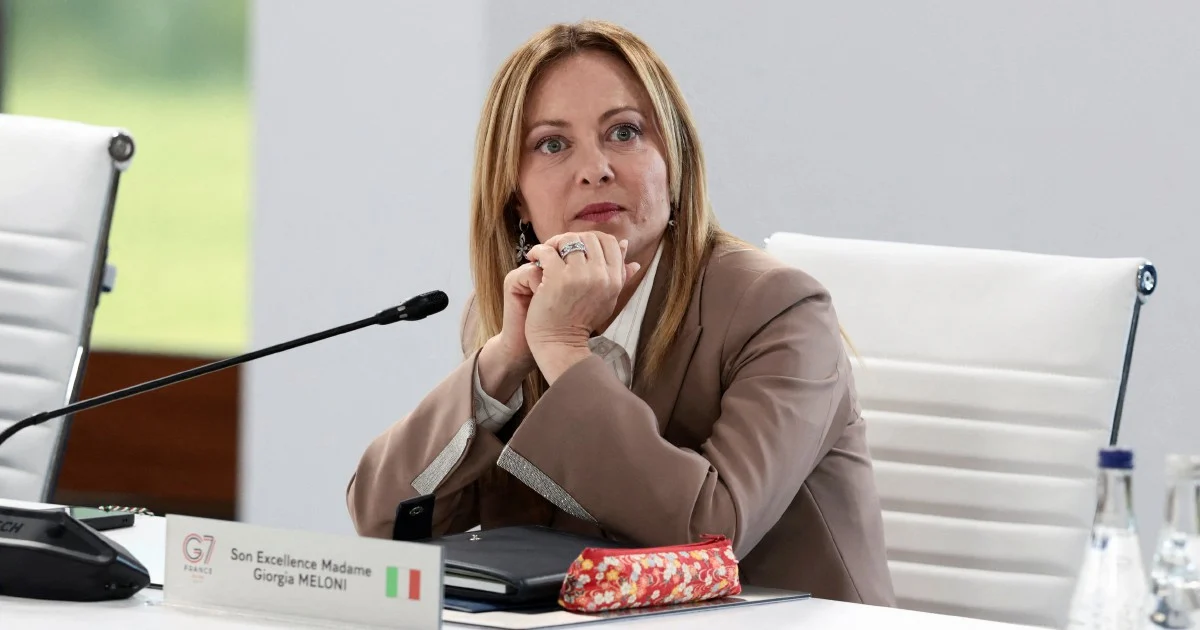
When Donald Trump assumed the presidency in January 2025, Italian Prime Minister Giorgia Meloni stood apart from her European counterparts by receiving an exclusive invitation to witness the inauguration ceremony in Washington. The gesture appeared to cement Rome's favoured status within the incoming administration and suggested the beginning of a particularly warm chapter in Italian-American relations. At that moment, few observers would have predicted the dramatic recalibration that would follow within months.
Meloni's initial positioning reflected a deliberate diplomatic strategy. As a conservative leader who had cultivated relations with Trump during his first term, she had established herself as someone capable of bridging the gap between the European Union's more centrist establishment and an increasingly nationalist American administration. Her presence at the inaugural ceremony, standing among Trump's inner circle rather than among the broader diplomatic corps, signalled that Italy considered itself in a special category of American allies. The contrast with other major European leaders—who either boycotted or attended in a perfunctory capacity—underscored Rome's calculated departure from traditional EU consensus on engagement with Washington.
The honeymoon, however, proved remarkably brief. Within the following months, Meloni began to voice concerns about Trump administration policies and rhetoric that diverged sharply from the cautious pragmatism of her initial approach. Her public statements transformed from the measured language of a leader comfortable in Trump's presence to pointed criticism of specific decisions and their implications for European interests. This transition reflected not merely a change in tone but a fundamental reassessment of Italy's strategic position and the costs of alignment with an unpredictable American administration.
Several factors appear to have precipitated Meloni's shift. Trade tensions affecting Italian industries, particularly in agriculture and manufacturing, created pressure for a tougher public stance. Additionally, Trump's erratic approach to NATO commitments and European security arrangements troubled Rome, which depends on transatlantic structures for its own defence architecture. The question of sovereignty—particularly regarding how American policy decisions affected Italian autonomy—became increasingly prominent in Meloni's rhetoric. Her earlier restraint gave way to assertions of Italian and European independence that suggested growing frustration with Washington's unilateral approach.
The political dynamics within Italy itself likely contributed to this repositioning. Meloni operates within a coalition government and must manage constituencies with varying views on American relations. Public criticism of Trump potentially served domestic political purposes, allowing her to maintain credibility with European partners while avoiding the appearance of complete subservience to Washington. By moderating her pro-Trump stance, she could present herself as a leader defending Italian interests against external pressure, a posture that resonates across much of the Italian political spectrum.
For Malaysian observers and Southeast Asian policymakers, Meloni's trajectory offers instructive lessons about navigating great power relationships. The Italian case demonstrates that initial alignment with a powerful partner, no matter how publicly affirmed, remains contingent on perceived mutual benefit. When costs accumulate—whether economic, diplomatic, or reputational—even leaders who have invested significantly in a particular relationship may be forced to recalibrate. This applies with particular force to smaller and middle powers operating in asymmetrical relationships with superpowers.
The broader European dimension deserves consideration as well. Meloni's public criticism of Trump, whether calculated or genuine, partly reflects a reassertion of EU interests against American preferences. As Europe faces repeated pressure from the Trump administration on trade, defence spending, and strategic autonomy, national leaders face the difficult choice between accommodation and resistance. Meloni's initial exclusive position appeared to offer Italy special advantages, but that privileged access may have paradoxically complicated her ability to maintain EU solidarity when Trump administration actions conflicted with European consensus.
The implications extend to how allied nations manage relationships with unpredictable administrations. Meloni's experience suggests that being perceived as uniquely close to a particular American president creates both opportunities and vulnerabilities. The advantages of special access and preferential treatment come with risks: isolation from allied peers, domestic criticism for appearing subservient, and exposure to policy shifts when the administration's priorities change or when initial commitments prove incompatible with other national interests.
Moving forward, Meloni's repositioning likely reflects a more sustainable equilibrium for Italian diplomacy. By articulating concerns about Trump policies while maintaining basic diplomatic channels, she can serve as both a voice for European interests and a potential mediator in Italian-American relations. This dual role—neither fully aligned nor openly opposed—may prove more durable than her initial positioning as Trump's favoured European leader. For other nations in the region seeking to balance relationships with major powers, this calculation between special partnerships and broader alliance solidarity remains perpetually relevant and strategically consequential.
%22%2F%3E%3C%2Fpattern%3E%3C%2Fdefs%3E%3Crect%20width%3D%22100%25%22%20height%3D%22100%25%22%20fill%3D%22url(%23ph4oa4pg)%22%2F%3E%3Crect%20width%3D%22100%25%22%20height%3D%22100%25%22%20fill%3D%22url(%23ph4oa4pp)%22%2F%3E%3Ctext%20x%3D%2250%25%22%20y%3D%2250%25%22%20text-anchor%3D%22middle%22%20dominant-baseline%3D%22central%22%20fill%3D%22rgba(255%2C255%2C255%2C0.95)%22%20font-family%3D%22Georgia%2C%20'Times%20New%20Roman'%2C%20serif%22%20font-weight%3D%22700%22%20font-size%3D%22272%22%20letter-spacing%3D%22-0.02em%22%3EJohor%3C%2Ftext%3E%3C%2Fsvg%3E)