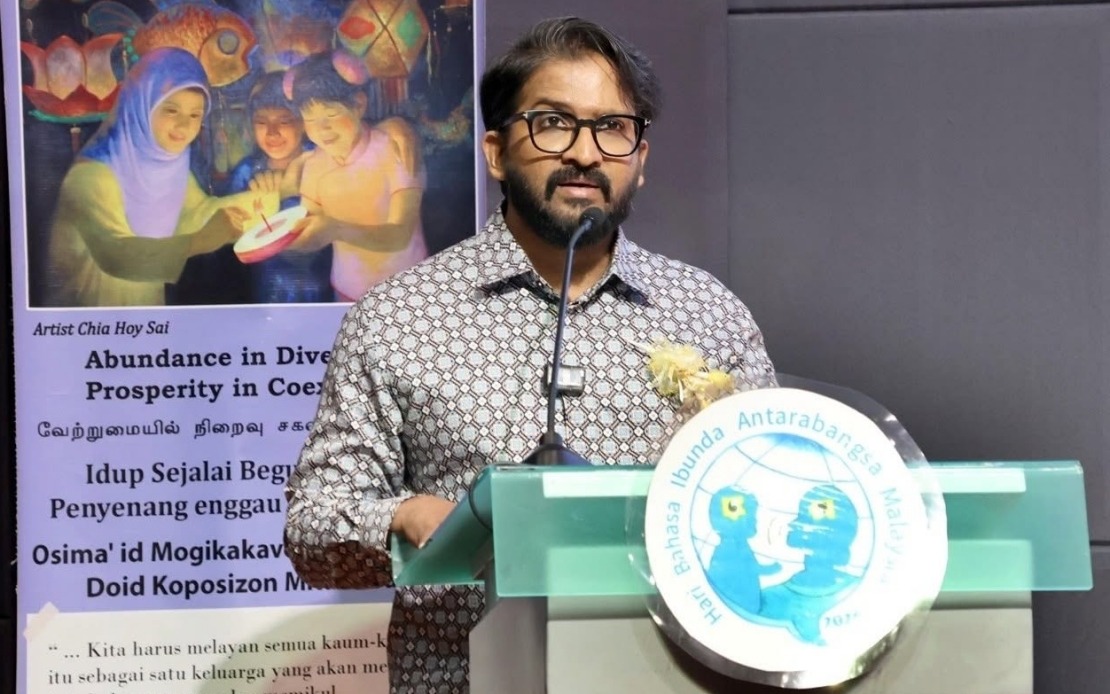
Deputy National Unity Minister R. Yuneswaran has made a compelling case for elevating mother-tongue education as a strategic tool to address the growing prevalence of race, religion and royalty (3R) disputes that regularly inflame social media discourse across Malaysia. Speaking through a Facebook statement, Yuneswaran emphasised that linguistic diversity, rather than representing a liability, constitutes a national asset that citizens should actively cultivate and celebrate to foster deeper interethnic understanding.
The minister's intervention arrives amid escalating online polarisation, where contentious discussions about sensitive communal matters routinely trigger public backlash and entrench existing divisions. By attributing these conflicts partly to insufficient knowledge of neighbours' linguistic and cultural traditions, Yuneswaran has identified a systemic gap that education policy might address more directly. His observation that 3R controversies emerge almost daily on digital platforms reflects a widespread concern that Malaysia's multicultural character is being tested by an environment where misunderstandings spread faster than corrections.
According to Yuneswaran, the foundation of these tensions lies in inadequate mutual comprehension of the histories, languages and cultural foundations that define Malaysia's constituent communities. Language serves a purpose far more profound than mere communication; it encodes identity, heritage and the value systems through which communities understand themselves and their place within the nation. When citizens lose fluency in their ancestral languages, they lose concurrent access to the philosophical frameworks and lived experiences that those languages preserve, making cross-cultural empathy more difficult to cultivate.
Malaysia's linguistic landscape underscores this potential. With approximately 130 languages spoken across the country, the nation embodies a linguistic richness matched by few countries globally. Rather than perceiving this diversity as a source of fragmentation, Yuneswaran has repositioned it as evidence of Malaysia's cultural sophistication and adaptive capacity. This reframing matters particularly for younger Malaysians who may have absorbed narratives casting diversity as inherently destabilising rather than intrinsically valuable.
A critical dimension of Yuneswaran's argument concerns the false dichotomy between mother-tongue competency and national language proficiency. The minister, drawing on his own experience navigating Chinese and national school systems before attaining fluency in Tamil, articulated that strengthening one's maternal language does not impede acquisition of Bahasa Malaysia or English. Rather, proficiency in one's heritage language creates a cognitive foundation enhancing capacity to learn additional languages and appreciate alternate worldviews. This nuance addresses a longstanding anxiety among non-Malay communities that emphasising vernacular languages might compromise national cohesion.
Yuneswaran's intervention gains particular significance within the framework of Malaysia's 13th Malaysia Plan, under which the National Unity Ministry has been tasked with consolidating nation-building initiatives. The ministry's mandate centres on cultivating environments where understanding, mutual respect and genuine curiosity about others' backgrounds become institutionalised rather than aspirational. Language education functions as one concrete mechanism through which such institutional change could materialise, transforming abstract commitment to unity into pedagogical practice.
The minister's advocacy reflects a recognition that social media algorithms and polarising rhetoric have accelerated the pace at which 3R disputes escalate, making preemptive investments in cultural literacy increasingly urgent. When citizens possess developed knowledge of their own heritage languages, they possess also a vocabulary for articulating their own identity securely, reducing the defensive posturing that characterises many online disputes. Conversely, those unfamiliar with their ancestral linguistic traditions may prove more susceptible to simplified narratives casting other communities' practices as threatening.
For Malaysia's policymakers, Yuneswaran's statement suggests that addressing 3R tensions requires not merely reactive moderation of online content or rhetorical calls for unity, but proactive investment in the educational infrastructure supporting multilingual competency. This could entail strengthening vernacular schools, expanding mother-tongue instruction within national schools, or creating incentives encouraging families to transmit linguistic knowledge across generations. The COVID-19 pandemic's disruption of education systems may have accelerated language attrition among younger cohorts, making such initiatives more time-sensitive.
Yuneswaran's emphasis on language as a unifying force rather than a dividing one inverts rhetoric that has periodically dominated Malaysian public discourse. By positioning linguistic diversity as strengthening rather than weakening Malaysia, the minister challenges communities to conceive their heritage languages as resources for building solidarity rather than markers of separateness. This philosophical reorientation, if widely adopted, could gradually reshape how Malaysians approach intercommunal engagement.
The practical implications extend beyond schools into family practices and community institutions. Encouraging grandparents to speak heritage languages with grandchildren, supporting cultural organisations maintaining linguistic traditions, and celebrating multilingualism in public spaces all contribute to the ecosystem Yuneswaran's argument implicitly advocates. In multiethnic Southeast Asia broadly, where several nations face analogous tensions between national integration and cultural preservation, Malaysia's approach to these questions holds regional significance.
Ultimately, Yuneswaran has articulated a vision where mother-tongue proficiency becomes reframed as a civic responsibility rather than a private preference, and where linguistic competency across multiple languages represents ordinary expectation rather than exceptional achievement. Realising this vision demands sustained commitment from policymakers, educators, and families, but the alternative—continued escalation of 3R conflicts rooted partly in mutual incomprehension—poses greater long-term risks to social cohesion than the investments such a programme would require.