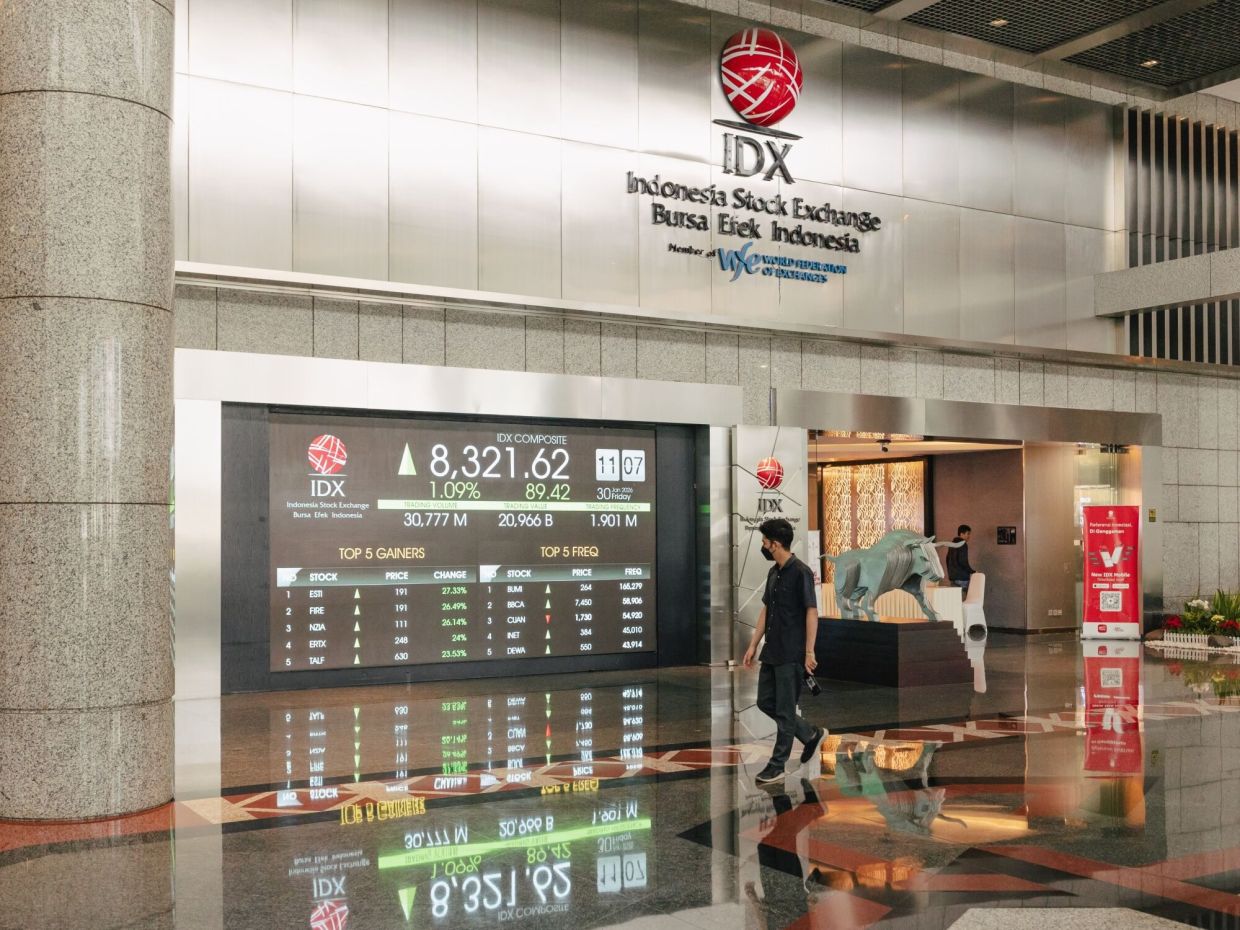
MSCI, the world's most influential index provider, has escalated concerns about Indonesia's suitability for emerging market status by highlighting governance and transparency gaps that affect how investors can assess the true ownership structure and market mechanics of listed companies. The announcement on Thursday dealt a fresh setback to an already beleaguered stock market and sets the stage for a consequential decision expected next week that could reshape investment flows into the Southeast Asian economy.
The index provider has downgraded Indonesia's information flow criterion to negative in its latest market accessibility review, citing limited visibility into shareholding patterns and evidence of coordinated trading behaviour that interferes with price discovery. These structural deficiencies raise fundamental questions about whether international fund managers can accurately gauge the free float of Indonesian companies and make informed investment decisions. For a market already struggling with credibility issues among global investors, this technical assessment carries outsized symbolic weight.
At stake is Indonesia's classification as an emerging market, a status that has anchored the investment thesis for billions of dollars in passive index-tracking funds worldwide. A downgrade to frontier market status would compel these passive trackers to liquidate holdings and force active managers with MSCI-linked benchmarks to reduce exposure, potentially unleashing outflows worth as much as $13 billion. Given that foreign investors have already pulled approximately $3.65 billion from Indonesian shares this year, such forced selling would compound existing pressures and potentially trigger a sharper repricing of the market.
The timing underscores the precariousness of Indonesia's position. Back in January, MSCI first flagged transparency concerns and issued a preliminary warning about a potential downgrade, sending shockwaves through Jakarta's bourse. The months since have witnessed a succession of body blows: the resignation of top exchange and regulatory officials in January, the removal of six companies from MSCI indexes in May—most connected to prominent business tycoons—and a sustained deterioration in investor sentiment. The Jakarta benchmark index has shed 29 percent of its value so far this year, making it among the world's worst performers.
Yet not all observers view the latest MSCI findings as uniformly damning. Mohit Mirpuri, a fund manager at SGMC Capital in Singapore, has cautioned against reading the report as a comprehensive indictment of Indonesia's market structure. He notes that only one accessibility measure has deteriorated, while Indonesia continues to perform comparably to peers such as South Korea, China, and India across several key yardsticks. This nuance matters because it suggests that while recent problems are real, they may not represent a systemic collapse of Indonesia's investment framework. His base case remains that Indonesia retains emerging market status, indicating that not all influential market participants have concluded that a downgrade is inevitable.
Indonesia's authorities have responded to MSCI's January warning with a flurry of reform initiatives aimed at improving market governance and transparency. Regulators doubled the minimum free float requirement for listed companies to 15 percent, a move designed to prevent excessive concentration and ensure broader ownership. The simultaneous resignation of both the stock exchange chief and the financial services regulator in a single afternoon in January signalled an acknowledgment that institutional renewal was necessary. However, the efficacy of these measures remains untested, and the fact that MSCI has continued to identify problems suggests that implementation and behavioural change have not kept pace with regulatory ambition.
The currency market complications add another layer of constraint. MSCI has flagged the absence of an efficient offshore rupiah market and significant constraints on the onshore market, limiting the tools available to large foreign investors seeking to hedge their Indonesia exposure. For global fund managers, currency risk is a critical consideration, and the inability to efficiently manage rupiah exposure makes Indonesian investments less attractive regardless of equity valuations. This technical infrastructure gap reflects Indonesia's limited integration into global financial markets and the structural barriers that investors must navigate to commit capital.
Underlying these market-specific issues is a broader erosion of Indonesia's macroeconomic credibility. Under President Prabowo Subianto, populist fiscal measures have raised concerns about the health of a $1.4 trillion economy that was once a favoured destination for emerging market capital. The rupiah has sunk to record lows despite the central bank's recent interest rate increases aimed at stabilizing the currency. Rating agencies Moody's and Fitch have both cut their debt outlooks for Indonesia to negative this year, citing diminished confidence in policymaking and institutional decision-making. When foreign investors lose faith in the broad direction of economic policy, equity market technicals become secondary concerns.
For Malaysian and Southeast Asian investors, the Indonesia situation carries sobering lessons about the fragility of emerging market classification and the real consequences of allowing governance standards to slip. Malaysia itself has long taken pride in its capital markets transparency and investor protection frameworks, areas where it has generally outperformed regional peers. The MSCI scrutiny of Indonesia underscores why sustained commitment to institutional quality and investor safeguards remains essential for maintaining the confidence of global capital flows. As Indonesia navigates next week's verdict, the broader message is that emerging market status is not a permanent entitlement but rather a conditional designation that requires continuous institutional attention and reform.
The decision facing MSCI next week will hinge partly on whether the recent reform measures and the trajectory of institutional improvement appear sufficient to warrant maintaining Indonesia's existing classification. A downgrade would impose immediate financial pain but might also force a more comprehensive reckoning with structural issues that have accumulated over time. Conversely, maintaining emerging market status without clear evidence of sustained reform could further damage MSCI's credibility as a neutral arbiter of market quality. For Indonesia's policymakers and investors, the outcome will shape capital flows, borrowing costs, and the country's ability to attract long-term foreign investment for years to come.