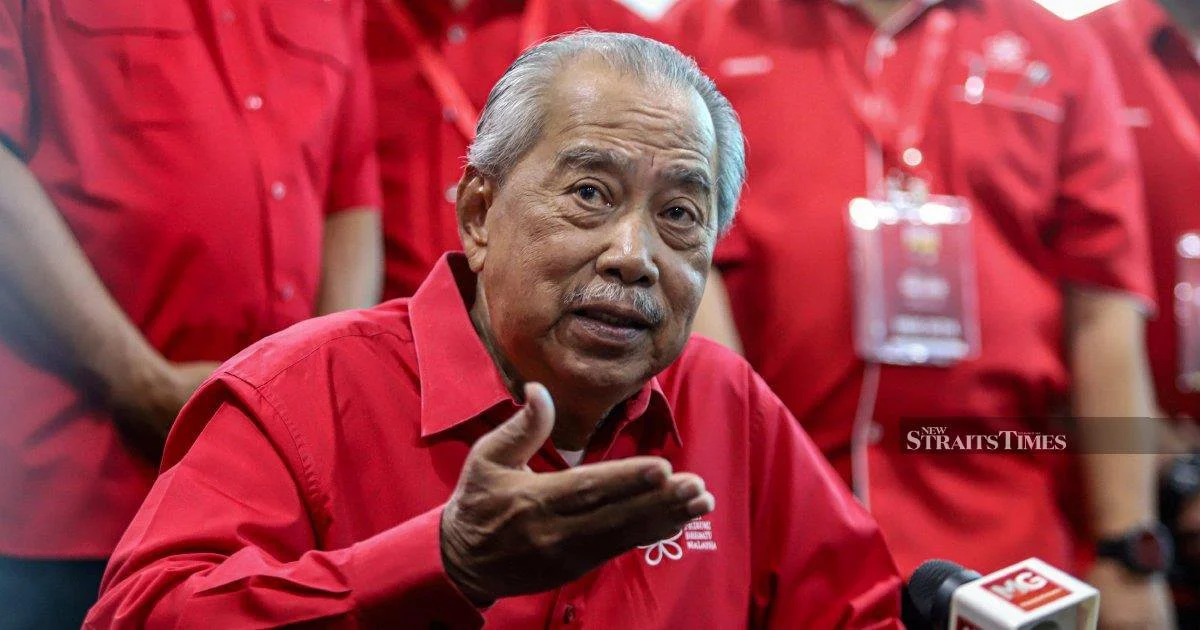
Bersatu's leadership has moved to quell persistent rumours about the coalition's durability by publicly reiterating the party's long-term commitment to Perikatan Nasional. In a statement that appears timed to counteract repeated questions about PN's internal cohesion, party president Tan Sri Muhyiddin Yassin has declared that his organisation will remain a foundational member of the alliance indefinitely. The assertion carries particular weight given Bersatu's central role in forming and sustaining the opposition grouping since its inception.
The Malaysian political landscape has grown increasingly volatile in recent years, with various coalitions undergoing periodic restructuring and realignment. Against this backdrop, coalition stability has become a critical concern for opposition parties seeking to present a unified front to voters. Speculation regarding Perikatan Nasional's future has been fuelled by shifting electoral mathematics and competing interests within its member parties, making Muhyiddin's unequivocal statement a significant signal of intent. By employing unambiguous language, the party leadership appears designed to provide reassurance to coalition partners, grassroots members, and the broader electorate that internal divisions will not destabilise the arrangement.
Bersatu's position within PN is uniquely influential, given its founding role in the coalition's establishment and its substantial parliamentary representation. The party has served as an anchor institution for the opposition alliance, and any departure would trigger significant repercussions for the grouping's overall viability and strategic positioning. Muhyiddin's pronouncement should therefore be understood not merely as a routine political declaration but as a deliberate effort to cement institutional cohesion at a moment when external pressures and internal tensions might otherwise strain the alliance.
The timing of such declarations often reveals much about underlying political dynamics. Statements reassuring coalition partners of loyalty are typically made when there exists genuine uncertainty about the relationship's continuity. The very need to emphasise permanence suggests that questions about PN's future structure have become sufficiently prevalent to warrant formal clarification. This pattern is common in Malaysian politics, where coalition configurations remain subject to rapid transformation based on shifting electoral calculus and opportunistic realignments.
From a strategic perspective, PN's fortunes depend significantly upon maintaining party-level unity. The coalition was originally conceived as an alternative arrangement to Malaysia's traditional two-coalition system, offering voters a distinctive political choice. However, achieving and sustaining this alternative requires consistent commitment from its constituent parties, particularly larger ones like Bersatu. Any erosion of commitment would weaken PN's electoral competitiveness and reduce its capacity to challenge the government effectively.
Muhyiddin's emphasis on permanence also carries implications for individual party members and supporters who must decide whether to invest their political future within the PN framework. Clear statements of institutional stability can provide such individuals with confidence regarding their party's strategic direction. Conversely, ambiguity about coalition membership tends to generate defections and internal dissatisfaction among party faithfuls concerned about their organisation's trajectory.
The broader political context surrounding this statement warrants careful consideration. Malaysian politics operates within a framework where coalition membership directly affects parties' access to government resources, parliamentary positions, and electoral support. A party's decision to remain within or withdraw from a coalition represents one of the most consequential strategic choices in Malaysian political life. Bersatu's declaration therefore constitutes more than rhetorical positioning; it represents a substantive commitment with far-reaching implications for Malaysian politics.
Observers of Malaysian politics recognise that coalition arrangements, despite public declarations of permanence, frequently undergo significant transformations during electoral cycles. Political parties must navigate between maintaining internal cohesion and responding to evolving voter preferences and electoral circumstances. Muhyiddin's statement, while emphatic, operates within this complex reality where political flexibility often becomes necessary despite public commitments to stability.
For Southeast Asian observers, Bersatu's commitment to PN reflects broader patterns in regional politics where opposition coalitions face persistent challenges maintaining unity while confronting governments with substantial institutional advantages. The region has witnessed numerous instances of opposition alliances fragmenting under pressure or dissolving when electoral calculations favour alternative arrangements. Within this context, explicit reaffirmations of coalition loyalty carry particular significance as indicators of political determination and strategic clarity.
The practical dimensions of maintaining coalition commitment extend beyond political rhetoric to encompass concrete mechanisms for managing internal disputes and coordinating party strategy. Bersatu's continued participation in PN requires establishing institutional arrangements that accommodate the diverse interests of member parties while advancing shared political objectives. Such structural elements become increasingly important as coalitions age and face inevitable pressures from electoral competition and internal faction-building.
Moving forward, the Malaysian political landscape will likely continue testing the resilience of all major coalitions as parties pursue their competitive interests. Muhyiddin's statement establishes a baseline expectation regarding Bersatu's institutional commitment, though future developments may require adjustment of such positions depending on electoral outcomes and broader political circumstances. The declaration nonetheless represents a significant anchor point for understanding how Bersatu currently conceptualises its role within Malaysia's opposition political space.