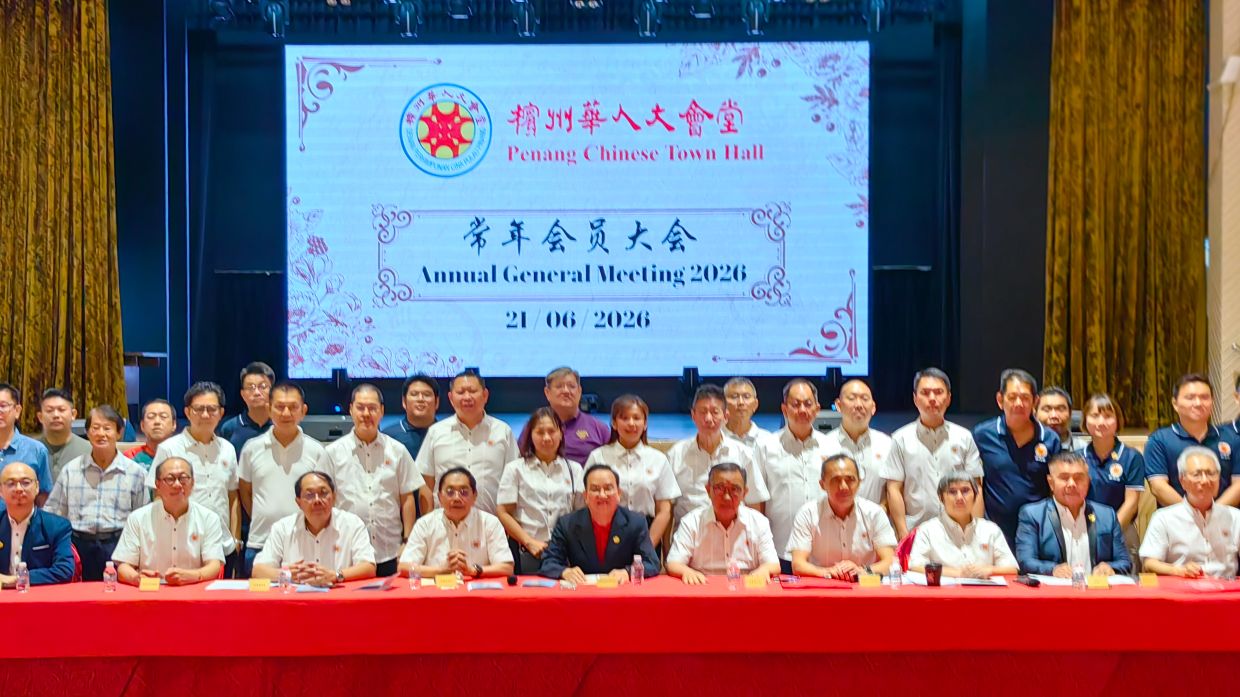
Penang Chinese Town Hall has finished the 2025 financial year in modest surplus, recording total income of RM12.61mil against expenditure of RM12.55mil, leaving a positive balance of RM59,191. The organisation's financial position reflects steady operations despite significant outflows dedicated to charitable and community purposes, with the bulk of revenue flowing directly into donations and support for its membership base.
The income structure reveals a deeply philanthropic organisation, with donations constituting RM11.24mil of the RM12.61mil total—nearly 89 percent of all revenue. This concentration on charitable contributions underscores PCTH's primary mission as a community-oriented institution. Beyond donations, the organisation generated RM439,671 from rental and maintenance fees, RM361,245 from auditorium rental services, and RM222,498 from anniversary-related receipts, demonstrating diversified revenue streams that support operational stability.
Expenditure patterns mirror the organisation's charitable mandate. Donations absorbed RM11.12mil, or approximately 88.6 percent of all spending during the year, though this represents a decline from RM12.35mil expended in 2024. This reduction may indicate strategic recalibration or changing community needs assessments. Meanwhile, operational costs for salaries and allowances increased to RM502,625 from RM452,761 in the previous year, reflecting either staff expansion or wage adjustments necessary to retain talent in a competitive employment market.
At its annual general meeting held on June 21 and attended by approximately 200 members, PCTH's chairman Tan Sri Prof Tan Khoon Hai delivered remarks emphasising civic responsibility as the nation approaches key electoral contests. With Johor and Negri Sembilan scheduled to conduct state elections in 2025, Tan encouraged voters to evaluate candidates and party platforms through a rational lens rather than emotional or habitual preferences. His message centred on the imperative for citizens to select leaders capable of fostering national unity, generating sustained economic prosperity, and preserving the social cohesion that underpins Malaysia's multicultural fabric.
Tan's electoral advocacy transcended parochial local concerns, positioning voting as a mechanism for directing the nation's long-term trajectory. He articulated a vision of elections as moments of collective decision-making about Malaysia's future orientation, not merely referendums on immediate neighbourhood improvements. This framing resonates particularly in Malaysia's current political climate, where elections are frequently dominated by hyperlocal grievances rather than substantive policy debate, and where voters benefit from being reminded of elections' broader constitutional significance.
Capitalising on infrastructure improvements, Tan unveiled the newly renovated Ping Zhang Hall, which has undergone comprehensive upgrading and modernisation. The refurbished venue features expanded floor space designed to maximise comfort, alongside professional-grade sound systems, sophisticated lighting infrastructure, and advanced LED displays. These enhancements position the hall as a premium venue suitable for diverse occasions—corporate dining functions, association celebrations, anniversary commemorations, charity fundraisers, and general community assemblies. Such facility improvements strengthen PCTH's competitive positioning within Penang's events and hospitality sector.
Most significantly, Tan announced PCTH's pivot toward technology sector engagement through hosting the 2026 China-Asean Artificial Intelligence Cooperation Forum scheduled for November in Penang. This initiative represents a strategic repositioning for the organisation, aligning it with regional technological currents and positioning Penang as a nexus for cross-border AI collaboration. The forum will convene experts, business leaders, and industry practitioners from across China and Asean member states to deliberate emerging AI technologies, industrial deployment strategies, and transnational cooperative frameworks.
Penang's credentials as a technology hub undergird this strategic choice. The state has earned recognition as Malaysia's Silicon Valley equivalent, housing the nation's most concentrated cluster of electrical and electronics manufacturers and suppliers. This industrial foundation, accumulated over decades of foreign investment and human capital development, provides the necessary ecosystem for artificial intelligence advancement. The region's existing strength in hardware manufacturing, software development, and technical workforce capacity creates natural advantages for AI-focused initiatives.
Tan's framing of the AI forum as a platform for regional technological exchange and cross-border cooperation reflects sophisticated understanding of Asean's economic integration trajectory. As the region pursues digital transformation and seeks to reduce dependence on Western technology providers, forums enabling Chinese and Asean expertise-sharing serve strategic interests across participating nations. For Malaysia specifically, such platforms offer opportunities for domestic companies to upgrade technological capabilities, access regional supply chains, and position themselves advantageously within emerging AI value networks.
The chairman's explicit encouragement for PCTH members possessing relevant technological expertise to participate in the forum demonstrates how heritage organisations are adapting to contemporary economic realities. Rather than remaining solely focused on traditional cultural preservation and philanthropic distribution, PCTH is leveraging its institutional platform and Penang location to engage with cutting-edge technological trends. This diversification reflects both practical necessity—as heritage organisations worldwide seek expanded relevance—and genuine opportunity, given Penang's genuine technological positioning.
The 2025 financial results, viewed alongside these strategic initiatives, reveal an organisation undergoing measured but deliberate evolution. The modest surplus, while not generating transformative capital accumulation, provides flexibility for investments in facility improvements and new programme development. The elevated salary expenditure signals commitment to attracting and retaining capable management necessary for executing ambitious initiatives like major international forums. Meanwhile, the maintained focus on charitable contributions preserves PCTH's social mission while it simultaneously expands into technological and economic development domains.
For Malaysian stakeholders tracking regional technology development, PCTH's positioning as convenor of the China-Asean AI forum merits attention. The organisation's credibility, institutional stability, and Penang location make it a plausible coordinator for such high-level engagement. Success in hosting this forum could establish PCTH as a recurring platform for technology-focused regional dialogue, potentially generating both prestige and sustainable revenue streams supporting continued facility development and expanded community programming.

%22%2F%3E%3C%2Fpattern%3E%3C%2Fdefs%3E%3Crect%20width%3D%22100%25%22%20height%3D%22100%25%22%20fill%3D%22url(%23ph32hyvg)%22%2F%3E%3Crect%20width%3D%22100%25%22%20height%3D%22100%25%22%20fill%3D%22url(%23ph32hyvp)%22%2F%3E%3Ctext%20x%3D%2250%25%22%20y%3D%2250%25%22%20text-anchor%3D%22middle%22%20dominant-baseline%3D%22central%22%20fill%3D%22rgba(255%2C255%2C255%2C0.95)%22%20font-family%3D%22Georgia%2C%20'Times%20New%20Roman'%2C%20serif%22%20font-weight%3D%22700%22%20font-size%3D%22151%22%20letter-spacing%3D%22-0.02em%22%3EPerikatan%3C%2Ftext%3E%3C%2Fsvg%3E)