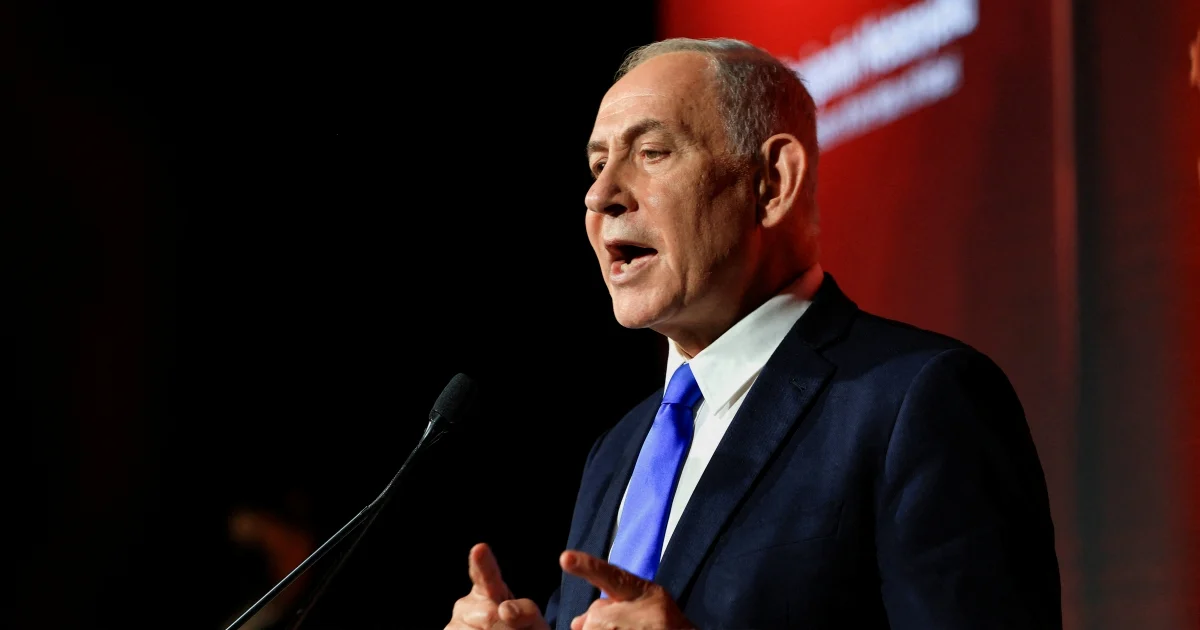
Israeli Prime Minister Benjamin Netanyahu declared on Sunday that military forces under his command would maintain their presence in southern Lebanon for however long the strategic situation demands, signalling no imminent withdrawal from the border region despite international pressure for a ceasefire framework.
The statement marks a significant hardening of Israel's public position regarding its military operations in Lebanon, an escalation that carries profound implications for regional stability and the broader Middle East conflict. Netanyahu's commitment to an open-ended deployment suggests that Israeli leadership envisions a prolonged security commitment in Lebanese territory, departing from earlier suggestions that operations might be time-limited or tied to specific tactical objectives.
The timing of Netanyahu's remarks reflects the intensifying security dynamics along the Israel-Lebanon border, where Hezbollah's cross-border activities have prompted Israeli military responses over recent months. The Lebanese armed group has served as a significant counterweight to Israeli power in the region, but its operations have increasingly drawn retaliatory strikes that have destabilised the border area and raised civilian casualties on both sides. Netanyahu's statement essentially places no ceiling on how long this situation might persist.
Simultaneously, the Israeli premier reasserted his government's unwavering opposition to Iranian nuclear development, reinforcing a position that has animated Israeli foreign policy for decades. This dual commitment—to maintaining military pressure on Lebanon while constraining Iranian nuclear ambitions—reflects Netanyahu's broader strategic vision for Israeli security in the Middle East. The two issues are interconnected in Israeli strategic thinking, given Hezbollah's deep ties to Iran and dependence on Iranian military support and funding.
For regional observers, particularly in Southeast Asia and Malaysia with significant diaspora communities across the Levant, Netanyahu's statements underscore the entrenched nature of Middle Eastern conflicts. Unlike conflicts that might be resolved through negotiation within months or years, the Israeli-Lebanese dynamic appears locked into a potentially indefinite cycle of military posturing and intermittent escalation. This trajectory threatens to destabilise Lebanon further, a nation already reeling from economic collapse, political dysfunction, and humanitarian challenges that predate recent military tensions.
The Lebanese government, already fragile and beset by sectarian divisions, has limited capacity to enforce national sovereignty over Hezbollah-controlled territories in the south, making it difficult for Beirut to negotiate an Israeli withdrawal or establish effective security arrangements. This structural weakness means that external powers—Israel, Iran, and potentially others—may fill the vacuum indefinitely, perpetuating the security vacuum that Netanyahu's statement acknowledges.
International responses to Netanyahu's declaration will likely prove mixed. Western allies, including the United States, have historically supported Israeli security needs while simultaneously advocating for diplomatic solutions and restraint that might prevent wider conflict. The ambiguous timeframe Netanyahu offered provides little comfort to those seeking de-escalation and could intensify calls for mediation efforts, though the chances of immediate progress appear slim given the stated positions of multiple parties.
The nuclear dimension that Netanyahu raised adds another layer of complexity to regional calculations. Israeli concerns about Iranian nuclear capabilities have driven military actions beyond Lebanon's borders, including strikes on Iranian targets and facilities allegedly associated with weapons development. Any future confrontation between Israel and Iran could rapidly escalate the southern Lebanon situation from a bilateral Israeli-Hezbollah problem to a three-way conflict involving Iran directly, with catastrophic consequences for Lebanon's civilian population and broader regional peace.
For Malaysia and other Southeast Asian nations monitoring Middle Eastern developments, Netanyahu's statement underscores the reality that peace processes in the region remain elusive despite decades of diplomatic effort. The economic implications—potential disruptions to shipping lanes, energy markets, and trade patterns through the Middle East—could reverberate across Asia's supply chains and economic relationships, making this far more than a local issue.
Lebanon's humanitarian situation, already dire with millions of internally displaced persons and Syrian refugees, will almost certainly worsen should the Israeli military presence persist and tensions remain elevated. International organisations and donor agencies face mounting challenges in delivering assistance, and regional burden-sharing for humanitarian support has reached breaking points in several neighbouring countries.
Netanyahu's framing of the Lebanon deployment as indefinite also suggests that Israeli strategic planners expect no near-term resolution to the underlying security challenges that prompted military action. This implies that Israeli threat assessments regarding Hezbollah's capabilities and intentions remain fundamentally pessimistic about the prospects for coexistence or stable deterrence, instead requiring permanent military pressure and containment. Such assessments, whether accurately reflecting ground realities or shaped by political considerations within Israel's fractious governing coalition, will drive policy for the foreseeable future regardless of international criticism or calls for restraint.
%22%2F%3E%3C%2Fpattern%3E%3C%2Fdefs%3E%3Crect%20width%3D%22100%25%22%20height%3D%22100%25%22%20fill%3D%22url(%23ph1i73eg)%22%2F%3E%3Crect%20width%3D%22100%25%22%20height%3D%22100%25%22%20fill%3D%22url(%23ph1i73ep)%22%2F%3E%3Ctext%20x%3D%2250%25%22%20y%3D%2250%25%22%20text-anchor%3D%22middle%22%20dominant-baseline%3D%22central%22%20fill%3D%22rgba(255%2C255%2C255%2C0.95)%22%20font-family%3D%22Georgia%2C%20'Times%20New%20Roman'%2C%20serif%22%20font-weight%3D%22700%22%20font-size%3D%22151%22%20letter-spacing%3D%22-0.02em%22%3EMalaysian%3C%2Ftext%3E%3C%2Fsvg%3E)