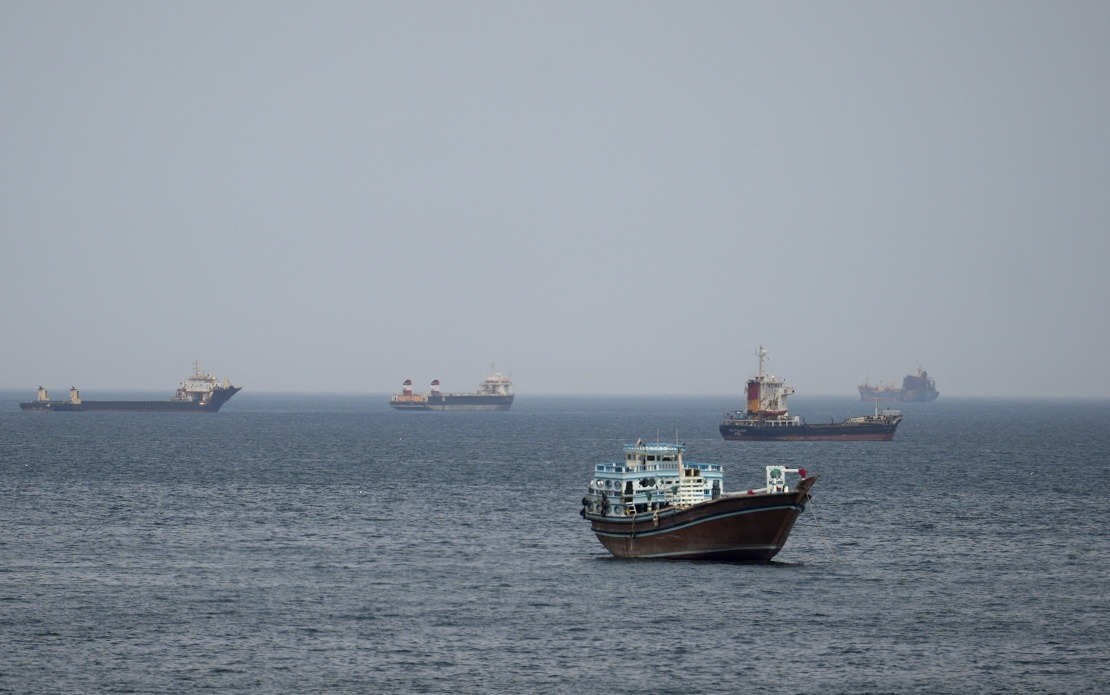
Commercial oil tankers have resumed transit through the Strait of Hormuz following the implementation of an interim ceasefire agreement between the United States and Iran on Thursday, marking a significant shift in one of the world's most strategically vital shipping corridors. The accord, struck after months of hostilities that began in late February, has already triggered a sharp decline in crude prices as markets price in the restoration of normal petroleum flows through a waterway responsible for roughly one-fifth of global oil supply. The economic relief is palpable across energy markets, with crude reaching its lowest valuation since the outbreak of conflict, suggesting that sustained transportation through the strait could stabilize energy costs for consumers across Southeast Asia and beyond in the coming months.
Despite the initial breakthrough, the agreement remains fragile and conditional, resting on several provisional arrangements. Negotiators have been allotted 60 days to reach a comprehensive accord on Iran's nuclear programme, the ostensible catalyst for Trump's original military campaign four months ago. As part of the interim framework, the United States has committed to establishing a $300 billion reconstruction fund for Iran alongside additional financial inducements aimed at sustaining Tehran's commitment to the process. Meanwhile, Iran has agreed to permit traffic through the Strait of Hormuz without imposing transit fees during this window, though it retains the explicit right to issue permits and direct maritime movements, effectively maintaining administrative control over this chokepoint's operations.
The shift in American negotiating posture represents a striking retreat from Trump's initial maximalist demands. When the conflict commenced, the president explicitly sought Iran's unconditional capitulation and the destruction of its nuclear weapons programme, elimination of strike capabilities against regional neighbours, curtailment of militant funding across the Middle East, and internal political transformation. The final agreement, however, incorporates none of these achieved objectives, a reality that has triggered criticism from Republican congressional allies questioning whether the administration surrendered excessive leverage to secure an unpopular war's cessation. Iran's Supreme Leader Ayatollah Moitaba Khamenei characterized the American decision as driven by desperation, simultaneously signalling that forthcoming nuclear discussions will demand careful calibration and warning that excessive American demands will face rejection.
The trajectory of negotiations ahead remains decidedly uncertain and laden with mutual suspicion. US Vice President JD Vance, designated to lead the American delegation in upcoming talks, has signalled Washington's determination to pursue constraints on Iran's long-range missile capabilities alongside nuclear programme limitations. Iranian officials, emboldened by their country's demonstrated capacity to withstand sustained military pressure and maintain operational control over regional maritime passages, are unlikely to concede ground easily on either front. The regime has already positioned itself as the victor in this encounter, having endured American assault without capitulation while securing valuable sanctions relief and renewed access to international commerce.
The most immediate challenge to the agreement's viability, however, emanates not from direct US-Iran interactions but from the unresolved Israeli-Lebanese conflict. Israel's military operations against Hezbollah have continued unabated even as the broader ceasefire took effect, with fresh airstrikes launched within hours of the agreement's implementation. More than one million Lebanese citizens have been displaced by this parallel conflict, yet Israeli military leadership has explicitly rejected any territorial withdrawal and released updated maps depicting expanded occupation zones within Lebanese territory. This intransigence directly contradicts the ceasefire agreement's explicit provisions calling for permanent termination of hostilities across all fronts and the restoration of Lebanon's territorial integrity and sovereignty.
Trump's handling of Israel presents a profound diplomatic challenge that could undermine the entire settlement. The president has issued uncharacteristically sharp public criticism of Israeli operations, remarking that continued attacks represent self-defeating behaviour toward America, now positioned as Israel's sole remaining powerful ally following regional isolation. His assertion that Israeli decision-makers should reconsider their strategic approach—phrased in deliberately provocative language questioning why one would assault one's only major international patron—signals genuine friction between Washington and Tel Aviv of a magnitude unseen in decades. Yet the president's rhetorical pressure has produced minimal tangible results, with Israeli forces maintaining their operational momentum in Lebanon regardless of American disapproval.
The sustainability of this ceasefire hinges fundamentally on whether Trump can compel Israeli compliance with the agreement's territorial provisions, a test that will determine the credibility of American guarantees and the viability of subsequent Middle Eastern diplomacy. Malaysian and regional observers note that American assurances mean little if Washington proves unable to restrain its regional clients from unilateral escalation. The precedent established by Israel's defiance of American wishes carries implications extending far beyond Lebanese borders, potentially signalling that security partnerships with Washington involve diminishing constraints on allied military action. For Southeast Asian nations managing their own relationships with major powers and regional actors, the apparent limits on American leverage over Israel warrant careful study.
The nuclear negotiations scheduled for the coming two months represent the second major pillar supporting this agreement's durability. Iranian officials have already adopted an assertive posture, articulated through Supreme Leader Khamenei's written statements threatening rejection of any arrangement they perceive as excessively demanding. Washington's stated objectives—constraining missile development alongside nuclear limitations—represent precisely the kind of comprehensive restrictions Tehran views sceptically. American officials maintain optimism that sustained negotiations could yet produce strong commitments on nuclear enrichment and weapons programme limitations, yet critics contend Iran enters these discussions from a position of enhanced strength after weathering the military campaign.
Markets and geopolitical observers recognize that Iran has achieved tangible gains through this conflict despite military setbacks. The regime successfully demonstrated its capacity to inflict damage on American interests, maintained control over critical maritime chokepoints, extracted financial concessions and sanctions relief, and emerged with its fundamental nuclear programme intact despite American efforts to eliminate it. Energy markets have responded rationally to these realities, pricing in the restoration of Iranian crude exports as probability rather than possibility. For Malaysian refineries and petrochemical manufacturers dependent on stable energy supplies, this development represents welcome relief from the volatility that characterized the preceding months.
The regional implications of this ceasefire extend well beyond energy markets to encompass fundamental questions about the American security commitment to the Gulf and broader Middle East. The willingness to negotiate with Iran rather than pursue regime change, combined with demonstrated inability to constrain Israeli actions, signals potential reorientation of American strategic priorities in the region. Southeast Asian states have long anchored their security calculations on assumptions of permanent American regional engagement and technological superiority sufficient to guarantee freedom of navigation and commercial access. Should American credibility erode or commitment waver, the calculations underpinning regional maritime commerce and security architecture would require substantial revision.
The immediate days and weeks will prove crucial in establishing whether this ceasefire represents genuine de-escalation or merely a temporary pause in underlying conflicts. Israeli military operations in Lebanon will likely accelerate international attention toward Trump's ability to enforce the agreement's territorial provisions. Iranian compliance with nuclear inspection protocols and American verification mechanisms will similarly test the depth of mutual commitment to the negotiating process. For Malaysian policymakers and regional stakeholders, close monitoring of these developments is essential, as the Middle East's stability remains inextricably linked to global energy security and maritime commerce patterns affecting Southeast Asia's economic wellbeing. The next 60 days will prove foundational in determining whether this agreement represents enduring peace or merely a prelude to renewed conflict.