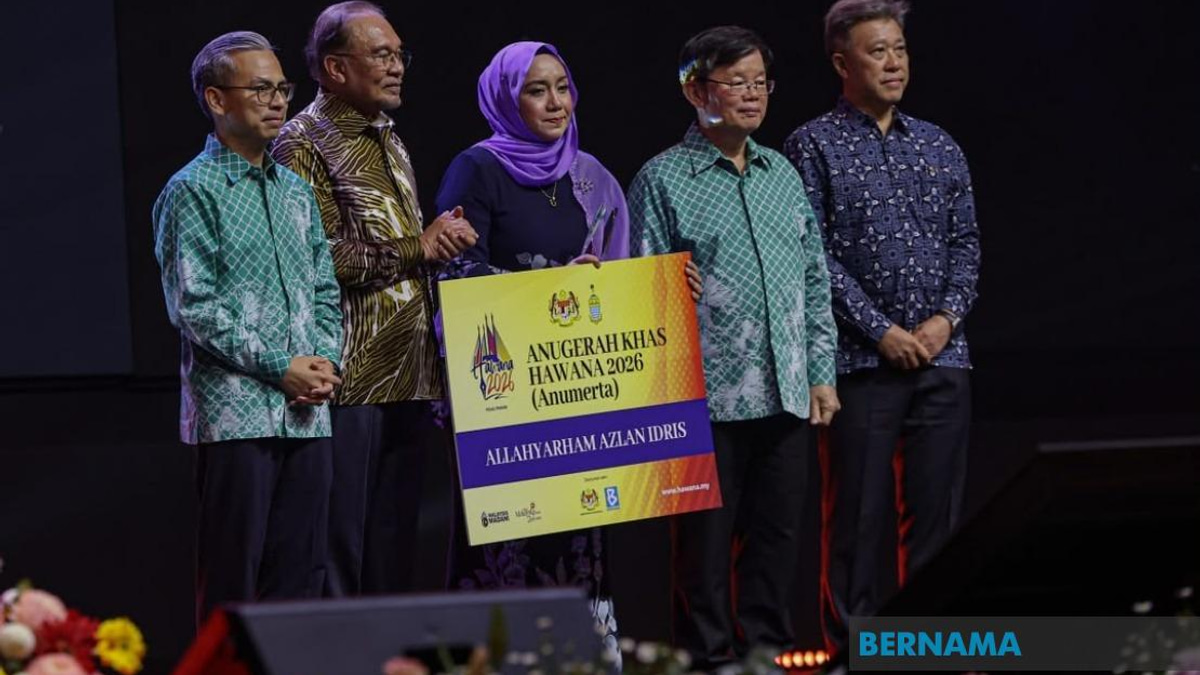
Malaysia's architectural establishment has formally acknowledged the Housing and Local Government Ministry's contribution to professional advancement, awarding its highest civilian honour to Minister Nga Kor Ming. The Malaysian Institute of Architects (PAM) presented the President's Award during its annual dinner in Kuala Lumpur this week, marking recognition of the strategic partnership forged between the ministry and the profession in shaping the nation's built environment policy.
The accolade, traditionally conferred upon individuals outside the architectural profession who have demonstrated exceptional service to the sector, reflects a ministerial approach characterised by progressive reform and collaborative engagement. PAM's recognition signals broader industry satisfaction with recent government initiatives to strengthen professional standards whilst modernising procurement practices for public works. For Malaysian policymakers, the award underscores the growing momentum behind integrating design excellence and competitive standards into public sector project delivery—a shift that has implications for how infrastructure and civic projects are conceived and executed across the country.
Nga's tenure has been marked by several concrete initiatives that earned institutional recognition. The ministry has championed a systematic programme of architectural competitions focused on public market revitalisation, a sector often overlooked in mainstream development discourse. To date, ten public market design competitions have been orchestrated, with six administered by local authorities and four facilitated by PAM directly. This emphasis on competitive procurement for market design represents a departure from conventional commissioning practices, signalling a commitment to elevating design standards in vernacular commercial spaces that millions of Malaysians navigate daily. Public markets remain vital cultural and economic anchors in urban and semi-urban communities, making their architectural renewal significant beyond aesthetic considerations.
Beyond individual projects, PAM highlighted five strategic pillars underpinning the recognition, spanning both administrative and technical dimensions. The ministry's prioritisation of design excellence through architectural competitions forms the foundation, establishing precedent for competitive selection across government projects. This approach carries potential for broader adoption across other ministries and agencies overseeing public construction, potentially reshaping how Malaysia's civic and institutional landscape develops.
The second pillar addresses digital integration and professional practice strengthening, acknowledging the ministry's role in facilitating the architectural profession's technological evolution. As Southeast Asian economies increasingly leverage Building Information Modelling and digital tools to enhance project efficiency and coordination, government endorsement of such integration carries weight in industry adoption. Malaysian architects and construction professionals require regulatory clarity and government demonstration of commitment to digital standards—areas where the ministry has evidently engaged constructively.
Continued collaboration between PAM and government agencies represents the third dimension of recognition. Formalised channels between professional bodies and ministerial apparatus remain underdeveloped across several Southeast Asian contexts, making Malaysia's structured engagement noteworthy. This institutional linkage enables two-way feedback: government gains professional expertise in policy refinement, whilst the profession receives early clarity on regulatory direction and procurement preferences.
The ministry's substantial support for signature industry platforms constitutes the fourth pillar. ARCHIDEX, Malaysia's flagship international architecture and design exhibition, and the Kuala Lumpur Architecture Festival represent the nation's professional standing regionally and globally. Government backing for these platforms signals investment in Malaysia's soft power credentials and professional reputation. For practitioners and firms, such platforms generate visibility, networking opportunities, and demonstration grounds for innovation—factors influencing talent retention and sectoral competitiveness.
Encouraging professional consultation and structured policy management forms the fifth recognition pillar, reflecting a governance philosophy that integrates specialist input into decision-making. This consultative approach contrasts with top-down policy formulation, potentially yielding more implementable and professionally credible regulations. For Malaysian architects navigating licensing, professional practice standards, and public sector engagement, ministerial openness to consultation reduces compliance friction and builds professional legitimacy.
The award contextualises broader regional trends in professional regulation and government-industry relations. Across Southeast Asia, countries including Singapore and Thailand have emphasised design-led development and competitive procurement frameworks, recognising that architectural quality and professional standards contribute to urban competitiveness and quality of life. Malaysia's formal recognition of such collaboration suggests growing alignment with regional best practices, potentially positioning the country as a design-conscious economy within ASEAN.
For housing and construction sectors specifically, ministerial emphasis on architectural excellence and professional standards carries practical implications. Public procurement practices that prioritise design quality establish market demand for professional services, supporting the architecture sector's economic contribution. Competitive selection processes for public projects also establish benchmarks and raise expectations for private sector development, potentially creating demonstration effects that cascade through the industry.
The recognition also carries subtle messaging regarding professional autonomy and ministerial restraint. By honouring an individual for facilitating collaboration rather than directing outcomes, PAM implicitly validates a governance model emphasising partnership over prescription. This distinction matters for professional institutions seeking to maintain standards and ethical frameworks against potential government pressure to accommodate expedience over excellence.
As Malaysia navigates post-pandemic recovery and infrastructure modernisation, the articulation of government-professional alignment carries symbolic and practical significance. The award encapsulates growing recognition that built environment quality—shaped by architectural expertise and competitive selection—represents investment in long-term national development rather than short-term cost minimisation. For housing ministers, policymakers, and professionals across the region observing Malaysia's trajectory, the message is clear: institutional commitment to architectural excellence and professional collaboration generates recognition and contributes to sectoral advancement.